When Budget Discipline Conflicts With Coffee Quality
Across the coffee industry, budget discipline is no longer a background concern. Rising green prices, volatile logistics costs, labor inflation, and tighter access to capital have pushed financial control to the center of decision-making. For many roasteries and café operators, spending restraint is not optional; it is a condition of survival. At the same time, quality remains the primary driver of differentiation, reputation, and long-term demand.
The tension between these two realities is becoming harder to manage. Budget discipline and coffee quality are not inherently opposed, but in practice they often collide. Understanding why this conflict emerges – and where it becomes most damaging – is essential for operators navigating today’s constrained market environment.
Why Cost Control Has Moved to the Foreground
In earlier growth phases of specialty coffee, cost increases could often be absorbed or passed on. Demand was expanding, price sensitivity was lower, and access to capital was relatively easier. That context has shifted. Many businesses now operate in mature or saturated markets where retail price increases face resistance, while upstream costs remain unstable.
Green coffee prices fluctuate with climate risk and currency exposure. Freight costs remain unpredictable. Energy and labor expenses continue to rise. In response, financial teams and owners understandably push for tighter budgets, clearer forecasts, and reduced variance. The problem is that coffee quality does not behave like a fixed cost.
Quality is dynamic. It depends on sourcing choices, sensory evaluation, production time, staff skill, and ongoing calibration. When budgets harden without acknowledging that variability, quality pressure becomes structural rather than incidental.
Where Budget Discipline Collides With Quality in Practice
The conflict rarely appears as a single decision. It emerges through a series of small constraints that accumulate.
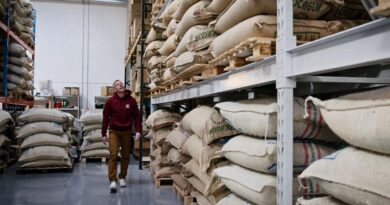
Green buying is often the first pressure point. Buyers are asked to hit tighter target prices while maintaining cup standards. This can lead to compromises in lot selection, reduced sampling rounds, or acceptance of wider quality ranges. None of these choices look dramatic in isolation, but together they increase inconsistency and reduce margin for error downstream.
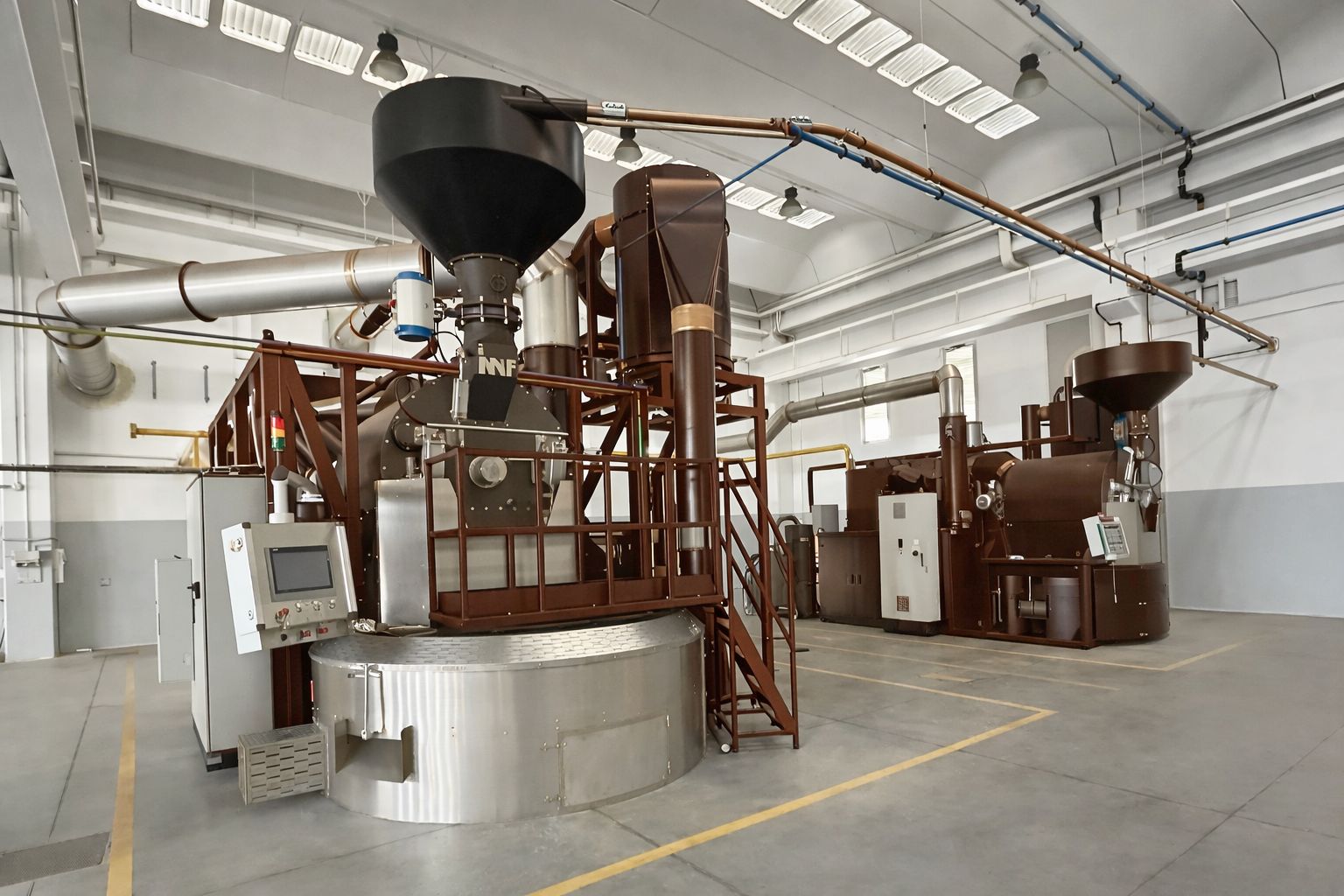
Production is another friction zone. Efforts to improve efficiency often translate into higher throughput targets, fewer profile iterations, or reduced roast time for development and testing. These changes can improve cost metrics while quietly degrading repeatability. Quality drift is not always immediately visible, but it shows up over time in customer feedback and internal cupping fatigue.
Quality control itself is frequently affected. When budgets tighten, QC is often seen as overhead rather than insurance. Panel sizes shrink, cupping frequency drops, and corrective actions are delayed. The system still exists, but it reacts more slowly – which is precisely when it is most needed.
The False Economy of Cutting Too Deep
One of the most common mistakes under financial pressure is assuming that quality reductions are linear and reversible. In reality, they are often nonlinear and cumulative.
Reducing green costs by a small amount may require accepting lots with narrower flavor margins. Those lots then require more precise roasting to perform well, increasing production risk. If production time is also constrained, inconsistency increases further. Eventually, more coffee is reworked, discounted, or wasted – offsetting the original savings.
The same pattern appears in staffing. Cutting training or relying on less experienced operators may reduce payroll in the short term, but it increases reliance on rigid SOPs and reduces situational judgment. When something goes wrong – equipment drift, green variability, unexpected demand – the system has less capacity to respond without loss.
From an economic perspective, these are not savings but deferred costs. They tend to surface later, often in less controllable forms.
Quality as a System, Not a Feature
A core reason this conflict persists is that quality is often treated as a product attribute rather than a system outcome. Budgeting, by contrast, is explicitly systemic: forecasts, controls, and variance tracking are built into financial operations.
When quality is not modeled systemically, it becomes vulnerable to incremental cuts. Each department optimizes locally – buying cheaper coffee, roasting faster, cupping less – without a shared understanding of how those choices interact.
Operators with more resilient outcomes tend to frame quality as an operational requirement with defined cost thresholds. Not every coffee needs to be exceptional, but every coffee must be controllable. That distinction matters. Control reduces waste, stabilizes production, and makes financial outcomes more predictable – which is ultimately what budget discipline is meant to achieve.
Margin Pressure and Strategic Trade-Offs
It is also important to acknowledge that quality-first decisions can undermine financial stability if taken without constraint. Paying above-market prices, over-diversifying SKUs, or chasing marginal sensory gains can erode margins just as surely as cutting too deep.
The conflict, then, is not between discipline and quality, but between different interpretations of discipline. One prioritizes immediate cost reduction. The other prioritizes system stability over time.
In mature markets, the latter often proves more durable. Customers may tolerate modest price increases or narrower ranges more readily than inconsistent quality. What they rarely tolerate is unpredictability.
The Role of Communication and Internal Alignment
Many quality-budget conflicts are exacerbated by misalignment between teams. Finance sees quality as subjective and difficult to measure. Production sees budgets as arbitrary constraints detached from reality. Buyers feel squeezed between both.
Organizations that manage this tension more effectively tend to invest in shared metrics and clearer trade-off frameworks. Not everything needs to be quantified precisely, but the consequences of decisions should be visible across departments. When cost savings in one area reliably create risk or expense in another, that relationship should be acknowledged explicitly.
This is less about process complexity and more about institutional honesty. Pretending that quality can be maintained indefinitely under tightening constraints only delays necessary adjustments.
Quality Drift as an Early Warning Signal
One of the most valuable signals in this environment is subtle quality drift. Changes in cup character, increased reliance on blending fixes, or growing internal disagreement during cuppings often indicate that financial pressure is already affecting outcomes.
Ignoring these signals because sales have not yet declined is risky. In many cases, demand erosion lags quality decline. By the time it becomes visible in revenue, corrective action is more expensive and disruptive.
Treating quality drift as an operational metric rather than a sensory complaint allows businesses to respond earlier and more deliberately.
A Practical Takeaway
Budget discipline and coffee quality will always exist in tension, especially in volatile markets. The danger lies not in choosing one over the other, but in misunderstanding how they interact. Cost control that undermines system stability ultimately weakens financial performance, while quality ambition without economic limits is equally unsustainable.
For industry professionals, the task is to identify where discipline supports quality – by reducing waste, improving control, and enabling consistency – and where it quietly works against it. Reflecting on that balance, and making it explicit within operations, is becoming a defining skill for resilient coffee businesses.
Read other articles :
- Smart Budgeting: Managing Roastery Cash Flow to Stay Profitable in 2026
- Beyond Flavor: How Coffee’s Physical Effects Shape Long-Term Demand
- Cup of Excellence 2026: Auction Schedule, Countries, and Key Changes
Follow us on :