How to Clean Coffee Oil Residue Inside the Machine Without Total Disassembly
The Hidden Reason Your Coffee Tastes Flat Even When Everything Else Is Right
Many roasters and café operators blame green coffee, roast profiles, or extraction when flavors suddenly turn dull or bitter. However, in day-to-day operations, one of the most common and least discussed causes is coffee oil residue inside the machine.
Coffee oils are unavoidable. They are also unstable. Once exposed to heat and oxygen, they oxidize quickly, turning rancid and clinging to internal surfaces. The problem is not just cleanliness. It is flavor contamination, airflow restriction, and long-term equipment stress.
The challenge? Most operators assume the only solution is full disassembly. In reality, experienced professionals manage coffee oil buildup effectively without tearing machines apart if they understand where oils accumulate and how to interrupt the process early.
This article explains how to do exactly that.
Why Coffee Oil Residue Builds Up Faster Than You Expect
Coffee oils are released during roasting, grinding, and brewing. Heat lowers their viscosity, allowing them to spread thinly across metal surfaces. Over time, those thin films oxidize and polymerize, becoming sticky, bitter, and difficult to remove.
The most important point: oil buildup happens gradually and invisibly. By the time residue is obvious, it has already affected flavor.
This is why prevention-focused cleaning matters more than occasional deep cleaning.
Where Coffee Oils Accumulate Inside Machines
Before choosing a cleaning method, you need to know where problems actually start.
Common High-Risk Areas
-
Grinder burr chambers and exit chutes
Fine particles combine with oil to form stubborn residue. -
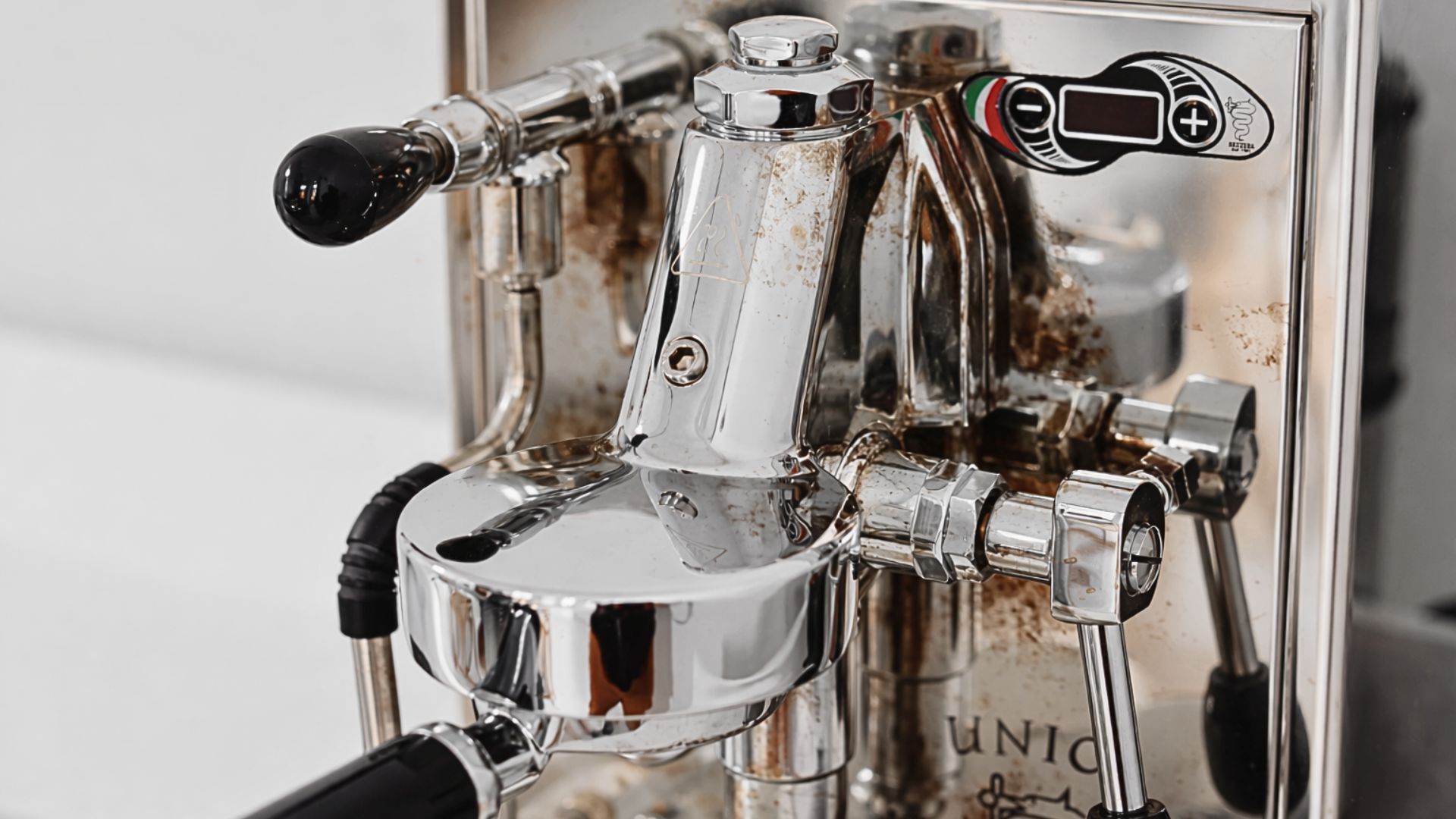
Espresso group heads and shower screens
Constant heat bakes oils onto metal surfaces. -
Roaster drop chutes and cooling trays
Warm surfaces accelerate oxidation. -
Internal air paths and elbows
Especially where airflow slows or changes direction.
Notably, most of these areas are accessible without full disassembly if cleaned at the right time and with the right approach.
Step 1: Clean While the Machine Is Still Warm
Timing is one of the most underestimated factors in effective cleaning.
Coffee oils are easiest to remove when they are warm but not hot. Once fully cooled, oils harden and bond more aggressively to metal.
Practical Guidance
- Clean shortly after shutdown, when surfaces are warm to the touch.
- Avoid cleaning during peak heat to reduce burn risk and chemical evaporation.
Why this works: Warm oils dissolve faster, requiring less force and fewer chemicals.
Step 2: Use Cleaners Designed Specifically for Coffee Oils
General-purpose cleaners often fail against oxidized coffee oils or worse, leave residues behind.
What Experienced Operators Use
- Food-safe, alkaline coffee detergents
- Coffee-specific degreasers for grinders and roasters
- Low-residue formulas approved for food-contact equipment
What to Avoid
- Household degreasers
- Solvent-heavy cleaners not rated for food use
- Abrasive powders inside enclosed systems
Coffee oils are complex lipids. Cleaners designed for milk or sugar residues rarely work effectively on them.
Step 3: Flush Internal Systems Instead of Disassembling Them
Most modern coffee equipment is designed to be cleaned internally if used correctly.
Espresso Machines
- Daily backflushing with blind filters and approved detergent
- Multiple rinse cycles to prevent chemical carryover
- Shower screen removal only when buildup persists
Grinders
- Grinder-cleaning pellets to absorb oils
- Followed by a purge with sacrificial coffee
- External vacuuming of chutes and exits
Roasters
- Brushing and vacuuming accessible duct areas
- Degreaser application through access ports
- Thorough wiping of cooling trays and drop areas
Flushing disrupts oil films before they harden into layers that require mechanical disassembly.
Step 4: Rely on Mechanical Action, Not Stronger Chemicals
A common mistake is increasing chemical strength instead of improving technique.
Mechanical agitation done correctly removes residue more effectively and safely.
Best Tools
- Nylon or brass brushes (never steel)
- Microfiber cloths that trap oil instead of spreading it
- Flexible brushes for chutes and ports
Chemicals loosen residue. Mechanical action removes it.
Step 5: Clean More Often, Not More Aggressively
Deep cleaning done infrequently is less effective than light cleaning done consistently.
Typical Professional Cleaning Rhythm
- Espresso backflush: daily
- Grinder chute cleaning: weekly
- Roaster internal access points: weekly to bi-weekly
- Cooling tray deep clean: weekly
Dark roasts, high-volume production, and oil-heavy coffees require shorter intervals.
A simple rule applies: if you can smell stale oil before cleaning, you waited too long.
Common Mistakes That Make Residue Worse
“It Looks Clean, So It Is Clean”
Thin oil films are often invisible but still affect flavor.
“Water Is Enough”
Water removes particles, not oils.
“Stronger Chemicals Save Time”
They often damage seals, gaskets, and coatings creating bigger problems later.
When Partial Disassembly Becomes Necessary
Even with excellent routine cleaning, deeper intervention is sometimes unavoidable.
Warning signs include:
- Persistent rancid or smoky odors
- Tar-like residue that does not dissolve
- Inconsistent airflow or pressure
- Flavor defects unaffected by recipe changes
However, consistent non-invasive cleaning dramatically reduces how often this happens.
Conclusion: Clean Early, Clean Smart, Protect Flavor
Coffee oil residue does not suddenly appear. It accumulates slowly, one roast or extraction at a time.
Operators who clean while oils are warm, use coffee-specific detergents, flush internal paths, and maintain regular schedules protect more than their machines. They protect cup clarity, consistency, and trust in their product.
You do not need to dismantle your equipment constantly. You need to understand how residue forms and interrupt it before it takes control.
Have a specific machine or roaster you struggle to keep clean?
Share your setup or question in the comments, or explore our related articles on equipment maintenance, grinder hygiene, and roast room quality control.
Read other articles here : greencoffeebeansnews
Join the newsletter
Follow us on :