How Climate Change Is Reshaping Coffee Production Economics
climate change coffee production economics, Climate change is no longer a distant concern confined to sustainability reports. It has become a tangible economic force influencing how coffee is cultivated, processed, priced, and transported across the supply chain. For producers, roasters, and buyers, its effects are appearing less as sudden, isolated shocks and more as ongoing structural pressure on costs, yields, and quality consistency.
This shift matters because the economics of coffee production were already under strain. Margins at origin are narrow, investment cycles are long, and quality outcomes depend on variables that are growing increasingly unpredictable. Climate volatility is intensifying all of these pressures simultaneously.
From Yield Risk to Structural Cost Pressure
For decades, climate risk in coffee was largely framed as yield risk: frost events in Brazil, droughts in Central America, or excessive rain during harvest. Today, the more consequential impact lies in how climate instability is altering the underlying cost structure of production.
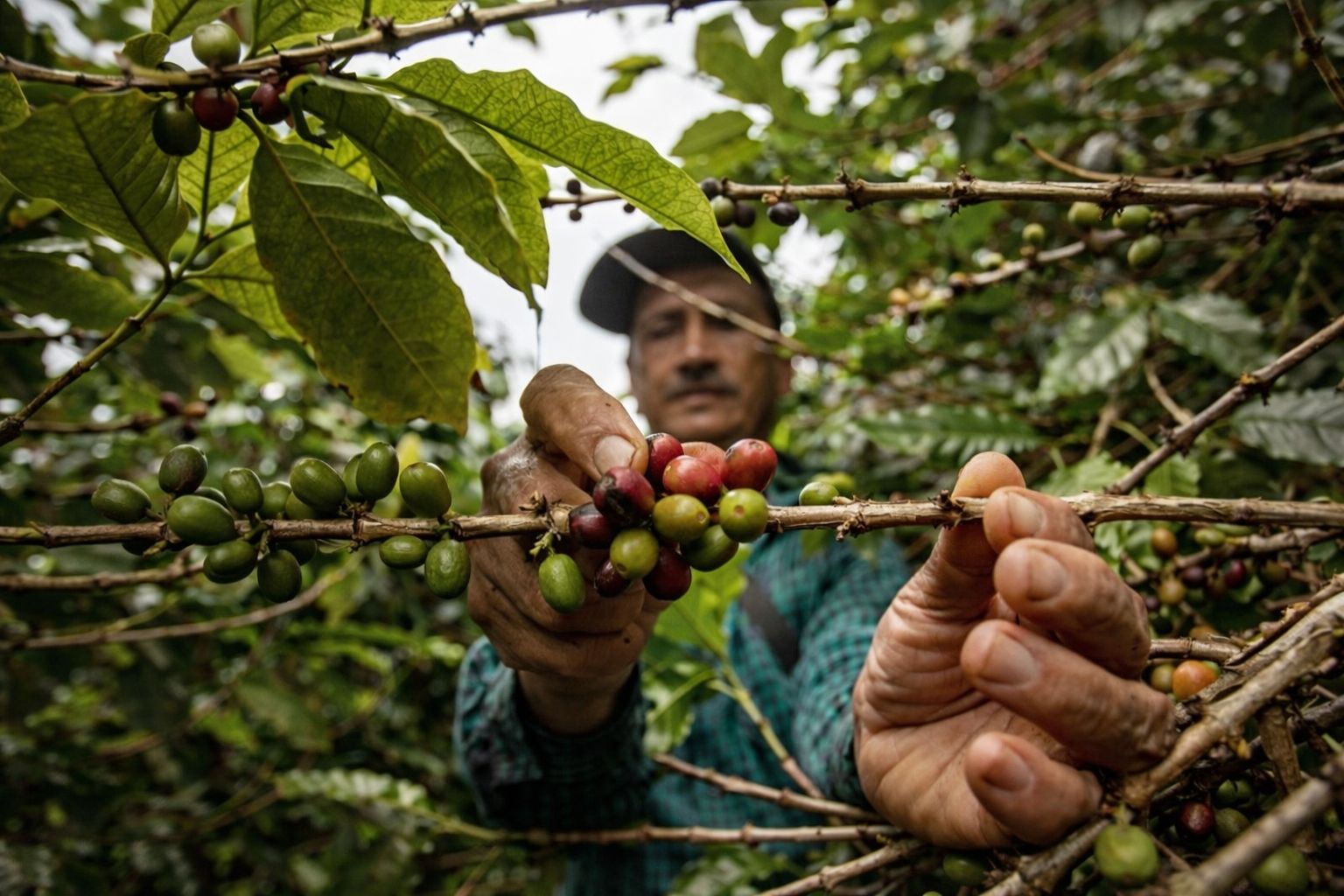
Producers are spending more just to hold output steady. Practices that were once optional – irrigation, shade management, soil rehabilitation, pest control – have become recurring necessities. In many producing regions, fertilizer programs have shifted not to chase higher yields, but to compensate for erratic rainfall that reduces nutrient uptake. Labor costs also increase as harvest periods become shorter or more fragmented due to uneven cherry maturation.
The result is a challenging economic dynamic: production expenses continue to rise even when yields stagnate. For producers operating within multi-year pricing cycles, this imbalance weakens financial resilience well before it manifests as an outright supply deficit.
Quality Variability as an Economic Issue
Quality drift is often discussed in sensory language, but its financial implications are equally significant. Climate variability disrupts flowering synchronization, cherry development, and drying conditions. The outcome is rarely a dramatic collapse in quality, but rather greater inconsistency from lot to lot.
From the producer’s standpoint, this variability reduces the share of coffee that can command higher differentials. A larger portion of output is diverted into lower-value channels, even when total volumes remain unchanged. For estates and cooperatives that rely on specialty premiums to offset rising costs, this directly constrains revenue.
Further down the chain, roasters encounter this as heavier quality control workloads, higher rejection rates, and more frequent roast profile adjustments. What initially appears to be a green coffee issue becomes an internal operational cost – more sample roasting, more blending compromises, and less predictability in core offerings.
Read also : What’s Driving Coffee Market Uncertainty in 2026 | Industry Analysis
Altitude, Land Use, and the Economics of Adaptation
One of the most visible responses to rising temperatures has been a gradual shift toward higher elevations. In principle, this helps preserve quality potential. In practice, it introduces a new set of economic trade-offs.
High-altitude land is typically more expensive, harder to access, and less amenable to mechanization. Infrastructure – such as roads, wet mills, and drying facilities – requires greater investment and ongoing maintenance. Transport costs increase, and labor availability can become more constrained. These factors drive up fixed costs, not just variable ones.
At the same time, many producers lack the option to move upslope. Smallholders without secure land tenure or access to capital are often forced to adapt where they are, investing in shade systems or disease-resistant varieties with long and uncertain payback periods. As a result, the financial burden of climate adaptation is uneven, with implications for supply concentration and long-term diversity at origin.
Disease Pressure and the Ongoing Cost of Risk Management
Higher temperatures and shifting rainfall patterns have expanded both the range and persistence of pests and diseases, most notably coffee leaf rust. While major outbreaks attract attention, the more subtle change is that disease management has shifted from an occasional expense to a permanent operating cost.
Preventive spraying, resistant cultivars, and monitoring systems all add to production budgets. Resistant varieties can lower disease exposure but may involve compromises in yield or cup profile that affect market positioning. Faster replanting cycles increase capital needs and temporarily reduce productive area.
For buyers, this translates into more frequent changes in variety composition and flavor profiles from familiar origins. For producers, it means making agronomic choices that balance biological resilience with market demand – often in the absence of clear or timely price signals.
Financing, Cash Flow, and Weak Price Transmission
Climate-related cost increases would be easier to absorb if prices adjusted accordingly. In practice, the coffee market is slow to reflect structural cost inflation at origin. Futures markets tend to react to supply shocks rather than gradual increases in baseline production expenses.
This lag creates cash-flow pressure for producers, particularly those financing inputs through credit. When climate volatility coincides with low market prices, producers may reduce inputs to stay afloat, setting the stage for further declines in yield and quality in subsequent seasons. The economic consequences accumulate over time.
For roasters and importers, this raises difficult questions about sourcing strategies. Spot purchasing may look economical in the short term, but it shifts risk back to producers, increasing the likelihood of future supply instability. Longer-term relationships can help manage this risk, but they require buyers to engage more directly with production economics rather than treating green coffee as a purely interchangeable commodity.
Logistics and Post-Harvest Exposure
The effects of climate change extend well beyond the farm. Heavier rainfall during harvest complicates drying and storage, while higher humidity increases the risk of mold and quality deterioration during storage and transport. These challenges add cost through extra handling, re-drying, or higher rejection rates upon arrival.
In many producing regions, infrastructure was not designed for current climate conditions. Roads are damaged more frequently, ports face weather-related congestion, and shipping schedules become less predictable. Each disruption adds friction and expense, often absorbed unevenly across the supply chain.
For roasters, this translates into delayed shipments, shorter booking windows, and a greater need for buffer inventory – all of which tie up working capital.
Strategic Implications for Buyers and Roasters
Taken together, these dynamics are reshaping how risk is distributed across the coffee sector. Climate change pushes more operational and financial risk upstream, while simultaneously increasing downstream exposure through variability in quality and supply reliability.
Roasters dependent on narrow origin portfolios or fixed flavor profiles are particularly vulnerable. Importers face higher working capital demands as transit times lengthen and inventory buffers grow. Café operators may not feel these pressures immediately, but they eventually surface as price volatility or changes in menu consistency.
There are no simple fixes. Climate-resilient production generally costs more, at least over the medium term. The critical question for industry stakeholders is not whether those costs will be absorbed, but how deliberately and transparently that process is managed.
Conclusion
Climate change is reshaping coffee production economics not through a single disruptive event, but through sustained pressure on costs, quality consistency, and risk allocation. For industry professionals, the task is to recognize these shifts early and adjust sourcing, pricing, and operational strategies accordingly.
This is less about sustainability narratives and more about economic reality. The businesses that remain stable in the years ahead will be those that understand where costs are rising, why quality behaves differently than it once did, and how their own decisions shape resilience across the supply chain.
Related articles :
- Climate Impact on Coffee Prices : A Roaster’s Perspective
- Global Coffee Prices Shift Again: What Should Roasteries Prepare?
- Green beans news – Today’s Coffee Market Update
- Global Coffee Prices Are Shifting What the Market Is Signaling
Wong young low is a coffee industry journalist from China who has been writing since 2007, focusing on specialty coffee, roasting, and market trends. He writes based on field experience and supply chain observations – helping roasters and coffee businesses make more accurate and realistic decisions.