Why Coffee Origin Matters More Than Most People Realize
In professional coffee conversations, origin is often treated as shorthand. Ethiopia implies florality, Brazil suggests chocolate and nuts, Colombia signals balance. These associations are useful, but they barely scratch the surface of why origin matters and how deeply it shapes decisions across roasting, sourcing, quality control, and commercial performance.
For roasteries and buyers operating at scale, origin is not a romantic story or a flavor label. It is a structural variable that influences risk, consistency, cost, and long-term credibility. Understanding origin properly means understanding systems, not stereotypes.
Origin Is a Production System, Not a Flavor Descriptor
When professionals talk about origin, they often default to sensory expectations. In reality, origin represents a complex production system defined by agronomy, infrastructure, labor models, climate patterns, and institutional capacity.
Two coffees from the same country and even the same region can behave very differently depending on:
- harvest structure and timing
- access to centralized or on-farm processing
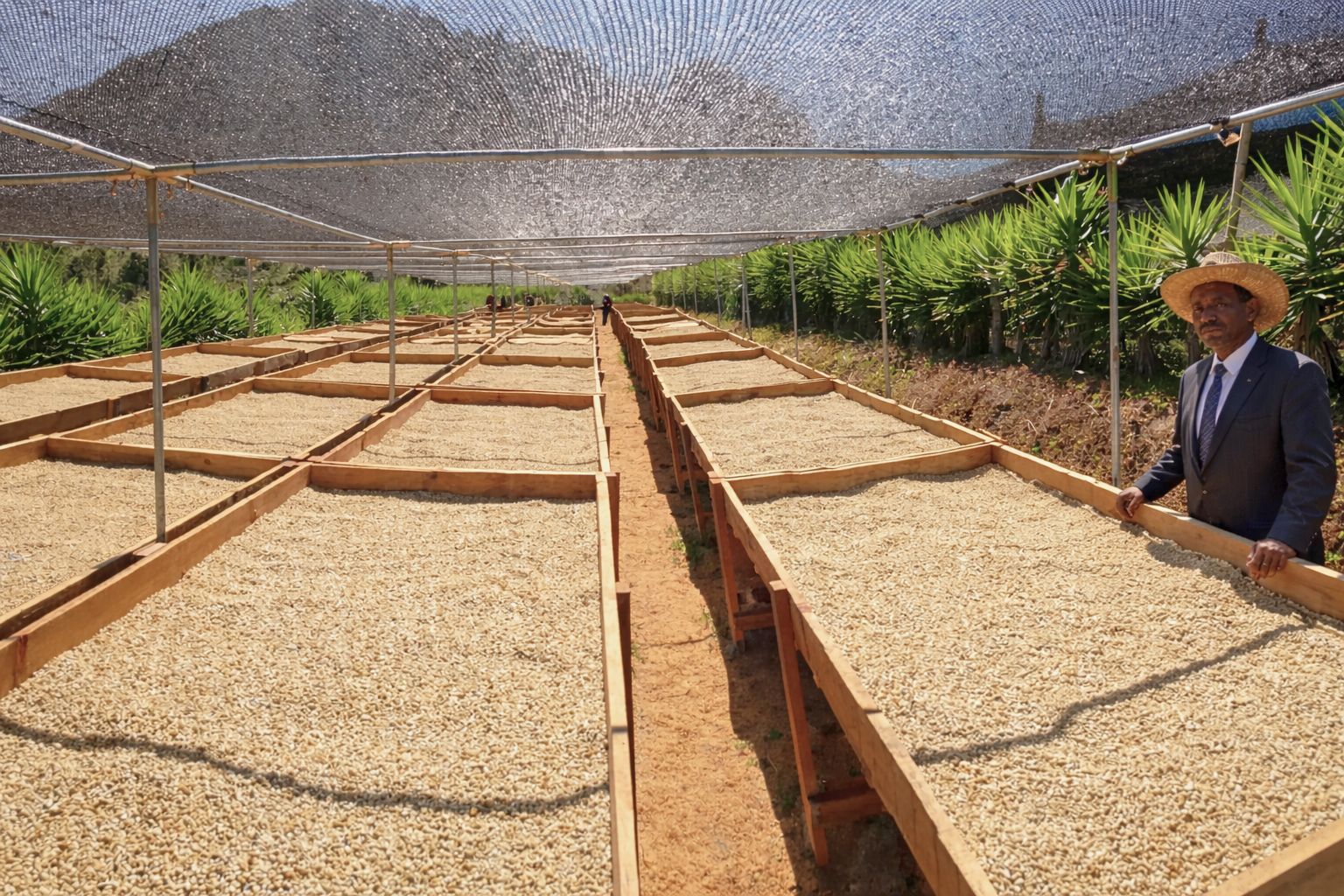
- drying infrastructure and climate stability
- export logistics and warehousing practices
These factors shape green coffee condition long before it reaches a cupping table. Flavor is an outcome, not the cause.
Roasteries that treat origin purely as a taste profile often struggle when coffees fail to perform consistently in production. Those that understand origin as a system are better equipped to predict behavior and manage trade-offs.
Origin Determines the Type of Variability You Will Face
All green coffee is variable. Origin determines how that variability shows up.
Some origins tend to present:
- wide density ranges within a lot
- moisture content shifts across the season
- variability driven by smallholder aggregation
Others are more likely to show:
- tight physical consistency
- predictable processing outcomes
- slower but more stable seasonal change
Neither is inherently better. The question is whether the variability aligns with the roastery’s operational tolerance.
A small, highly skilled team may handle fragile, expressive coffees well. A larger operation with multiple operators and tight schedules may need coffees that trade peak expression for stability. Origin choice plays a decisive role in that balance.
Origin Shapes Roasting Strategy More Than Roast Style
Roast profiles are often discussed as creative decisions. In practice, many profiling constraints are imposed by origin characteristics.
High-grown, dense coffees with sharp organic acid structures demand different energy application than softer, lower-density coffees. Some origins respond well to aggressive early heat. Others penalize it through tipping, scorching, or uneven development.
When roasteries apply a house style indiscriminately across origins, they often compensate through last-minute adjustments. Over time, this leads to inconsistency, higher rework rates, and operator fatigue.
Origin-aware roasting does not mean abandoning style. It means recognizing which aspects of a profile are flexible and which must adapt to green coffee reality.
Origin Has Direct Cost Implications Beyond Green Price
Green coffee cost is often evaluated per kilogram. Origin influences costs that appear later and are harder to measure.
These include:
- increased sample roasting and profile development time
- higher energy use due to longer or less efficient roasts
- greater QC workload to manage inconsistency
- higher risk of write-offs due to aging or defect expression
A coffee that appears affordable at purchase can become expensive in production if it introduces friction. Conversely, a higher-priced coffee from a more stable origin may reduce hidden costs and protect margins.
Experienced buyers assess origin not just for price competitiveness, but for how it performs across the entire system.
Origin Affects Shelf Life and Inventory Risk
Not all coffees age the same way. Origin plays a major role in how flavor stability evolves over time.
Climate conditions during drying, typical water activity ranges, and processing consistency influence how coffees hold up in storage. Some origins tolerate longer holding periods with minimal sensory drift. Others peak quickly and decline sharply.
For roasteries managing inventory across multiple channels retail, wholesale, subscription this matters.
Poor alignment between origin behavior and inventory strategy leads to rushed releases, quality drift, or forced discounting. Origin-aware buying allows roasteries to plan rotation and substitution with fewer surprises.
Origin Influences How Easily Quality Can Be Explained
In professional markets, origin also functions as a communication tool.
Some origins carry widely understood expectations that help buyers, cafés, and consumers quickly contextualize a coffee. Others require more explanation and education to justify pricing or flavor profile.
This does not mean obscure origins should be avoided. It means they should be used intentionally.
When roasteries rely heavily on origins that require constant explanation, they increase sales friction. When origin choice aligns with market familiarity and expectations, selling becomes easier and more repeatable.
Origin selection is therefore not just a sourcing decision, but a sales and education decision.
Origin Risk Is Increasing and Unevenly Distributed
Climate volatility, labor shortages, and political instability are not affecting all origins equally.
Some producing countries face:
- increasingly erratic harvest timing
- declining production predictability
- rising internal logistics costs
- Others, for now, maintain relatively stable output due to infrastructure, altitude buffers, or institutional support.
Roasteries that concentrate sourcing heavily in high-risk origins may experience sudden supply gaps or forced substitutions. Diversification helps, but only when origin risks are understood structurally, not assumed to be interchangeable.
Strategic sourcing increasingly depends on evaluating origin resilience, not just current quality.
When Origin Becomes a Liability Instead of an Asset
Origin adds value when it supports the roastery’s goals. It becomes a liability when it introduces complexity without corresponding benefit.
This often happens when:
- coffees are bought for story rather than fit
- origin rotation outpaces the team’s ability to adapt
- market positioning does not match origin characteristics
In these cases, origin creates internal strain while delivering limited external reward.
The most effective roasteries define what they need from origin consistency, distinction, resilience, or margin protection and source accordingly.
A Practical Takeaway
Coffee origin matters not because it sounds compelling, but because it shapes nearly every downstream decision a roastery makes.
It influences how coffees roast, how they age, how they sell, how much they cost to manage, and how much risk they introduce into the system. Treating origin as a flavor label underestimates its power.
For industry professionals, a more useful question than “Which origin tastes best?” is:
Which origins support the way our operation actually works today and at the scale we are building toward?
Answering that question with honesty often leads to better sourcing decisions, fewer operational surprises, and a more resilient business over time.
Read other articles :
- Five Coffee Lots That Changed Specialty Coffee Quality
- Roastery Website SEO: 5 Proven Ways to Increase Coffee Orders
- How Packaging Color Shapes Expectations in Specialty Coffee
Follow us on :