Coffee Roaster Maintenance That Protects Your Business
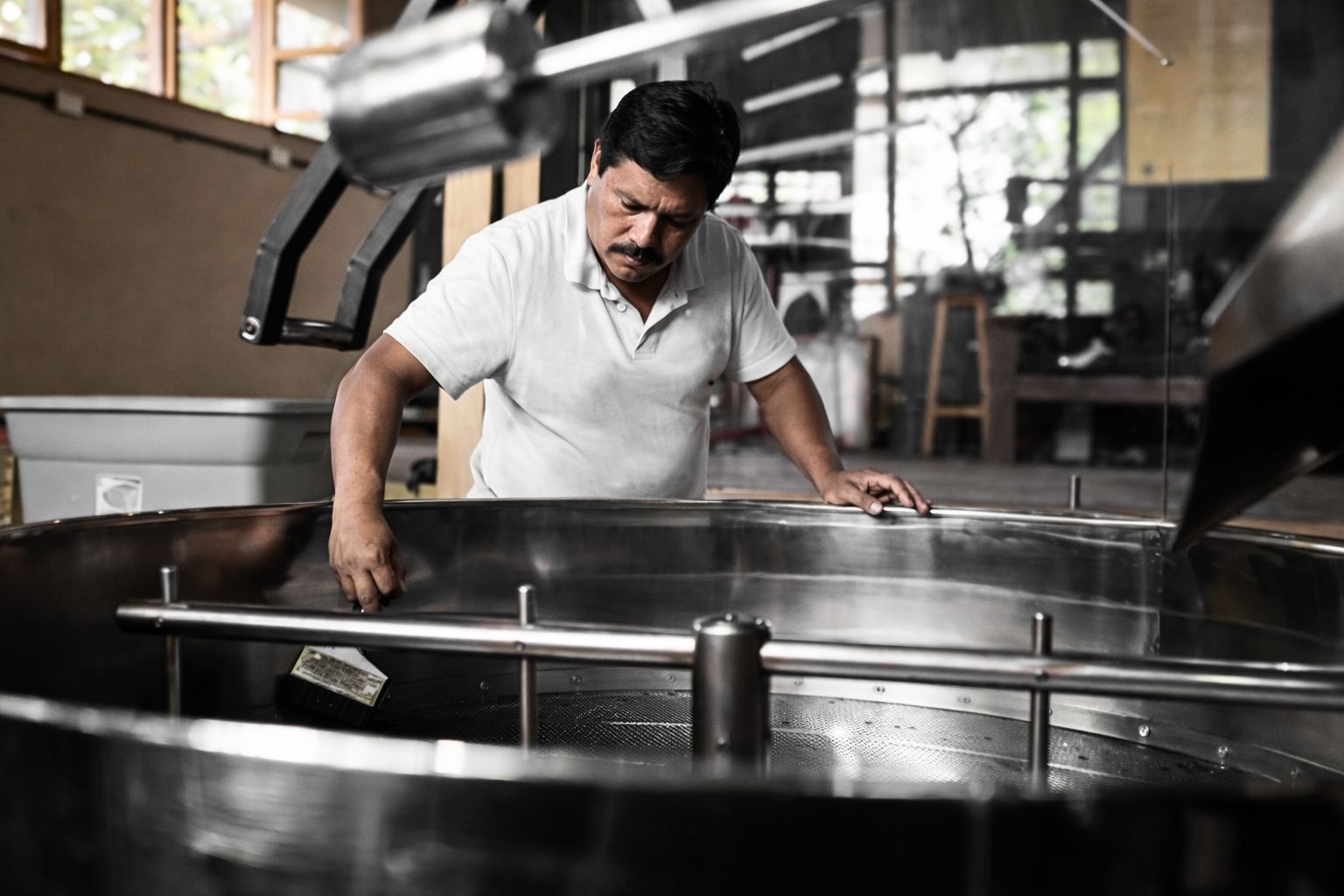
Coffee Roaster Maintenance That Protects Your Business. Most roasters can describe the exact roast profile of their flagship blend down to the second. Ask about charge temperature, gas changes, or airflow adjustments, and the answers come easily. But when the conversation shifts to Coffee Roaster Maintenance – specifically, when the exhaust ductwork was last deep-cleaned – responses often become vague. This gap reveals a quiet misunderstanding about what truly sustains consistency in a roasting operation.
Dialing in a perfect roast curve feels like craftsmanship. It is visible, measurable, and rewarding. Maintenance, by contrast, is repetitive and unglamorous. Yet without systematic cleaning, that craftsmanship cannot be repeated reliably. Over time, neglect changes how the machine behaves, even if the profile on paper never changes.
This article outlines the maintenance framework professional roasteries rely on to protect equipment performance, reduce fire risk, and preserve a stable roasting environment. We will look at what actually builds up inside a roaster, where that buildup causes the most damage, and how maintenance becomes a routine process rather than emergency damage control.
Why Maintenance Matters Beyond Appearances
The value of disciplined roaster maintenance rests on several practical realities that directly affect quality, safety, and long-term costs.
When a roaster operates in a dirty state, coffee quality degrades in measurable ways. Oil buildup and chaff accumulation restrict airflow, which disrupts heat transfer and makes stable roasting increasingly difficult. This often shows up as bitterness, dullness, or overdevelopment – defects that were not present when the machine was clean. Even light roasts lose clarity, masking the origin character roasters work hard to preserve.
What often gets overlooked is that contamination does more than introduce off-flavors. It removes precision. As ductwork becomes coated with residue, the roaster responds more slowly and less predictably to adjustments. Changes to gas or airflow may feel muted or delayed, forcing operators to chase profiles rather than execute them consistently. Over time, this reactive approach becomes normalized, even though the root cause is mechanical, not sensory.
Fire risk remains the most serious consequence of poor maintenance. Chaff and coffee oils are highly combustible, and they accumulate throughout the roasting and exhaust system. Fires can occur even in well-maintained operations, but their severity differs drastically. In a clean system, a fire is more likely to be contained. In a neglected one, the same ignition can spread rapidly through oil-coated ducting, with devastating results.
Restricted airflow also places strain on fan motors. As resistance increases, motors work harder, run hotter, and become more prone to failure. A burned-out motor is not only expensive – it can also become an ignition source itself. Maintenance, in this sense, is not only about removing fuel but also about preserving the components that keep the system stable.
From a financial perspective, maintenance protects the largest capital investment most roasteries make. A few hours of scheduled cleaning each month costs far less than emergency repairs, technician callouts, and lost production time. Over the life of a machine, consistent upkeep extends service life and reduces the likelihood of sudden shutdowns.
There is also resale value to consider. Equipment with documented maintenance records retains significantly more value than machines with unknown histories. Buyers can see the difference immediately, and they price accordingly.
Finally, presentation plays a subtle but real role. In spaces where customers can see the roaster, cleanliness communicates care and professionalism. A neglected machine raises questions – not only about maintenance, but about standards applied elsewhere in the operation.
What Actually Builds Up Inside a Roaster
Effective cleaning starts with understanding what you are removing and why it accumulates where it does.
Chaff is the most visible contaminant. It separates from the bean during roasting and collects rapidly, especially when roasting natural or dry-processed coffees. This material is extremely flammable and tends to accumulate in chaff collectors, exhaust pathways, and cooling tray plenums. Even small roasters can produce surprising volumes of chaff during sustained production.
Coffee oils create a more complex problem. As beans heat, oils vaporize and travel through the exhaust system, condensing on cooler surfaces downstream. Over time, these oils combine with fine particles to form creosote – a dense, sticky residue that coats ductwork. Once established, creosote is difficult to remove and steadily restricts airflow.
The impact of this restriction is not linear. Because airflow capacity depends on the cross-sectional area of ducting, even thin layers of buildup reduce efficiency significantly. A small reduction in diameter translates into a disproportionate loss of airflow. This explains why machines can feel “fine” for months before performance suddenly degrades.
Dust completes the picture. Fine coffee dust settles everywhere: around burners, on fan motors, beneath cooling trays, and inside electrical housings. While less dramatic than chaff or oil, it contributes to combustion risk and insulates components that rely on airflow for cooling.
These contaminants concentrate in predictable areas. Exhaust ducting and chimneys collect the heaviest oil deposits. Chaff collectors fill quickly and lose efficiency if neglected. Cooling trays clog both on the surface and below. Fan blades accumulate residue that reduces airflow and stresses motors. Temperature probes develop coatings that subtly distort readings, introducing error into roast data without obvious warning signs.
Building a Maintenance Schedule That Holds Up Under Pressure
The real divide in maintenance practices is not between clean and dirty machines, but between proactive and reactive systems.
Reactive maintenance happens only when problems become impossible to ignore – when airflow collapses, profiles drift beyond recovery, or a fire scare forces immediate action. In these environments, operators constantly recalibrate to compensate for changing machine conditions, never realizing the baseline itself is shifting.
Proactive maintenance removes that variable. By cleaning on fixed intervals, roasters keep machine behavior consistent. Profiles remain repeatable because the physical system remains stable.
Schedules that actually get followed tend to be simple and time-based. “Every Friday afternoon” is easier to maintain than tracking roast counts or production hours. The goal is to eliminate decision-making so maintenance becomes routine.
Daily tasks focus on high-turnover areas. Chaff buckets should be emptied well before they are full. Cooling trays need thorough brushing to keep perforations clear. Exterior surfaces should be wiped down, and quick checks of gas, electrical, and water connections help catch problems early.
Weekly maintenance goes deeper. This includes vacuuming beneath cooling trays and around burners, blowing out fan motors with compressed air, lubricating joints with appropriate grease, and cleaning temperature probes to maintain accurate readings.
Monthly cleaning requires partial disassembly. Exhaust ducting for both roasting and cooling systems needs attention, as do fan blades and housings. This is also the time to inspect seals, gaskets, and high-temperature tape before small leaks become efficiency losses.
Annual maintenance builds on this work with more comprehensive checks. Some roasteries measure motor load or airflow performance, while others bring in third-party technicians for inspection. The value lies in verifying that the system still operates within its intended parameters.
The Practical Reality of Keeping Maintenance on Track
Patterns emerge when observing roasteries over time. New operations often begin with strict cleaning routines, driven by pride in new equipment and quality goals. As production ramps up, time pressure erodes discipline. Maintenance gets postponed until “things slow down,” which rarely happens.
The warning signs appear gradually. Roast times lengthen. Gas settings creep upward. Operators adjust profiles, assuming refinement is required. In reality, airflow is declining. By the time the problem is obvious, cleaning has become a far larger and more unpleasant job.
Visibility matters. Roasters in customer-facing spaces tend to stay cleaner, simply because neglect is visible. Machines hidden in back rooms often degrade further before intervention. External accountability – whether through visibility, inspections, or documentation – supports consistency.
Tools also matter. Proper scrapers, commercial vacuums, and effective degreasers turn maintenance into manageable work. Inadequate tools make the same task exhausting, encouraging avoidance. The difference in cost is minor compared to the difference in compliance.
Safety shortcuts remain common. Cleaning hot equipment, skipping lockout procedures, or working without respiratory protection introduces unnecessary risk. Dust inhalation, burns, and electrical exposure are preventable hazards, yet complacency persists because incidents are infrequent. Effective maintenance treats safety as mandatory, not optional.
Chemical choice deserves care. Aggressive solvents can damage seals or leave residues. Purpose-made cleaners balance safety and effectiveness, though many roasteries successfully use general degreasers when applied correctly and rinsed thoroughly. The key is consistency and suitability for food-contact environments.
Assigning responsibility also affects outcomes. Single-point ownership creates accountability but risks gaps when staff are absent. Cross-training spreads knowledge but requires clear standards to maintain consistency. The most resilient systems balance both approaches.
The Economics of Prevention Versus Crisis
When viewed financially, maintenance discipline becomes difficult to argue against. A few hours of monthly cleaning costs little compared to emergency repairs. Replacing a failed motor, paying technician fees, and losing production time can easily exceed a year’s worth of preventative work.
Fire damage represents the extreme end of the spectrum. Even minor incidents lead to repairs, insurance complications, and downtime. Severe fires can end a business entirely. Accumulated chaff and oils make that risk far more severe.
Quality loss carries quieter but persistent costs. Coffee that misses standards gets discounted, blended down, or discarded. Over time, these losses add up, eroding margins in ways that are rarely attributed back to maintenance, even though the connection is clear.
Frequently Asked Questions
How often should exhaust ductwork be fully cleaned?
For most commercial roasteries, monthly deep cleaning is appropriate. High-volume operations may need shorter intervals, while lower-volume roasters can sometimes extend slightly. Changes in airflow or roast behavior should always override the calendar.
Does roasting washed coffee reduce maintenance needs?
Washed coffees produce less chaff, which helps with surface-level cleaning. However, oil accumulation in exhaust systems occurs regardless of processing method. Core maintenance requirements remain largely unchanged.
Are maintenance records important for insurance?
Many insurers expect documented cleaning routines, particularly for chaff removal and exhaust maintenance. In the event of a claim, records help demonstrate that reasonable precautions were taken.
Is professional cleaning necessary?
Most roasteries handle routine cleaning internally and use professionals for annual inspections or severe buildup. A hybrid approach balances cost and thoroughness for many operations.
How can I tell if buildup is affecting roast performance?
Gradual increases in roast time, higher gas settings, or delayed first crack under identical conditions often indicate airflow restriction. A full cleaning followed by comparison usually makes the impact immediately
Read other articles
-
Coffee Roastery Design : Blueprint Layout
-
Cara Memulai Memanggang Kopi: Panduan Praktis untuk Pemula
-
Roast Inconsistency Between Batches: 5 Practical Solutions

Wong young low is a coffee industry journalist from China who has been writing since 2007, focusing on specialty coffee, roasting, and market trends. He writes based on field experience and supply chain observations – helping roasters and coffee businesses make more accurate and realistic decisions.