Coffee Roastery Design : Blueprint Layout
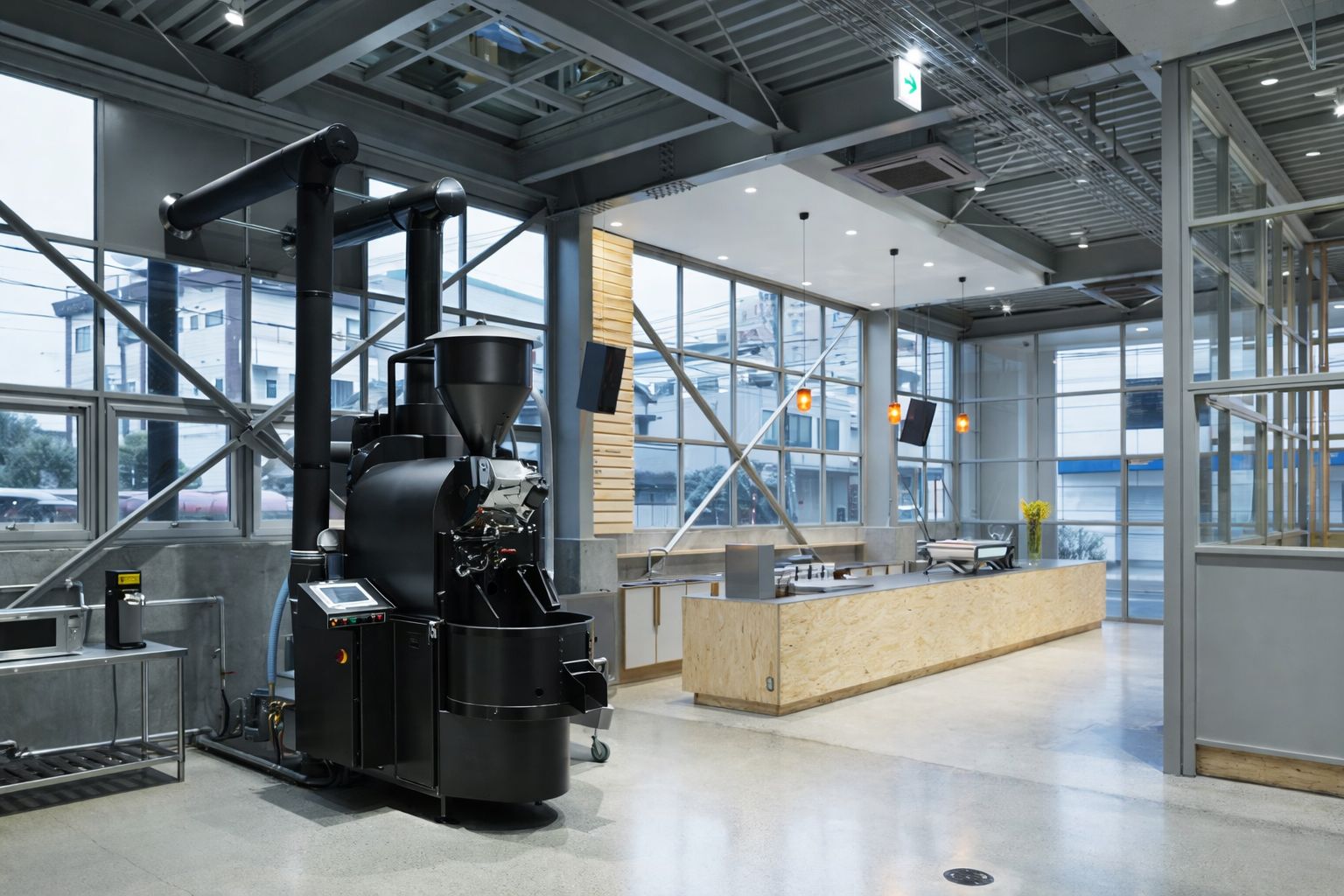
Coffee Roastery Design : Blueprint Layout, The specialty coffee market is expanding fast – especially in busy city centers, where commuters, tourists, and local residents expect quality as a baseline. That urban momentum has created real opportunity for roasters who can keep up with demand.
Most operators understand the obvious essentials: source excellent green coffee, invest in reliable equipment, and build a strong brand. But there’s a third pillar that still doesn’t get the attention it deserves – the physical design of the roastery itself.
Too often, layout is treated like a technical afterthought. That’s a mistake. Facility design isn’t just “operations.” It’s the backbone of the business. A poorly planned space can create workflow choke points, introduce safety risks, and force expensive redesigns once production is already underway. On the other hand, a well-designed roastery supports efficiency, compliance, and growth – making every step, from receiving greens to shipping finished coffee, feel logical and friction-free.
This guide breaks down the fundamentals of strategic roastery design and offers a practical blueprint for building an operation that can last. Whether you’re planning a large industrial facility or a tight urban micro-roastery, smart workflow and space planning are what turn a roasting passion into a business that actually scales.
1. The New Roasting Landscape: Why Facility Design Is Your Competitive Edge
To understand why roastery design has become a serious competitive advantage, you first need to look at what’s happening in today’s specialty coffee market. The shift toward dense urban locations has changed everything. It’s created huge demand – but also serious constraints. And those constraints reward operators who design intelligently from day one.
The trend is global and hard to ignore. Major cities are now coffee culture hotspots, packed with cafés and roasters. Shanghai has more than 9,110 coffee shops. Tokyo has over 3,826. London exceeds 3,700. New York City has 1,571. In London alone, specialty coffee shops have reportedly increased by around 700% over the past decade. That concentration cuts both ways.
Urban locations offer major upsides: access to customers, constant foot traffic, tourism, and often stronger brand visibility. Celsius Roasters in Lyon, France, has built part of its model around that proximity. Co-founder Nicolas Le Fourn explains: “We have a very international clientele, which is only possible when access is easy. For our business clients, this geographical proximity is an undeniable advantage, allowing us to deliver by bike and build close relationships.”
But the trade-offs are real – especially cost. In central London, even modest commercial space can cost £85 to £90 per square foot. At that price point, wasting space isn’t merely inefficient – it’s existential.
That’s why facility design has shifted from a “nice operational detail” into a survival requirement. Whether you’re building a large plant or a compact city setup, workflow, safety, and space discipline are no longer secondary concerns. They’re the strategy.
You may also like our article on How to Roast Coffee: The Truth About Optimal Batch Size
2. Designing for Flow and the Future: Fundamentals of a Complete Roasting Facility
A common (and expensive) mistake when launching a roastery is designing around equipment purchases rather than the overall process. Machines can be excellent on paper, but if the layout creates bottlenecks – or forces staff into awkward, unsafe routines – performance drops fast. The smarter approach is to design around flow: map the coffee’s journey from green intake to outbound shipping.
A functional roasting facility needs to support every essential production stage in sequence. According to Gian Pietro Balboni, technical process engineer at IMF Roasters, the process should move through a clear progression:
-
Receiving, Cleaning, and Sorting: The first intake point for green coffee
-
Green Coffee Storage: Dedicated, climate-controlled space for quality preservation
-
Roasting: The main production area, built for safety and operator movement
-
Cooling, Blending, and/or Grinding: Post-roast processing before stabilization
-
Roasted & Ground Coffee Storage: Controlled holding areas or silos for freshness
-
Packaging and Shipping: Final preparation and dispatch
To make that workflow practical – not theoretical – Gian Pietro stresses the importance of a plant flow diagram. It’s a visual map of how product and people move through the space, and where equipment sits inside that system. Used properly, it highlights where each process happens, what machines are involved, and what physical constraints could derail efficiency.
Just as important: design for expansion. If the layout only works at your current production volume, it will eventually fail you. Building in flexibility – especially modular space planning – reduces the chance you’ll have to tear everything apart later. As Gian Pietro explains: “By anticipating future expansions right from the layout stage, we minimise the need for expensive reconfigurations later on.”
These principles apply everywhere, but they get tested hardest in city environments – where space is limited, regulations are tighter, and the margin for inefficiency is basically zero.
3. The Urban Challenge: Mastering the Compact Roastery
In dense urban roasteries, the basic rules of workflow and efficiency become non-negotiable. Every square meter costs money, and compliance expectations tend to be stricter. Add neighborhood sensitivity to noise and smells, and the operating environment becomes far more complex than most first-time roasters expect.
Celsius Roasters in Lyon is a useful example of how these constraints show up in real life:
-
Space limitations: There’s simply no room for poor planning. Co-founder Lucas Hubinon puts it bluntly: “In our premises, every square metre counts.” That reality shaped their machinery choice. The compact footprint of their IMF RM15 roaster – especially its width and height – gave them a “real advantage,” allowing chimneys and ducting to be installed exactly where needed without wasting space.
-
Regulatory and neighborhood hurdles: Urban roasters deal with permits, inspections, and local complaints more often than rural operators. Lucas notes that managing concerns around noise and odor can become part of the job. Meanwhile, Nicolas highlights the daily logistical headache: deliveries on narrow streets sometimes require “closing the street,” plus a fair amount of diplomacy.
-
Maintaining coffee quality: Small spaces make storage conditions harder to control, but the risks are real. Lucas stresses the need for a stable storage zone: “that isn’t subject to variations in temperature and humidity; otherwise, the coffee will age prematurely, and roasting will be inconsistent.”
Their experience shows what’s possible when constraints are treated like design inputs, not obstacles. Working with specialists at IMF Roasters, they built a workflow that fit the space rather than fighting it.
Once those constraints are clear, the next step is technical: the systems that keep a roastery compliant, consistent, and sustainable – especially in tight neighborhoods.
4. Essential Technical Systems for the Modern Roastery
Even the best layout won’t matter if the technical systems are weak. A roastery’s long-term viability depends on proper integration of airflow, emissions handling, noise control, energy management, and storage stability. In cities, where complaints and inspections can happen quickly, those systems become even more critical.
Airflow, Emissions, and Odor Control
Ventilation isn’t optional. It affects roasting performance, indoor air quality, and neighborhood relations all at once. Systems must handle smoke and chaff effectively while keeping odor under control. In compact facilities, integrated systems have a clear advantage. Nicolas Le Fourn explains: “IMF Roasters offers integrated afterburners, aimed at reducing the environmental impact of smoke and minimising nuisance to the neighbourhood.” For small spaces, that kind of integration matters – because it addresses emissions without eating valuable floor area.
To add context for operators designing systems, it helps to understand how afterburners work in emission treatment and odor control – see this overview of afterburners for coffee roasting emissions
Noise Reduction
In a city environment, noise mitigation is risk management. Roasters, grinders, and ventilation systems can produce consistent background noise that neighbors notice quickly. Choosing machinery engineered for quieter operation helps prevent friction that can escalate into complaints – or worse, regulatory scrutiny.
Energy Efficiency
Energy-efficient equipment has two direct benefits. First, it reduces heat stress inside compact production areas (which matters more than people think). Second, it lowers operating costs. Nicolas notes their satisfaction with the IMF RM15: “We’re happy with the IMF RM15’s gas consumption. When compared to the amount of coffee roasted per kilo, it is an extremely efficient machine.”
Optimal Storage Conditions
Green coffee quality depends heavily on stable storage. Ideal ranges typically sit around 60% to 65% humidity, with temperatures between 15°C and 25°C (59°F to 77°F). To maintain that consistency, roasters often need proper ventilation, sealed storage zones, and systems like green coffee silos that protect beans from moisture and oxygen exposure.
These systems don’t run themselves. They’re ultimately supported by the machinery choices that power the entire operation – which leads to the final piece of the design puzzle: technology.
5. The Technology Advantage: Smart Equipment and Automation
In today’s roastery environment, modern technology isn’t a luxury purchase – it’s leverage. This is especially true in space-constrained operations, where output and consistency must be achieved without expanding the footprint. The right equipment makes those limitations workable. Sometimes it even turns them into an advantage.
Modern roasters offer several benefits that directly address urban constraints:
-
High production in a compact footprint: Smaller machines can now deliver serious throughput due to improved engineering. Nicolas Le Fourn highlights this: “IMF technology allows for very high production relative to the compact size. Roasting times are approximately 30% shorter for a batch that is 25% larger compared to an equivalent traditional drum roaster.”
-
Precision and waste reduction: When you roast expensive coffees, waste isn’t just annoying – it’s costly. Lucas Hubinon praises the reliability of their setup: “The convection is very forgiving, which means we waste very little coffee. So, we maintain our passion for precision, but without breaking a sweat when we load the roaster with an expensive Gesha.”
-
Automation that protects focus: Smart automation doesn’t replace skill – it protects it. Lucas explains the value clearly: “Our roaster allows us to focus solely on batch improvement. In the semi-automatic mode, you can launch the programme and make minor adjustments each time to push the precision to the highest level.”
-
Aesthetic and functional integration: In city centers, roasteries often double as cafés or retail spaces. That changes the role of the roaster itself – it becomes part of the customer experience. With the right design, a production machine can also strengthen brand identity rather than being hidden away.
Ultimately, technology is what makes a thoughtfully designed roastery not only workable, but competitive in a crowded market.
Conclusion
Opening a coffee roastery is complex. There are countless decisions – green sourcing, equipment, staffing, compliance, branding. But one of the most damaging early mistakes is designing the facility around equipment alone, without stepping back to plan layout and workflow as a complete system. That oversight can quietly undermine efficiency and safety from the very first day.
The takeaway is straightforward: roastery design isn’t decoration. It’s infrastructure. A well-planned facility supports operational excellence, regulatory safety, and long-term growth – whether you’re building an industrial plant with dedicated zones or a compact urban shop where every square meter has to earn its place.
When roasters prioritize flow, space discipline, and future flexibility, they create a facility that works now – and can evolve later without chaos.
At its best, a roastery becomes more than a production site. It becomes a strategic asset: one that strengthens the brand, improves customer relationships, and builds a competitive advantage that doesn’t disappear when trends change.
Read also :
-
Coffee Roasting Equipment for Small Businesses
-
How to Start Roasting Coffee: A Practical Guide for Beginners
-
Batch-to-Batch Roasting Inconsistency: Causes & Solutions
Wong young low is a coffee industry journalist from China who has been writing since 2007, focusing on specialty coffee, roasting, and market trends. He writes based on field experience and supply chain observations – helping roasters and coffee businesses make more accurate and realistic decisions.