Coffee Roasting Process: A Step-by-Step Guide From Green Beans
Every delicious cup of coffee is the result of a long process that begins long before brewing.
At the coffee roasting factory, raw green coffee beans are roasted with precision to produce the best aroma and flavor.
However, most coffee lovers never see the roasting process that goes on behind the scenes.
Understanding this stage helps explain the differences in the flavor characteristics of each coffee and the important role that roasting plays in determining the final quality of the coffee.
This article will guide you through the coffee roasting process from start to finish, while showing you how professional roasteries shape flavor and maintain consistent quality.
The Role of a Coffee Roasting Factory
Coffee roasting factories are at the center of the coffee supply chain.
Farmers produce green coffee beans, while cafes and consumers brew them into drinks.
Between the two, roasting factories play an important role in determining how the coffee ultimately tastes.
In addition, the roasting process unlocks flavors that are not present in raw coffee beans.
Green coffee beans contain acids, sugars, and various compounds that only develop into aromas and flavors when exposed to heat.
As a result, coffee roasting plants determine:
- Flavor balance
- Aroma intensity
- Consistency between batches
Step 1: Selection of Green Coffee Beans
Before the roasting process begins, professional roasteries focus on selecting high-quality green coffee beans.
Selection and Evaluation
Roasteries obtain coffee beans from importers or directly from producers.
At this stage, roasters evaluate several key factors, including:
- Origin and altitude
- Variety and processing method
- Freshness of harvest
- Traceability and sustainability
Each of these factors affects how the coffee beans react during the roasting process.
Cupping and Quality Control
Next, the roastery conducts cupping, which is a standard tasting method in the coffee industry.
Small samples of coffee beans are roasted, then evaluated based on aroma, acidity level, sweetness, and potential defects.
Based on the cupping results, the roaster determines:
- Whether the coffee meets quality standards
- The most suitable roasting style
- The flavor characteristics to be highlighted
Step 2: Coffee Roasting Process
Roasting is a controlled chemical transformation.
At this stage, heat changes the internal structure of the coffee beans and triggers the development of flavor and aroma.
From Green to Brown
As the coffee beans begin to heat up, the moisture inside them evaporates and the sugars undergo caramelization.
Over time, the coffee beans reach the first crack, which is the moment when internal pressure causes the beans to expand and make a distinctive sound.
In some cases, roasting continues until the second crack, depending on the desired roast level and flavor profile.
During this process, the roaster carefully monitors several key variables, including:
- Temperature
- Time
- Airflow
- Rate of rise
Each of these variables directly affects the development and balance of the coffee’s flavor.
Step 3: Roast Profile and Development
A roast profile is a heat curve that is planned and applied during the roasting process.
Professional roasters design different profiles for each type of coffee.
The development time of the roast, especially after the first crack stage, plays an important role in shaping the flavor balance.
Even a difference of just a few seconds can change the acidity, sweetness, and bitterness of the coffee.
Therefore, consistency is a top priority in professional coffee roasting.
Step 4: The Technology Behind Modern Roasteries
Modern coffee roasteries combine traditional experience with advanced technology.
This combination helps produce coffee with consistent, high-quality flavor.
Roasting Equipment
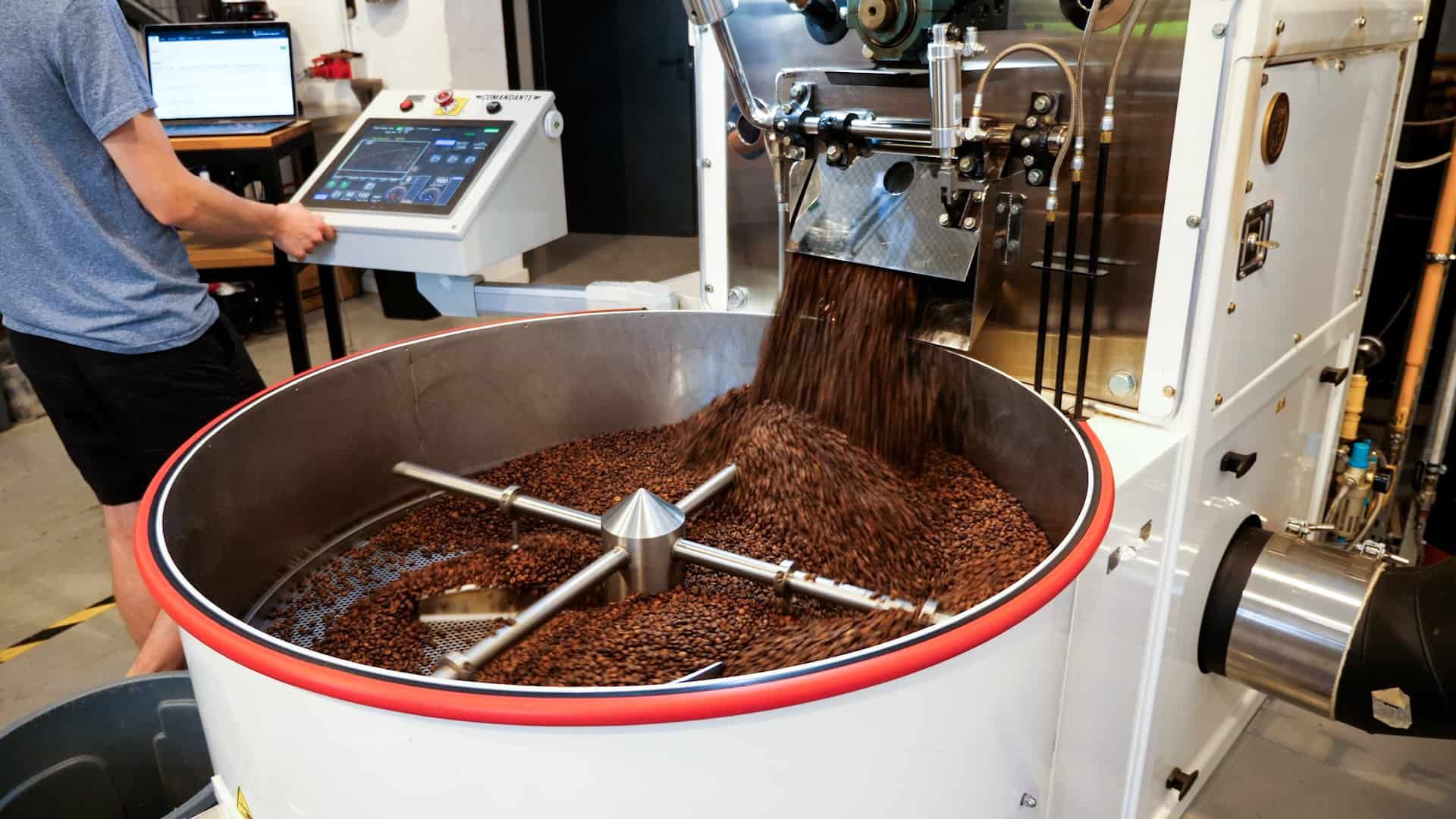
Most roasteries use two main types of machines: drum roasters and hot air roasters.
Although they have different designs and modes of operation, both have the same goal:
to apply heat evenly and in a controlled manner so that the coffee beans roast consistently.
Data and Software
Today, many roasteries monitor the roasting process using digital systems.
Data such as temperature, time, and air flow are recorded and analyzed to ensure stable results.
With the help of software, roasters can:
- Repeat proven roasting profiles
- Reduce flavor variations between batches
- Maintain consistent quality over time
The Human Role Remains Important
Despite advances in technology and automation, the human role remains irreplaceable.
Machines serve as tools, but it is the roaster who assesses the aroma, color, and development of the coffee beans, and makes the final decisions during the roasting process.
Step 5: Quality Control After Roasting
Quality control does not stop after the roasting process is complete.
This stage is actually very important to ensure that the coffee produced remains stable and meets standards.
Gas Release and Rest Period
Freshly roasted coffee still releases carbon dioxide (degassing).
Therefore, roasting factories allow the coffee beans to rest for a certain period before packaging or brewing, so that the coffee flavor can develop optimally.
Post-Roasting Tasting
Roasting factories routinely conduct tasting (cupping) tests on roasted batches.
If any differences in flavor from the expected standard are found, the roaster will adjust the roasting profile for the next batch to maintain consistency.
This step is very important, especially for coffee supplies to cafes and wholesale customers.
Why the Coffee Roasting Process is Important
For consumers, the decision to roast coffee greatly affects the coffee drinking experience, including:
- Clarity and flavor character
- Consistency of quality over time
- Coffee performance in various brewing methods
Meanwhile, for the coffee industry, the roasting process also affects the price, sustainability, and demand for high-quality coffee.
Additionally, understanding the coffee roasting process helps dispel common myths.
For example, dark-roasted coffee is not always stronger, and light roasting does not automatically mean the coffee is under-roasted.
The Future of Coffee Roasteries
As coffee culture evolves, consumer expectations continue to rise.
Today, transparency, sustainability, and efficiency are considered just as important as taste.
In response, many roasteries are investing in more energy-efficient equipment, building closer relationships with producers, and providing consumers with clearer information.
These changes reflect a broader shift toward accountability and more responsible practices across the coffee industry.
Conclusion
The coffee roasting process transforms raw agricultural materials into a complex and delicious beverage.
From the selection of green coffee beans to final quality control, every decision made plays an important role in shaping the resulting coffee flavor.
Ultimately, coffee roasting is the stage where the coffee’s true character is fully formed.
By understanding this process, both consumers and professionals can appreciate coffee more deeply, not just as a brewed beverage, but as the product of a meticulous and skillful series of processes.