Designing a Roastery That Works as a Café: Key Trade-Offs
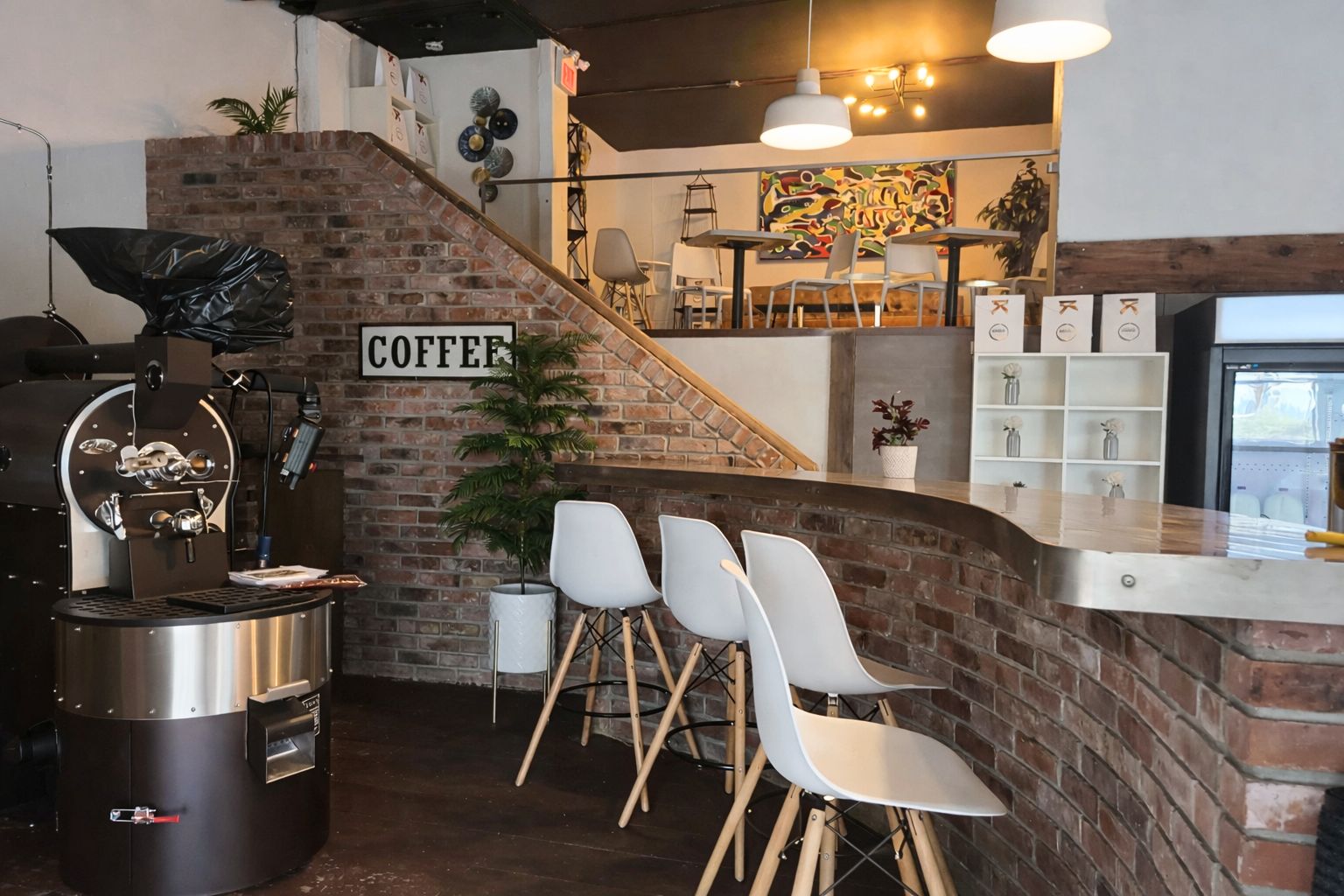
For many coffee businesses, combining a roastery and a café under one roof looks like a logical step. The model promises efficiency, brand visibility, direct feedback from customers, and better margin capture across the value chain. In practice, it is one of the more complex operational designs a coffee company can attempt. A roastery and a café are fundamentally different environments, with different rhythms, constraints, and risk profiles. Designing a space that serves both well requires careful trade-offs long before any equipment is installed.
This is not a question of aesthetics or customer experience alone. The way a dual-purpose facility is designed will shape production efficiency, staff performance, quality consistency, regulatory exposure, and long-term scalability. For operators considering this model, the design phase is where most future problems are either prevented or locked in.
Understanding the Core Tension: Production Versus Hospitality
At the heart of the challenge is a basic conflict. Roasteries are optimized for control, predictability, and throughput. Cafés are optimized for flow, accessibility, and comfort. When these priorities collide, one side usually pays the price.
Production roasting demands stable environmental conditions, clear workflow separation, and minimal interruption. Café service introduces noise, traffic, variable staffing, and peak-time pressure. If these forces are not deliberately managed in the layout, the result is often compromised roasting schedules, distracted operators, or degraded customer experience.
Designing a roastery-café hybrid starts with acknowledging that the space must protect production first. Café visibility can add value, but not at the expense of roast consistency or safety.
Zoning: Separating Functions Without Isolating Them
The most successful hybrid facilities are built around clear zoning. This does not necessarily mean physical walls everywhere, but it does mean defined operational territories.
Roasting, green storage, and production logistics should be treated as industrial space, even when visible to the public. That includes adequate clearance, controlled access, and noise management. Café service areas, by contrast, must support customer circulation, bar workflow, and seating comfort without interfering with production movement.
Problems arise when zoning is blurred for the sake of openness. Shared walkways, mixed-use storage, or overlapping staff responsibilities often seem efficient on paper but create friction under real operating conditions. Forklifts, green coffee pallets, and customer queues do not coexist gracefully.
Visual transparency can still be achieved through glazing, raised platforms, or guided sightlines. What matters is that access and control remain intact.
Airflow, Heat, and Noise Are Design Constraints, Not Details
Roasting equipment introduces heat, smoke, and mechanical noise that cafés are not designed to absorb. Retrofitting ventilation after the fact is expensive and often inadequate. From the outset, exhaust routing, make-up air, and sound attenuation must be engineered with both functions in mind.
Poor airflow design creates cascading issues. Excess heat affects café comfort and staff endurance. Inconsistent air pressure can destabilize roasting conditions. Odor complaints can trigger regulatory scrutiny. These are not edge cases; they are common failure points in mixed-use facilities.
Similarly, noise from destoners, loaders, and cooling trays may be tolerable in a production setting but disruptive in a hospitality environment. Design choices around equipment placement, insulation, and operating schedules must reflect this reality.
Workflow Design Shapes Labor Efficiency
In a combined facility, labor efficiency is often overestimated. The assumption that staff can fluidly move between roasting, packaging, and café service ignores the cognitive and physical demands of each role.
Design should support specialization, even in small teams. Clear pathways for green intake, roasted coffee movement, and packaging reduce cross-traffic and errors. Café bar flow should not intersect with production logistics during peak service times.
When workflows collide, labor costs rise through inefficiency rather than headcount. Staff spend more time navigating space than performing value-adding work. Over time, this erodes margins and increases turnover.
Designing for clean handoffs between functions is more important than designing for multitasking.
Green Coffee Storage and Regulatory Reality
Green coffee storage is often underestimated in café-forward designs. Bags take space, require climate control, and introduce pest management considerations. Storing green coffee near food service areas increases regulatory complexity and inspection risk.
Local regulations vary, but many jurisdictions treat roasting and food service differently. Fire codes, health regulations, and zoning requirements may impose constraints that only become visible once operations begin. Designing without early regulatory consultation is a common and costly mistake.
Separating green storage from customer-facing areas, even if inconvenient, often reduces long-term compliance risk. The same applies to waste handling, chaff disposal, and equipment maintenance zones.
Quality Control Needs Its Own Space
Quality control is often the first casualty of space constraints. In hybrid facilities, cupping tables are squeezed into corners or repurposed as meeting areas. This signals, intentionally or not, that QC is secondary.
In reality, the complexity of a dual operation increases the need for quality oversight. Production variability, café feedback, and rapid product turnover all demand structured evaluation.
Designating a quiet, controlled area for cupping and sample roasting supports better decision-making. It also reinforces internally that quality is not just a café-facing concept but an operational discipline.
Financial Trade-Offs and Capital Allocation
From a financial perspective, hybrid facilities concentrate risk. Capital expenditure is higher, and fixed costs are less flexible. A design that prioritizes visual impact over operational resilience may perform well initially but struggle under margin pressure.
Space allocated to seating is space not available for future production expansion. Oversized cafés can constrain roasting growth, forcing later relocation or duplication of facilities. Conversely, undersized cafés may fail to justify their operational complexity.
Design decisions should be stress-tested against realistic growth scenarios. What happens if production doubles? If café traffic declines? If wholesale demand shifts? Flexibility has value, but only if it is intentionally built in.
Learning From Common Failure Modes
Most design failures are not dramatic. They show up as constant small compromises: roasting done at suboptimal times to avoid customers, packaging delayed due to café crowds, staff stretched thin across incompatible tasks.
These issues are rarely solved by redesign alone. They are consequences of initial assumptions about how space, labor, and demand would interact.
The operators who fare best are those who treat the roastery-café model as a production-first system with a customer interface, not the other way around.
A Practical Takeaway
Designing a roastery that doubles as a café is less about creating a showcase and more about managing competing constraints. The success of the model depends on whether production integrity, labor efficiency, and regulatory realities are protected from the outset.
For decision-makers, the critical step is to design for how the business will actually operate on its hardest days, not how it will look on its best. Reflecting honestly on those conditions before committing to a layout is often the difference between a resilient hybrid operation and an expensive compromise.
Read other articles :
- How to Start Roasting Coffee: A Practical Guide for Beginners
- Roastery Website SEO: 5 Proven Ways to Increase Coffee Orders
- How to Double Roastery Revenue Without New Equipment
Follow us on :