Drive-Thru Coffee Revolution | America’s Coffee Culture
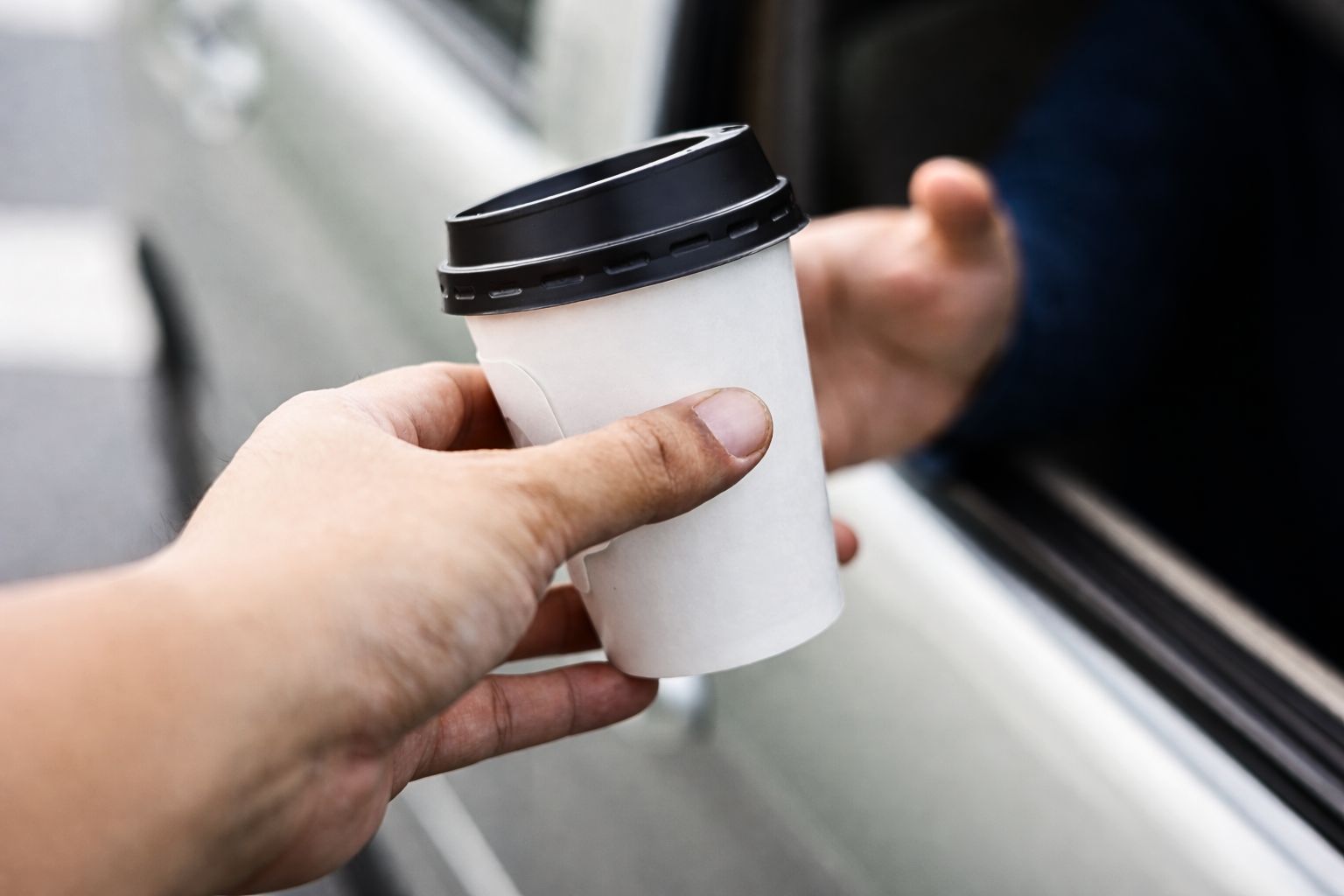
- 59% of all US coffee purchases now occur at drive-thrus, up from 55% the previous year – a record high
- Fast-growing chains like 7 Brew (163% sales growth), Dutch Bros (1,000+ outlets), and Black Rock Coffee Bar are leading the transformation
- Economic advantages include lower real estate costs, higher throughput per square foot, and 90-second service times
- Cultural shift toward solitude: Americans having dinner with friends down 30% in two decades, solo dining up 29% in two years
- Starbucks under pressure: announced 90% of new US locations will feature drive-thrus, stock down 9% while Dutch Bros up 64%
The Seismic Shift in American Coffee Consumption
American coffee culture is experiencing a fundamental transformation. The communal atmosphere of traditional cafés is giving way to the private sanctuary of the automobile – and the numbers prove this isn’t a gradual change.
According to the National Coffee Association, a record 59% of all coffee purchases now occur at drive-thrus, jumping from 55% just one year earlier. This revolution is being led by specialized, vehicle-focused chains including Dutch Bros, 7 Brew, Biggby Coffee, Scooter’s Coffee, and Black Rock Coffee Bar, all expanding at unprecedented rates.
This transformation isn’t a fleeting trend. It’s fueled by a powerful convergence of pandemic-accelerated behaviors, compelling economic incentives, and a broader societal pivot toward efficiency and mobility.
Drive-Thru Chains Are Executing a Market Takeover
Drive-thru-only coffee chains aren’t simply growing – they’re redrawing the industry map at a scale and velocity that’s forcing strategic realignment across the sector. Their business model is engineered for maximum throughput and rapid, scalable expansion.
Explosive Growth Metrics
The expansion numbers tell a remarkable story:
7 Brew has become the fastest-growing chain in the U.S. over the last three years. Sales surged 163% last year alone. Following a major investment from Blackstone in 2024, the company more than doubled its footprint to approximately 460 locations.
Dutch Bros evolved from a single pushcart in 1992 into a powerhouse with over 1,000 outlets. In the second quarter alone, the company opened 31 new shops, demonstrating continued aggressive expansion.
Franchise Investment validates the model’s appeal. Franchise Equity Partners recently acquired 7 Brew’s second-largest franchisee and immediately announced plans to add over 200 more stores to its portfolio.
Ruthlessly Efficient Operations
The core operational model of these chains is built entirely around vehicle-based service. Their physical architecture is deliberately stripped of seating, with some locations as small as 350 square feet. This minimalist approach serves one purpose: speed.
Black Rock Coffee aims to deliver a customer’s complete order within just 90 seconds. This rapid physical expansion is underpinned by a highly attractive economic model that’s capturing investor attention.
The Economic Engine Driving Investment
The drive-thru revolution is fundamentally an economic phenomenon. Its dominance is rooted in a hyper-efficient business model that maximizes revenue per square foot while minimizing capital outlay – an irresistible formula for investors seeking rapid, repeatable scalability.
Lean Operations, Maximum Profitability
The drive-thru economic model delivers key advantages:
- Significantly lower costs from small real estate footprints
- Minimal equipment needs
- Lean staffing models
- Reduced construction expenses compared to traditional, full-service cafés
This cost structure pairs with superior operational efficiency. As Partha Sarathi Mishra, Ph.D., of the University of Texas at El Paso explains, drive-thrus achieve “higher throughput per square foot.” A typical in-car order takes just five to eight minutes, while an in-café visit lasts much longer, requiring more space and staff to service the same number of customers.
Strong Unit Economics
The resulting unit economics are exceptionally strong. 7 Brew now generates over $500 million in system sales from its highly efficient model.
This compelling financial formula has made these chains highly attractive to public markets. Black Rock Coffee Bar’s recent public offering raised $294.1 million, becoming the first restaurant brand to go public in two years – a powerful testament to investor confidence and clear market appetite for this high-growth format.
While economics explain investor appetite, a profound shift in American consumer culture provides the fuel.
Cultural Transformation: The Car as the New Café
The phenomenal success of drive-thru coffee isn’t merely an economic story – it’s deeply cultural. The trend intertwines with profound societal shifts toward solitude, convenience, and the redefinition of personal vehicles as primary spaces for consumption and retreat.
The Rise of Solitude in American Life
According to The Atlantic, the percentage of adults having dinner or drinks with friends has fallen by over 30% in the last two decades. Concurrently, solo dining has increased by 29% in just the past two years, with many citing a desire for “me time” as the primary reason.
The car has become a central refuge in this trend. A New York Post survey revealed that millennials often use driving time for self-improvement, such as listening to podcasts, while Gen Z uses the vehicle to decompress and even nap. This transformation of the car into a private sanctuary provides the perfect environment for “dashboard dining.”
A Private, Controlled Space for Consumption
The car has effectively transformed into what Professor Mishra calls a “‘private, controlled space for consumption: a new kind of personal café.'” Data from Technomic validates this, showing a marked increase from 2022 to 2025 in consumers eating limited-service meals inside their vehicles.
Social media amplifies and normalizes this behavior. Influencers create Mukbang ASMR videos of themselves sipping oversized lattes in their cars for billions of viewers.
Stimulation Without Obligation
Drive-thru chains have expertly catered to this culture. A 7 Brew manager in Connecticut notes, “We create an experience.” With pop music playing and baristas taking orders car-side, the model delivers “stimulation without obligation” – a fun, fleeting social interaction contained entirely within the customer’s car.
This offers the illusion of connection without the perceived burden of community, perfectly matching a society where off-premises consumption now dominates the restaurant industry.
Starbucks Faces an Existential Reckoning
The rapid ascent of the drive-thru model creates profound challenges for traditional café-centric businesses, forcing an existential crisis for industry giant Starbucks. The new market reality directly attacks economic inefficiencies inherent in its foundational business strategy.
The “Third Space” Becomes a Vulnerability
For decades, Starbucks built its global empire on the concept of the “third space” – a welcoming gathering place between home and work. That success, which encouraged longer customer dwell times, created a vulnerability in throughput that drive-thru models now ruthlessly exploit.
While the company continues promoting community value, it’s simultaneously shuttering hundreds of traditional café-style stores, ceding critical ground to more agile rivals.
Measurable Market Share Erosion
The competitive threat isn’t abstract – it’s measured in market share erosion and reflected in investor sentiment. Analysts at Placer.ai estimate that the behavioral shift toward drive-thrus is equivalent to a quarter of Starbucks’ customers and half of its revenue migrating to a different service format.
Stock performance reflects this market pressure. Over the past year, Dutch Bros’ stock jumped 64%, while Starbucks’ fell over 9%.
Strategic Pivot to Drive-Thru
In a decisive strategic pivot in May 2022, Starbucks announced that 90% of all its new U.S. locations would feature a drive-thru – a clear acknowledgment that the market has fundamentally changed.
This pressure isn’t uniquely American. In the UK, Costa Coffee faces similar struggles with its café-first model, signaling a broader challenge for traditional formats in developed, car-centric economies.
The Future of Coffee Culture
The dominance of the drive-thru model raises critical long-term questions about the future of coffee culture, product quality, and the ultimate trajectory of the global market. As speed and efficiency become primary value propositions, the industry faces a potential schism between coffee as a craft beverage and coffee as a high-speed commodity.
Risk of Product Dilution
One primary concern with a model oriented entirely around speed is the risk of product dilution. Critics fear that the focus on rapid service will reduce coffee to mere “sugar-laden fuel,” eroding cultural capital built over decades.
This has led to warnings of a “dilution effect,” where younger consumers raised on syrup-heavy iced lattes may lose appreciation for the nuanced taste of coffee itself. Starbucks’ continued emphasis on “connection” and a “crafted experience” can be seen as a strategic effort to preserve the idea of coffee as something more than a simple caffeine delivery mechanism.
Coexistence of Both Models
Looking ahead, experts believe the market will likely accommodate both models. Professor Mishra anticipates that drive-thru and traditional café formats will coexist, with specific chains specializing in one or the other. He suggests evolving work patterns will shape this landscape, with office commuters favoring drive-thru speed and remote workers seeking the alternative environment of a café.
Global Expansion Uncertainty
While the trajectory seems clear in the U.S., the model’s global hold is less certain. Drive-thrus have not taken hold with the same intensity in Europe, where café culture remains a cherished public institution. However, the trend is growing, evidenced by Pret a Manger’s recent launch of its first-ever drive-thru in the UK.
The American coffee economy has been irrevocably altered, setting a powerful precedent for the rest of the world.
Conclusion
The drive-thru has definitively become the dominant model in America’s coffee economy, propelled by superior unit economics and a deep cultural shift toward convenience, mobility, and solitude. This transformation has placed immense pressure on incumbents like Starbucks, forcing them to fundamentally rethink growth strategies.
The industry’s future will likely be bifurcated, with a new balance of power established. Hyper-efficient, convenience-driven models will set the baseline for growth, forcing legacy brands to either compete directly on efficiency or double down on a premium, experiential niche.
Ultimately, the global future of coffee will be decided by a simple but profound question: how much of life do people around the world wish to spend in their cars?
Read other articles :
-
Designing a Roastery That Works as a Café: Key Trade-Offs
-
Choosing a Coffee Roasting Machine in 2026
-
The Marketing Strategy Most Cafés Get Wrong

Wong young low is a coffee industry journalist from China who has been writing since 2007, focusing on specialty coffee, roasting, and market trends. He writes based on field experience and supply chain observations – helping roasters and coffee businesses make more accurate and realistic decisions.