How to Keep Coffee Beans Fresh : Shelf Life, Degassing
How to Keep Coffee Beans Fresh : Shelf Life, Degassing & Storage Explained ,Crafting a superior cup of coffee is an art, but its foundation is pure science – specifically, the science of freshness. This single factor, far more than any luxury machine or intricate brewing technique, is the critical variable in achieving a truly remarkable brew. This guide goes beyond basic tips to provide a comprehensive understanding of the coffee bean’s lifecycle, from the roaster’s cooling tray to your final pour. By mastering these principles, you can protect your investment in high-quality beans and unlock the vibrant potential they were destined to deliver.
Why Freshness is the Cornerstone of Great Coffee
To elevate your daily ritual, you must first grasp why freshness is non-negotiable. The sensory magic of coffee – its captivating aroma, nuanced flavor, and satisfying body – is the direct result of hundreds of volatile aromatic compounds developed during roasting. These delicate compounds are the soul of the bean, yet they are incredibly fragile and begin to degrade almost immediately.
The distinctive character of your coffee relies entirely on these volatiles. When you open a fresh bag, that potent scent is the escape of these fragrant molecules. However, their lifespan is fleeting.
Coffee’s primary adversary is oxidation. Once roasted beans encounter oxygen, a chemical reaction begins to break down the essential oils and solubles responsible for flavor. This degradation transforms a vibrant, complex profile into one that tastes dull, flat, or even rancid. The mission to preserve these precious qualities starts the moment the roast is complete.
The Lifecycle of a Roasted Bean : The Critical Degassing Phase
Counter-intuitively, brewing coffee too soon after roasting can be just as detrimental as brewing stale beans. Immediately post-roast, beans enter a vital phase known as “degassing” or “resting.” This period isn’t a sign of decline, but a necessary stabilization step.
Degassing is the process where roasted beans release trapped gases, primarily carbon dioxide (CO₂). Brewing before this gas escapes can disrupt the extraction process. The rapid release of CO₂ creates pockets that prevent water from interacting evenly with the grounds, often resulting in a cup that tastes sour, muted, or “hollow.”
The ideal resting period depends on the roast profile:
-
Light Roast: 5 – 10 days
-
Medium Roast: 4 – 8 days
-
Dark Roast: 2 – 4 days
Darker roasts degas and oxidize faster because their structure is more porous and permeable. Conversely, dense light roasts trap CO₂ more effectively, requiring a longer rest to achieve clarity. This natural degassing marks the start of the freshness timeline and the eventual decline of peak flavor.
Understanding Coffee’s Shelf Life: A Practical Timeline
Coffee beans don’t spoil in the traditional sense, but they have a distinct window where flavor is at its absolute zenith. Understanding this timeline ensures you never settle for a lackluster cup.
| Coffee Type | Unopened (Optimal Storage) | Opened (Airtight Container) |
| Green Beans | 1-2+ years | ~1 year |
| Whole Roasted Beans | 6-9 months | 2-4 weeks |
| Ground Coffee | 3-5 months | 1-2 weeks |
The Peak Flavor Window for specialty coffee is relatively short. Most roasters recommend brewing between 5 and 30 days post-roast, with the absolute sweet spot occurring around 7 to 14 days.
Why do whole beans outlast ground coffee? Simple physics. Grinding exponentially increases surface area, exposing fragile oils to oxygen and accelerating staling. This transition from peak to stale is driven by specific environmental triggers.
Also read our article about : 3 Ways to Fix Under-Roasted Coffee Without Wasting the Batch
The Four Enemies of Fresh Coffee
To prolong freshness, you must manage the four environmental factors that accelerate degradation. Consider these the key variables in protecting your investment.
-
Oxygen: Triggers oxidation, the main cause of staleness, leading to flat, bitter, or rancid flavors.
-
Light: Causes photodegradation, where UV rays break down the compounds responsible for nuanced flavor notes.
-
Heat: Acts as a catalyst, speeding up chemical reactions. Storing coffee near appliances will cause it to stale rapidly.
-
Moisture: Coffee is hygroscopic, meaning it absorbs moisture and odors. Humidity introduces unwanted tastes and encourages mold growth.
Knowing the enemy is half the battle; the next step is defensive storage.
The Ultimate Guide to Storing Coffee Beans
Proper storage is the most effective strategy for extending your coffee’s life. By creating a stable environment, you defend your beans against the elements.
Choosing the Right Container
-
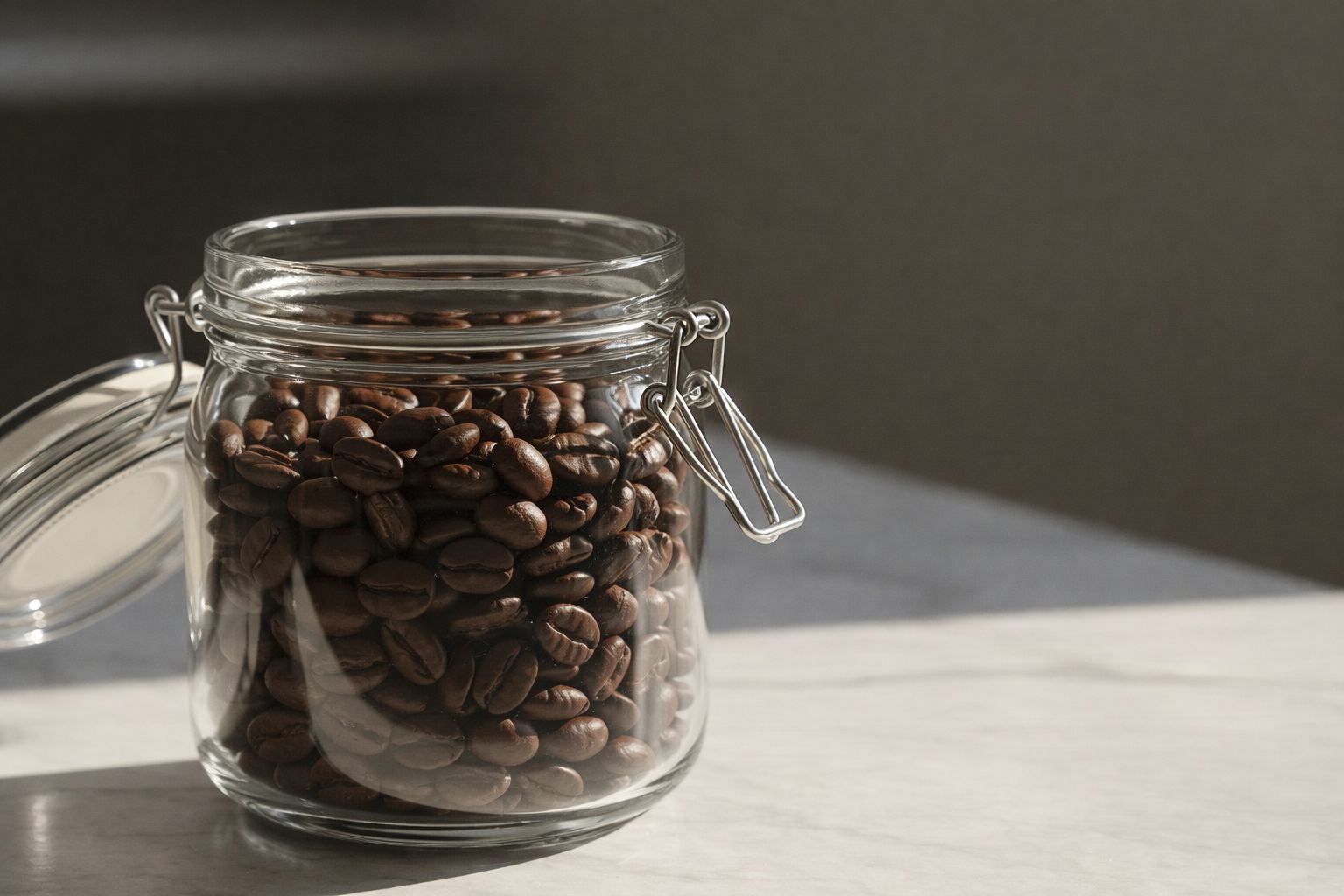
Opaque, Airtight Containers: The gold standard. Stainless steel vaults block both light and air. Clear glass jars, while aesthetic, fail to block UV light.
-
One-Way Valve Bags: Ideal for fresh beans. The valve allows CO₂ to escape without letting oxygen in.
-
Vacuum-Sealed Canisters: Excellent for preventing oxidation, but only recommended after beans have fully degassed. Trapping CO₂ inside the bean can negatively impact brewing.
The Ideal Location
The perfect environment is cool, dark, and dry. A kitchen pantry or cupboard away from the oven is ideal. Avoid sunlit countertops or cabinets near steaming kettles.
The Great Debate : Fridge vs. Freezer
Let’s be clear: The refrigerator is the enemy of fresh coffee. It is a humid environment filled with odors that coffee will readily absorb.
Freezing, however, is a viable option for long-term storage – not daily use. To freeze correctly:
-
Divide beans into single-week portions.
-
Vacuum-seal or double-bag each portion to ensure it is airtight.
-
Thaw completely at room temperature before opening to prevent condensation.
-
Once thawed, never refreeze.
How to Identify Stale Coffee Beans : A Sensory Checklist
Before you brew, a quick sensory check can confirm if your beans are still prime.
-
Smell: Fresh beans have a lively, complex aroma. Stale beans smell dull, musty, or odorless.
-
Sight: Fresh beans often have a subtle sheen. Stale beans look dull and dry. (Note: Excessively oily beans can also indicate a very dark roast that has gone stale).
-
Touch: Fresh grounds have trace moisture; stale grounds feel dry and powdery.
-
Taste: The ultimate test. Stale coffee tastes bland, flat, or unpleasantly bitter.
-
The Bloom Test: When hot water hits fresh grounds, they bubble and rise as CO₂ escapes. If the water sits flat, the beans have likely lost their vitality.
Best Practices for Maintaining Maximum Freshness
Integrating these high-impact habits ensures you brew the best possible cup every day.
-
Buy Whole Beans: Ground coffee loses peak flavor within minutes. Grind immediately before brewing.
-
Purchase in Small Batches: Buying smaller bags frequently ensures your supply stays within the freshness window.
-
Check the Roast Date: Always look for a specific “roasted on” date, a hallmark of quality. Avoid vague “best before” dates.
-
Label the Bag: Write the opening date on the bag to track exposure time.
-
Invest in a Burr Grinder: Blade grinders chop unevenly, leading to sour and bitter brews. Burr grinders produce the uniform particle size essential for balanced extraction.
Don’t Waste a Bean: Creative Uses for Old Coffee
When beans are past their prime for drinking, don’t toss them. They still hold value.
-
Cold Brew: The forgiving nature of cold brewing works well with older beans.
-
Cooking: Use grounds in dry rubs for steak or incorporate into desserts like tiramisu.
-
Household: Use dry grounds as a natural deodorizer in the fridge.
-
Gardening: Add to compost for a nitrogen boost (use with caution due to acidity).
-
Body Scrub: Mix grounds with oil for a natural exfoliant.
Conclusion
Mastering home coffee isn’t about expensive gear; it’s about becoming a custodian of flavor. By understanding the bean’s lifecycle, defending it against environmental enemies, and adopting simple preservation rituals, you transform your daily routine. This knowledge empowers you to stop being a passive consumer and start actively crafting an exceptional experience, every single day.
Frequently Asked Questions (FAQs)
Q1: How long do coffee beans stay fresh after roasting? A : Whole roasted coffee beans stay at their peak flavor for about 2 to 4 weeks after the roast date. While they remain safe to consume for months, the vibrant flavor notes will begin to fade significantly after the first month.
Q2: Should I store my coffee beans in the fridge? A : No, you should avoid storing coffee in the refrigerator. It is a humid environment full of odors, which coffee beans (being hygroscopic) will absorb, ruining their flavor. Furthermore, taking beans in and out of the cold causes damaging condensation.
Q3: Is it better to buy whole beans or ground coffee? A : It is significantly better to buy whole beans. Ground coffee has a massive surface area exposed to oxygen, causing it to go stale within minutes or hours. Grinding whole beans immediately before brewing preserves the essential oils and aromatics.
Q4: Can I freeze coffee beans for long-term storage? A : Yes, but only for long-term storage, not daily use. To freeze correctly, vacuum-seal the beans in single-use portions. When you are ready to use them, let them thaw completely at room temperature before opening the bag to prevent condensation. Do not refreeze them.
Q5: What is coffee “degassing”? A : Degassing is the natural process where roasted beans release carbon dioxide (CO₂) that built up during the roasting process. It is crucial to let beans “rest” and degas for a few days after roasting (depending on the roast level) to avoid uneven extraction and sour flavors.

Wong young low is a coffee industry journalist from China who has been writing since 2007, focusing on specialty coffee, roasting, and market trends. He writes based on field experience and supply chain observations – helping roasters and coffee businesses make more accurate and realistic decisions.