Mushroom Coffee Explained: Do the Health Claims Hold Up?
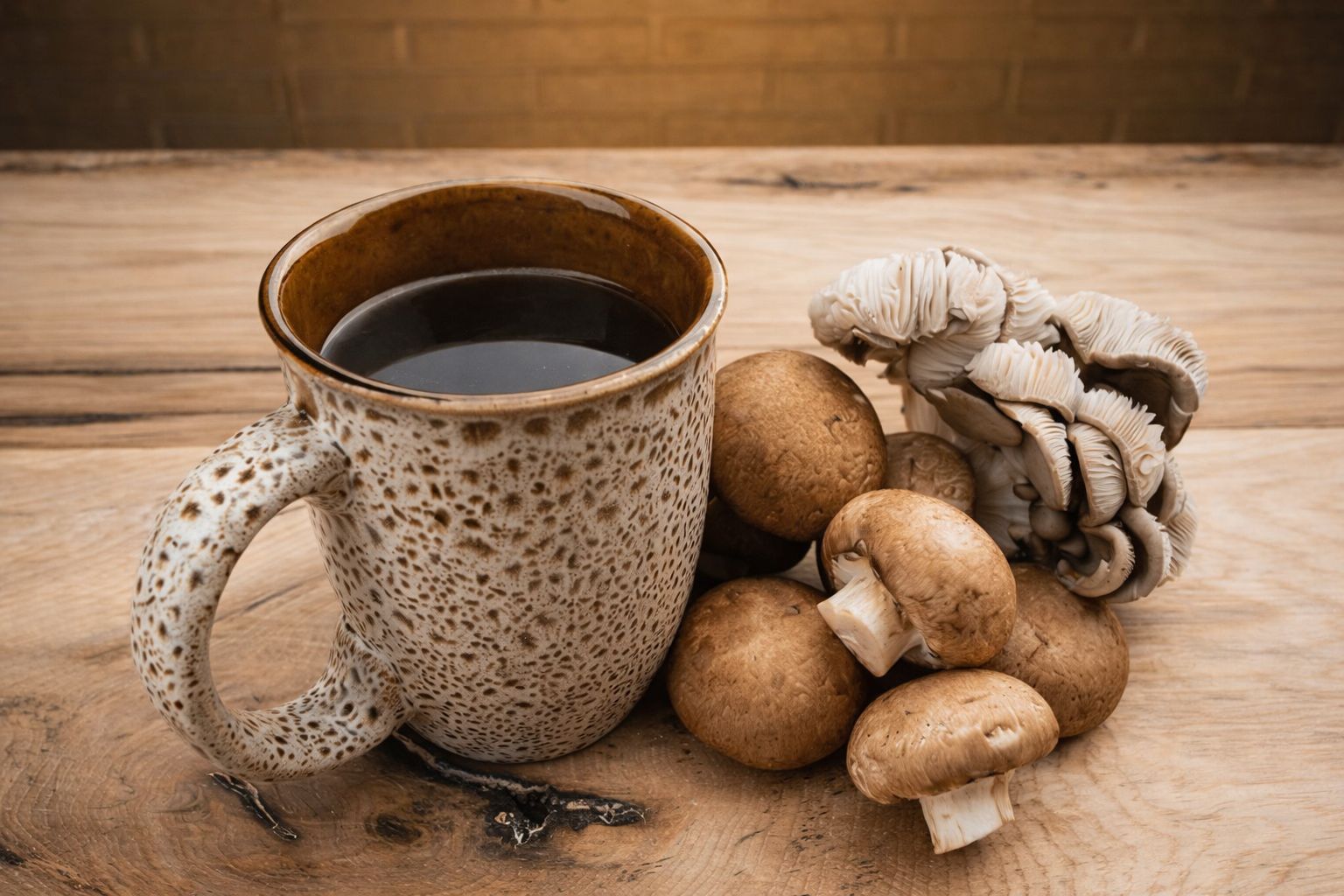
Mushroom coffee has rapidly moved from niche wellness circles into the mainstream specialty beverage market. Positioned as a functional alternative to coffee, the category blends instant coffee with extracts from so-called “medicinal mushrooms,” often accompanied by adaptogens, sweeteners, or plant-based creamers.
Despite strong health-oriented marketing, closer analysis reveals a significant gap between claimed benefits, scientific evidence, and the doses actually consumed.
What Mushroom Coffee Actually Is
Across brands, mushroom coffee products follow a similar structure:
40–60% instant coffee
40–60% non-coffee ingredients, including mushroom extracts (lion’s mane, chaga, cordyceps, reishi, maitake), sweeteners, coconut milk powder, or herbal additives
Most single-serve sachets contain 2–5 grams total, meaning the actual mushroom extract per serving typically ranges from 700 mg to 1.5 g.
Scientific Evidence vs. Commercial Reality
What the Research Shows
The strongest standard for functional food claims is human randomized controlled trials (RCTs).
Cordyceps and chaga:
No human RCTs demonstrate proven benefits at any dose.
Lion’s mane, reishi, maitake:
Some human RCTs show positive effects but only at doses of 5–6 grams per day of mushroom extract, consumed consistently over multiple weeks.
The Dose Problem
None of the commercial mushroom coffee products tested approach these evidence-backed doses.
To replicate conditions used in successful studies, a consumer would need to drink 4–6 servings per day, which would simultaneously push caffeine intake toward 400–600 mg daily a level likely to cause negative effects before any mushroom-related benefit appears.
As a result, functional claims cannot be supported at real-world serving sizes.
Coffee as the Only Proven “Functional” Ingredient
Ironically, the only consistently proven functional compound in mushroom coffee is coffee itself:
Caffeine has well-documented effects on alertness and performance, Coffee consumption is associated with reduced all-cause mortality, Phenolic compounds support gut health
However, the instant coffee used in mushroom products is typically low quality, offering fewer sensory and potential health benefits than freshly brewed coffee.
Sensory Findings: Savory vs. Sweet
Savory-Forward Products
Four Sigmatic, Dirtea, Mushrooms For Life
Dominated by brothy, umami, mushroom-forward flavors
Coffee functions mainly as bitterness rather than complexity
Often described as “savory extracts with coffee notes”
Sweet, Dessert-Style Products
Laird Superfood, Chagaccino, Reishi Cacao, Chaga Matcha
High sweetness driven by coconut sugar, erythritol, monk fruit
Mushroom presence is minimal or masked
Coffee often clashes with sweetness rather than complementing it
Across the category, none of the products deliver high-quality coffee flavor, and mushroom expression is either overpowering (savory) or nearly absent (sweet).
Economic Reality
Mushroom coffee costs more per serving than high-quality brewed coffee, Instant coffee quality remains low across all tested products, Functional doses are not achieved at recommended servings, Value proposition relies on perception, not measurable efficacy
Why the Category Exists
Mushroom coffee succeeds commercially due to:
The health halo effect and functional beverage trend, Low regulatory burden for wellness claims, Borrowed credibility from traditional medicine narratives, Placebo satisfaction being sufficient for repeat purchase, However, the category avoids addressing dose-response realities, making claims difficult to falsify.
A More Rational Alternative
For consumers seeking benefits:
Drink quality coffee for proven effects, Use standalone mushroom supplements at evidence-backed doses, Maintain independent control over caffeine and mushroom intake
This approach is often cheaper, more effective, and sensorially superior.
Final Assessment
Mushroom coffee does not fail because mushrooms lack potential benefits.
It fails because commercial products deliver sub-therapeutic doses, low-quality coffee, and inflated expectations.
Until human studies demonstrate measurable benefits at real-world serving sizes (700 mg–1.5 g/day), mushroom coffee remains a marketing-driven category, not a functionally validated one.
This article evaluates mushroom coffee from a functional food and evidence-based perspective. It does not provide medical advice.
Read other articles :
- Certifications vs Direct Trade: How They Shape Risk, Cost, and Trust
- Why Coffee Trade Margins Are Won at the Handoffs, Not at the Farm
- Cup of Excellence 2026: Auction Schedule, Countries, and Key Changes
Follow us on :