How Roast Development Time Impacts Cup Quality
In coffee roasting, small decisions often create the biggest differences in the cup. Among all roasting variables temperature, airflow, charge weight few are as influential and misunderstood as roast development time. It is the phase where flavor either comes together beautifully or falls apart quietly.
Two coffees roasted to the same color can taste dramatically different. One may be sweet, balanced, and expressive, while the other feels flat, bitter, or hollow. The difference often lies not in the roast level itself, but in how long the coffee was allowed to develop after first crack.
For professional roasteries, understanding roast development time is essential to unlocking consistency, clarity, and repeatable quality. It shapes how sugars caramelize, how acids soften, and how aromatics stabilize. In short, development time decides whether a coffee reaches its full potential or misses it entirely.
What Is Roast Development Time in Coffee Roasting?
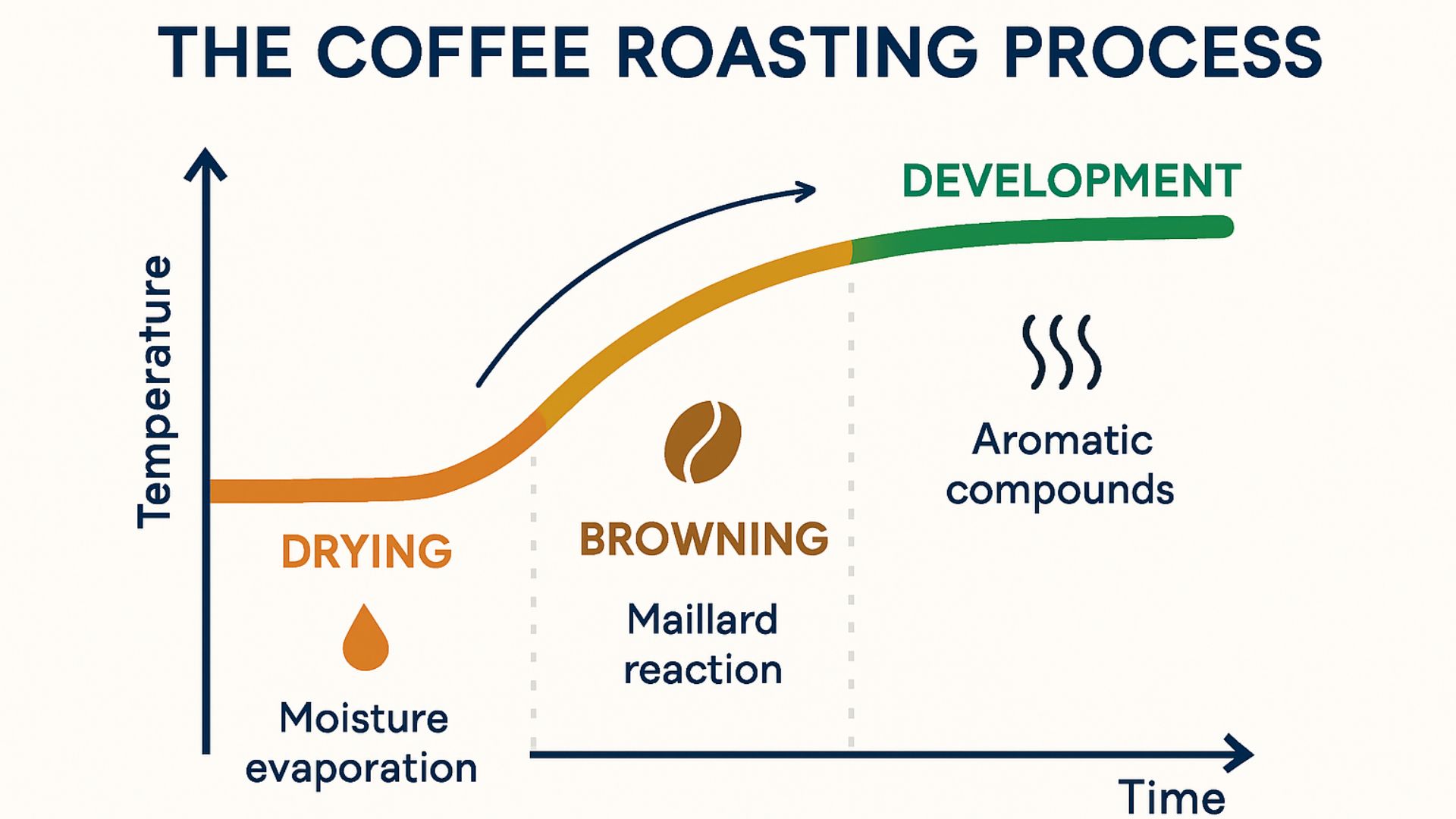
Roast development time refers to the period after first crack until the coffee is dropped and cooled. This stage is where internal chemical reactions finalize flavor structure.
During development:
- Sugars caramelize more deeply
- Acidity transforms from sharp to structured
- Aromatic compounds stabilize or degrade
Roasters often measure development as both absolute time (seconds) and development time ratio (DTR) the percentage of total roast time spent in development.
While numbers matter, development time is less about hitting a formula and more about controlling outcomes.
Why Roast Development Time Directly Affects Cup Quality
Development time influences how a coffee tastes more than many roasters realize.
Flavor Balance and Sweetness
Insufficient development often results in:
- Sharp acidity
- Cereal-like or vegetal notes
- Thin body
Excessive development can lead to:
- Muted acidity
- Heavy bitterness
- Loss of origin character
Proper development allows sweetness to emerge without flattening complexity. This balance is where high-quality cups live.
Acidity Structure, Not Just Intensity
Development time does not eliminate acidity it reshapes it. Short development preserves brightness but risks harshness. Longer development softens acids, making them rounder and more integrated.
Well-developed coffees often feel juicy rather than sour, even at lighter roast levels.
Aroma and Aftertaste Stability
Many aromatic compounds form earlier in roasting but stabilize during development. Rushing this phase can cause aromas to dissipate quickly in the cup, while controlled development improves flavor persistence and finish.
Underdeveloped vs Overdeveloped Coffee: How It Shows in the Cup
Roast development issues are often misdiagnosed as bad green coffee or wrong roast level.
Signs of Underdevelopment
- Dry, papery, or grassy flavors
- Sharp acidity without sweetness
- Short, hollow finish
Signs of Overdevelopment
- Dull or baked flavors
- Ashy or overly bitter notes
- Loss of origin clarity
These flaws can occur at any roast color, which is why visual cues alone are unreliable.
How Development Time Interacts With Roast Level
Development time behaves differently across roast levels.
Light Roasts
Light roasts demand precise development. Too short, and the coffee tastes sour and incomplete. Slightly extended development improves sweetness without sacrificing clarity.
Many specialty roasteries focus heavily on development control here to highlight terroir.
Medium Roasts
Medium roasts are more forgiving but still sensitive. Balanced development enhances caramel notes while preserving acidity. Overdevelopment at this level quickly leads to flatness.
Dark Roasts
In dark roasts, development is extended by default. The risk shifts toward bitterness and roast-dominant flavors. Controlling development helps avoid harsh, smoky finishes.
Development Time Ratio (DTR): Useful, But Not Absolute
Many roasters use DTR as a guideline, commonly ranging between 15–25% of total roast time. While helpful for consistency, DTR is not a universal solution.
Factors that influence ideal development include:
- Bean density and moisture
- Processing method
- Roaster design and heat transfer
- Intended brew method
Experienced roasters treat DTR as a reference, not a rule.
How Professional Roasteries Dial In Development Time
Skilled roasteries approach development time systematically.
Cupping as the Final Judge
Development decisions are validated at the cupping table. Roasters adjust development based on sweetness, balance, and finish not just roast curves.
Small Adjustments, Big Impact
Changes of 10–20 seconds can dramatically alter cup quality. Professional roasters often tweak development time before changing roast level or charge temperature.
Matching Development to Coffee Style
Washed coffees often benefit from slightly longer development to build sweetness. Natural and honey-processed coffees may require tighter control to avoid overexpression.
Why Development Time Matters More Than Ever
As specialty coffee moves toward lighter profiles and higher transparency, roast defects become easier to taste. Development time is now a defining factor in how quality is perceived.
Organizations such as World Coffee Research emphasize that roasting precision plays a critical role in expressing genetic and origin potential. Development time sits at the heart of that precision.
👉 [Also read: Related articles on this website]
Conclusion
Roast development time is where coffee flavor is decided. It determines whether acidity feels vibrant or aggressive, whether sweetness emerges or stays locked away, and whether a coffee finishes clean or collapses into bitterness.
For roasteries aiming for consistency and quality, mastering development time is not optional. It is one of the most powerful tools a roaster has subtle, technical, and unforgiving.
Great coffee is rarely the result of dramatic changes. More often, it comes from controlling the final moments of the roast with intention, restraint, and understanding.