Better Cold Brew Coffee: An Extraction-Focused Method That Cuts Waste
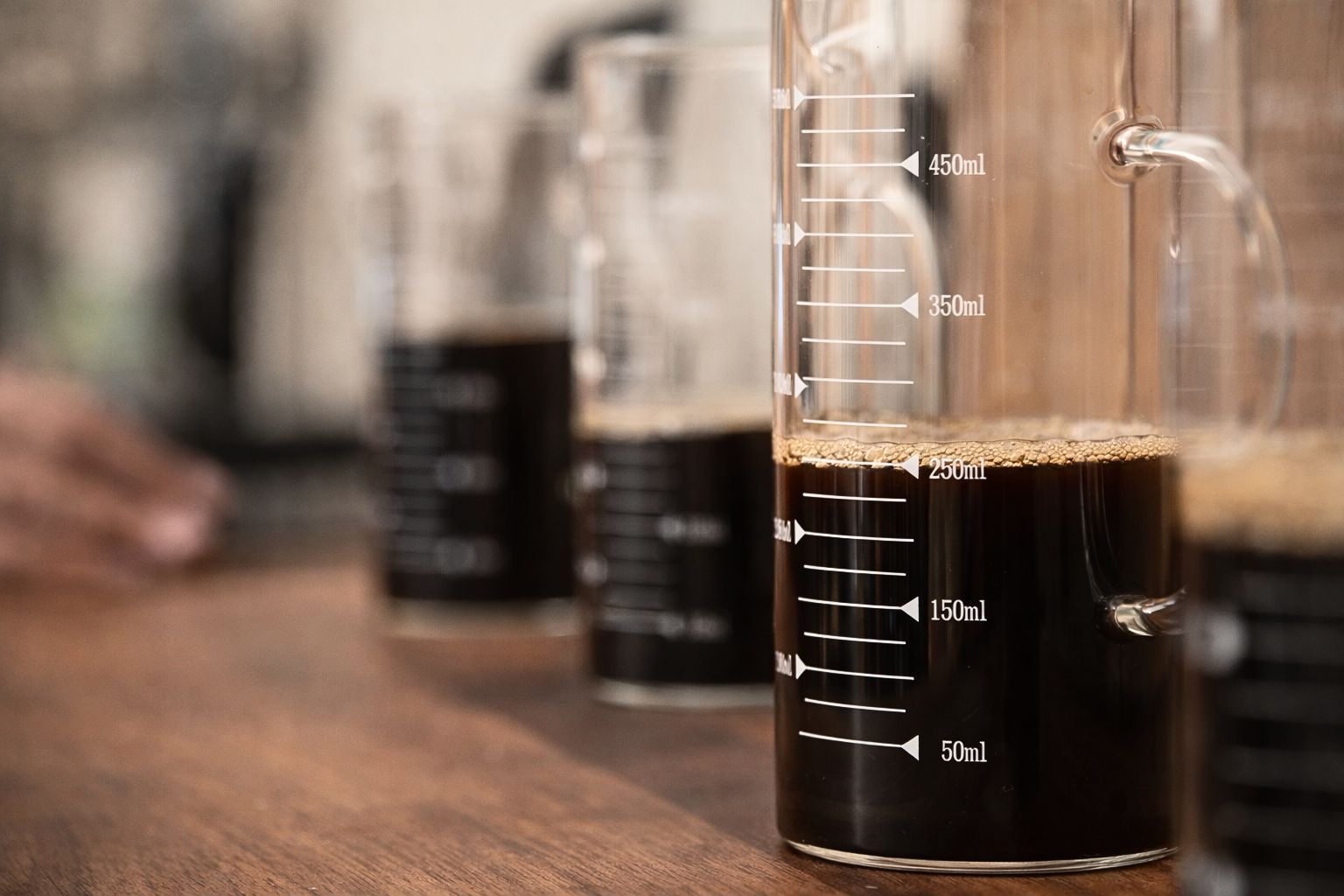
Cold brew has long been popular for its low acidity and heavy body, yet most traditional methods are inefficient. They rely on coarse grinding and high coffee-to-water ratios to compensate for weak extraction, resulting in wasted coffee and muted flavor. Over time, stored concentrates also develop a generic, oxidized taste that obscures origin character.
This approach addresses both problems by removing the filtration constraint that defines conventional cold brew. By enabling finer grinding through the use of fining agents, it achieves higher extraction at sensible brew ratios while maintaining freshness.
Why Traditional Cold Brew Underperforms
Cold water filters through coffee grounds extremely slowly. To make separation feasible, most cold brew systems force coarse grinds and minimal filtration. Coarse grinding, however, extracts weakly. The industry solution has been to use more coffee often ratios of 1:10 or higher compensating for poor extraction with sheer quantity.
The result is economic and sensory waste: a large portion of the coffee’s potential flavor is never extracted, yet still paid for and discarded.
A second issue emerges with storage. Cold brew concentrates held for several days develop a flat, “aged cold brew” profile that masks the coffee itself. By day two, oxidation is noticeable; by day five, it dominates.
Removing the Filtration Bottleneck
The key insight is simple: filtration is not mandatory.
Coffee grounds naturally settle out of liquid over time, as demonstrated in French press brewing. Fining agents widely used in beer and wine accelerate this process by causing suspended particles to clump and sink. When applied to cold brew, they allow fine grinding without filtration, enabling proper extraction and clean separation by gravity alone.
A small amount of a vegan fining agent (around 10 drops per liter) is sufficient. After steeping, brewed coffee can be gently poured off the top, leaving sediment behind.
Practical Brewing Parameters
This method brews coffee to drinking strength, not as a concentrate.
- Ratio: 70–75 g coffee per liter of water
- Grind: Fine, roughly moka pot or fine AeroPress range (≈250 microns)
- Water: Room temperature is sufficient; soft, clean water preferred
- Extraction: Largely complete within one hour
- Settling: 12 hours required for fining agent to fully clarify
- Storage: Sealed in the refrigerator; best consumed within 24 hours
Extraction levels consistently fall between 20.5% and 22.8%, comparable to well-executed hot brewing and higher than typical cold brew.
What This Means for Flavor
Cold water extracts selectively. It preserves body and sweetness while suppressing harsh bitterness and some aromatics. As a result, not all coffees perform equally well.
- Light, washed coffees: Poor fit. They lose texture and aromatic complexity. Brew hot and ice instead.
- Medium roasts: Strong performers. Sweet, balanced, and approachable with minimal acidity.
- Dark roasts: Surprisingly effective. Cold brewing removes harsh bitterness while retaining body.
- Natural processes: Excellent results. Fermented notes soften, fruit becomes candy-like and juicy.
- Heavily processed experimentals: Poor fit. Aromatics fail to transfer despite full extraction.
The pattern is clear: cold brew favors coffees where body and sweetness matter more than volatile aromatics.
Why This Matters
Economically, this method uses roughly 25% less coffee than traditional cold brew while extracting more flavor. For regular cold brew drinkers, the savings add up quickly.
From a quality perspective, daily fresh brewing avoids oxidation entirely, preserving origin character instead of masking it. It also aligns specialty coffee quality with an extraction method capable of honoring it.
A More Rational Cold Brew
Cold brew does not need to be wasteful, stale, or generic. By eliminating filtration constraints, grinding finer, and brewing fresh at sensible ratios, it becomes both economically and sensorially viable.
The takeaway is straightforward: cold brew works best when treated as an extraction problem, not a convenience product. When that shift is made, the results are cleaner, cheaper, and more expressive without sacrificing the low-acid profile people seek.
Read other articles :
- The Ultimate Moka Pot Technique: How to Control Heat and Eliminate Bitterness
- Why Customers Don’t Return to Roasteries After the First Purchase
- How Packaging Color Shapes Expectations in Specialty Coffee
Follow us on :