Green Coffee Bean Density and Its Impact on Roast Profiles
Green coffee bean density is one of the most influential and most misunderstood variables in coffee roasting. Many roasters acknowledge density, but few fully adjust their roast strategy around it. Instead, density is often treated as background information rather than a primary driver of heat behavior.
This misunderstanding leads to common roasting problems: flat sweetness, sharp acidity, muted aromas, or roasts that look correct on paper but fail in the cup. Density does not just affect how coffee roasts it determines how heat moves, how reactions unfold, and how flavor is built.
In production roasting, this often becomes obvious when a profile that worked perfectly for one lot suddenly fails on the next despite identical settings and curves.
This article explains what green coffee bean density really means, how it directly impacts roast profiles, and most importantly how to adjust your roasting approach to work with density instead of fighting it.
What Green Coffee Bean Density Actually Represents
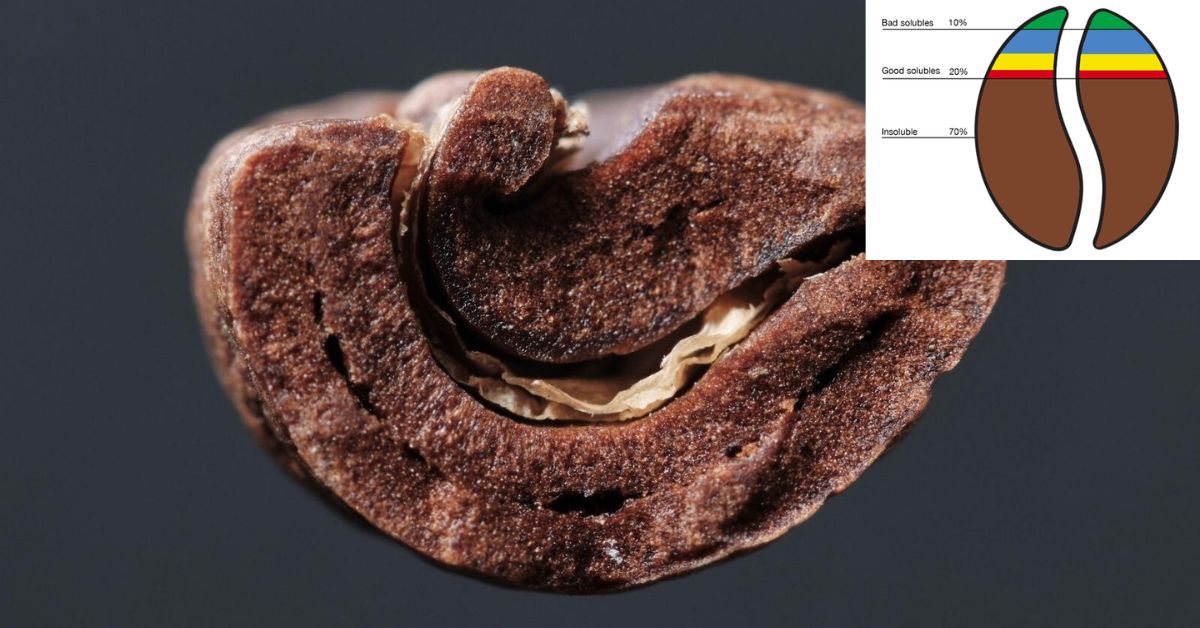
Density is a measure of how much mass is packed into a given volume of green coffee. In practical terms, it reflects how tightly structured the bean is.
Density is influenced by:
- Altitude of growth
- Bean maturation speed
- Variety
- Processing method
- Moisture content
High-density beans tend to grow slower at higher altitudes, developing tighter cell structures. Low-density beans grow faster, often at lower elevations, with more porous internal structures.
Density is not a quality score but it is a behavior predictor.
Why Density Matters More Than Roast Colour or Origin
Density determines how beans absorb, store, and release heat. This affects every phase of the roast.
Roasters often misattribute roast problems to:
- Profile shape
- End temperature
- Roast time
When the real issue is that the coffee’s density was never accounted for.
This is one of the most common reasons roasters keep adjusting time and temperature without ever solving the underlying issue.
Two coffees roasted with identical profiles but different densities will not behave or taste the same.
Read Also : Best Coffee Beans for Espresso: Expert Recommendations
How Density Influences Heat Transfer
High-Density Beans: Slower, Deeper Heat Absorption
High-density beans resist heat penetration. Energy takes longer to reach the center of the bean.
Characteristics:
- Require more initial energy
- Respond slowly to changes
- Hold heat longer during development
If underpowered early, these coffees stall and underdevelop internally even if surface color looks fine.
Low-Density Beans: Faster, More Reactive Heat Response
Low-density beans absorb heat quickly and unevenly.
Characteristics:
- Brown faster
- React immediately to heat changes
- Lose heat quickly
- If roasted too aggressively, they scorch early and lose sweetness before development begins.
Density defines momentum, not just temperature.
Density and the Drying Phase
The drying phase sets the foundation for the entire roast.
High-Density Coffee During Drying
High-density beans need:
- Sufficient charge energy
- Stable heat application
- No hesitation early on
If drying is too slow, moisture migration becomes uneven, leading to dull acidity and flat sweetness later.
Practical adjustment:
Use a slightly higher charge temperature or stronger early energy—without spiking rate of rise.
Low-Density Coffee During Drying
Low-density beans dry quickly and unevenly.
Risks include:
- Surface scorching
- Early browning
- Loss of aromatics
Practical adjustment:
Reduce initial energy and focus on controlled airflow to remove moisture without aggressive heat.
Density’s Impact on Maillard Development
Maillard reactions build sweetness, body, and aromatic complexity.
High-Density Beans in Maillard
These beans benefit from:
- Extended Maillard time
- Controlled momentum
- Stable airflow
If rushed, they taste sharp and incomplete.
Roast strategy:
Allow Maillard to unfold gradually. Do not compress this phase just to hit color targets.
Low-Density Beans in Maillard
Low-density beans move through Maillard quickly.
Risks include:
- Overdevelopment
- Baked flavors
- Muddy sweetness
Roast strategy:
Shorten Maillard slightly while preserving clarity. Avoid dragging the roast unnecessarily.
Density and First Crack Behavior
First crack timing and intensity vary dramatically with density.
High-Density Coffee
- First crack arrives later
- Crack may be quieter
- Development requires patience
These coffees reward controlled development, not rushed finishes.
Low-Density Coffee
- First crack arrives earlier
- Crack may be explosive
- Development window is short
Mistiming here leads to bitter or hollow cups.
Many roasters recognize this moment instantly the crack sounds right, the timing feels off, and the cup confirms it later.
Key insight:
Development decisions must be density-driven, not clock-driven.
Read Also : 7 ways to choose raw coffee beans don’t make a mistake again!
How Density Affects Flavor Outcomes
Density shapes flavor expression more than many roasters expect.
High-Density Beans Tend to Show:
- Brighter, structured acidity
- Cleaner sweetness
- Longer finish
If roasted correctly, they excel in light to medium profiles.
Low-Density Beans Tend to Show:
- Heavier body
- Lower acidity
- Earthier or chocolaty notes
They often perform better at medium to medium-dark roasts.
Density does not dictate flavor but it sets the boundaries.
Common Mistakes Roasters Make With Density
Treating All Coffees the Same
Using one “house profile” across densities leads to inconsistency.
Density demands adaptation, not uniformity.
Chasing Roast Curves Instead of Behavior
Forcing a curve ignores how density affects heat absorption.
Better to respond to bean reaction, not screen visuals.
Using Colour as Compensation
Trying to “fix” density-related problems by adjusting roast color late in the roast damages flavor.
Color reflects reactions it doesn’t correct them.
Practical Roasting Adjustments Based on Density
For High-Density Coffees
- Slightly higher charge energy
- Strong but controlled drying
- Longer Maillard phase
- Patient development
For Low-Density Coffees
- Lower charge energy
- Gentle early heat
- Shorter Maillard
- Tight development control
These adjustments protect structure and sweetness.
How to Identify Density Without Lab Tools
If you don’t have a density meter, observe:
- Bean weight relative to size
- First crack timing consistency
- Heat responsiveness during drying
Experience and note-taking often outperform instruments.
Conclusion
Green coffee bean density is not a detail it is a framework. When density is ignored, roasters chase symptoms instead of solving problems. When density is understood, roast profiles become logical, repeatable, and expressive.
Density tells you how coffee wants to be roasted.
Your job is not to force it into a profile but to build a profile around it.
Most roasters learn this not from textbooks, but after enough batches that looked fine and tasted disappointing.
Roasters who respect density stop guessing.
They roast with intention and the cup shows it.
Understanding density is one of the fastest ways to improve roast consistency without changing equipment.
Read Also : Climate Impact on Coffee Prices : A Roaster’s Perspective
FAQ: Green Coffee Bean Density and Roasting
Is higher density always better?
No. Density affects behavior, not quality. Both high and low-density coffees can be excellent when roasted correctly.
Can density change over time?
Yes. Moisture loss and storage conditions affect effective density.
Should density determine roast level?
It should inform roast strategy, not dictate roast darkness.
Do natural and washed coffees differ in density?
Often yes. Naturals tend to be slightly lower density due to processing.
Is density more important than origin?
For roasting behavior, yes. Origin matters for flavor, density matters for heat control.
Join the newsletter
Follow us on :