Green Coffee Purchasing Strategy for Roasteries Under Market!
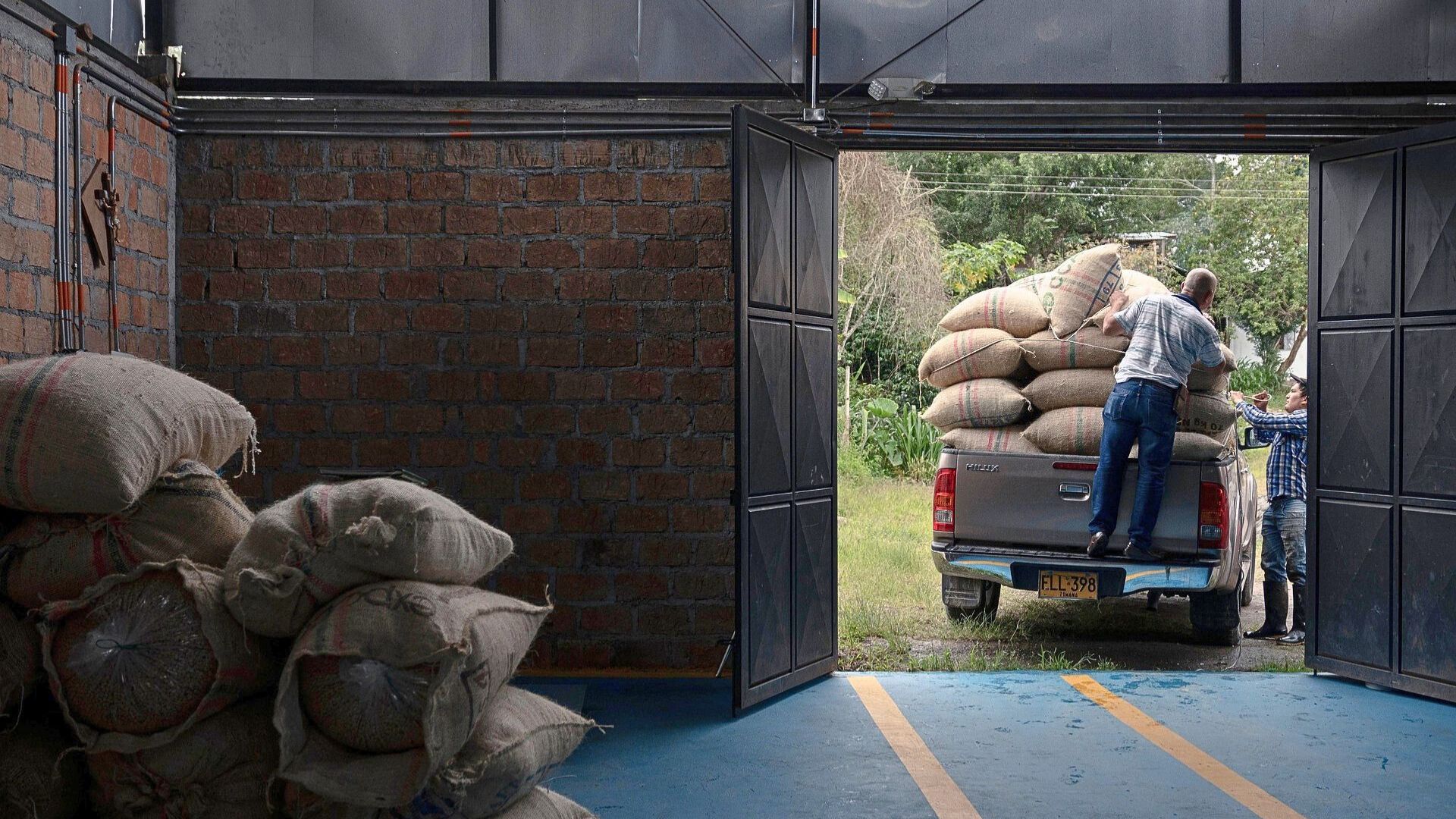
Green coffee buying is often framed as a sourcing activity. In practice, it is a strategic function that shapes a roastery’s cost structure, production stability, and long-term credibility. Decisions made at origin ripple through roasting operations, quality control, cash flow, and customer relationships sometimes months after contracts are signed.
For many roasteries, buying strategy evolves reactively. Coffees are purchased based on availability, cupping performance, or short-term pricing opportunities. This can work at small scale, but as volume increases and markets become more volatile, reactive buying exposes structural weaknesses. A robust green coffee buying strategy is less about chasing exceptional lots and more about aligning supply decisions with how the roastery actually operates.
For growing operations, a green coffee buying strategy for roasteries is no longer optional but a structural requirement.
Why Green Coffee Buying Strategy Is a Strategic Constraint for Roasteries
Green coffee is typically the single largest cost input for a roastery. Yet its impact goes far beyond price per kilogram. Variability in moisture, density, processing, and age directly affects roast behaviour, energy use, and labour requirements. Inconsistent supply creates downstream inefficiencies that are rarely captured in purchase cost alone.
Roasteries that treat buying as an isolated function often struggle with production inconsistency and margin erosion. Those that integrate sourcing decisions into operational planning are better positioned to absorb market shocks without compromising quality or reliability.
Start With Production Reality, Not Origin Ambition
A common failure point in green coffee buying is misalignment between aspiration and capacity. Roasteries may pursue complex microlots, experimental processes, or short-term spot offerings without considering how these coffees fit into existing production systems.
Every coffee introduces operational demands. Coffees with wide moisture variation require more profile adjustment. Coffees with limited availability increase SKU turnover and planning complexity. At scale, these factors compound.
Effective buying strategies begin by defining what the roastery can consistently support: batch sizes, throughput, profile complexity, and quality control bandwidth. Origin diversity should expand within those constraints, not against them.
Segment Coffees by Function, Not Just Quality
Not all green coffee serves the same role in a portfolio. A robust buying strategy distinguishes between coffees intended for different operational and commercial functions.
Some coffees anchor the menu: consistent, repeatable lots that form the backbone of blends or year-round offerings. Others provide differentiation: seasonal singles, limited releases, or experimental profiles. Problems arise when these categories blur.
Roasteries that rely too heavily on opportunistic buying often end up using fragile or inconsistent coffees in high-volume roles. This increases roast risk and undermines reliability. Clear functional segmentation allows buyers to accept variability where it adds value and avoid it where it creates cost.
Read also : Why Some Roasteries Always Have Customers: 5 Strategies That Work
Consistency Is Bought, Not Fixed Later
Many roasteries attempt to solve inconsistency at the roast level. While roasting skill matters, it cannot compensate indefinitely for poorly matched green coffee.
Coffees with inconsistent density, uneven drying, or unclear processing history demand more corrective work. That work costs time, energy, and attention and increases the likelihood of batch-to-batch variation. Over time, the roastery pays repeatedly for variability that was introduced upstream.
This does not mean avoiding all variability. It means buying with intent. Intake standards, sample roasting protocols, and clear acceptance criteria reduce surprises later. In practice, consistency is less about finding “perfect” coffee and more about reducing unknowns.
Price Is Only One Dimension of Cost
Green coffee pricing is increasingly volatile, driven by currency shifts, logistics disruptions, and climate-related supply risk. In response, some roasteries chase short-term price advantages without considering total cost of ownership.
Cheaper coffee that increases re-roasts, slows production, or requires frequent profile changes may cost more in aggregate than a higher-priced, stable lot. Conversely, locking into long-term contracts without flexibility can expose roasteries to quality or market misalignment.
Effective buyers evaluate price alongside performance. They ask not only “what does this cost?” but “what does this require from the system?” The answer often changes which coffees make sense at a given scale.
Align Buying Horizons With Cash Flow and Risk
Buying strategy is also a financial strategy. Pre-financing, spot buying, and forward contracts each carry different cash flow implications and risk profiles.
Small roasteries often overextend by purchasing large volumes to secure pricing or exclusivity, tying up capital needed for operations. Larger roasteries sometimes underutilize their buying power, relying too heavily on spot markets and absorbing unnecessary volatility.
There is no universally correct approach. What matters is alignment. Buying horizons should match sales predictability, storage capacity, and risk tolerance. When they do not, even well-priced coffee can strain the business.
Read also : Why Roastery Businesses Must Choose Between Craft and Scale
Relationships Matter but Systems Matter More
Direct relationships with producers and importers are often cited as the foundation of good buying. They are valuable, but relationships alone do not guarantee strategic alignment.
As volumes grow, informal agreements and verbal expectations become fragile. Clear specifications, shared quality benchmarks, and transparent communication reduce misunderstandings on both sides of the supply chain.
Roasteries that formalize these relationships without making them rigid tend to experience fewer surprises. Trust is reinforced not by goodwill alone, but by systems that support consistency and accountability.
Build Feedback Loops Between Buying and Roasting
One of the most overlooked elements of green coffee strategy is feedback. Buyers and roasters often operate with partial information, especially in larger teams.
Roast performance, yield loss, defect rates, and customer feedback should inform future buying decisions. When feedback loops are weak, the same issues recur across seasons and origins.
High-performing roasteries treat sourcing as iterative. Buying decisions evolve based on what actually happens in production, not just what cups well at the table.
The Risk of Over-Diversification
Diversification is often promoted as a hedge against supply risk. Used indiscriminately, it becomes a liability.
Managing too many origins, lots, and processing styles simultaneously increases cognitive load and operational strain. Quality control becomes reactive, and staff spend more time managing exceptions than producing consistently.
Strategic diversification focuses on resilience, not variety for its own sake. It asks which risks truly need hedging and which complexities can be avoided.
Read also : How to Plan Production Capacity for a Growing Coffee Roastery
A Practical Takeaway
A green coffee buying strategy that works over time is rarely the most exciting one. It is the one that aligns supply decisions with operational reality, financial discipline, and quality expectations.
For decision-makers, a useful question is not “what is the best coffee we can buy?” but “what coffee allows our system to perform at its best, consistently?” The answer often leads to fewer surprises, stronger margins, and relationships that hold up when markets tighten.
As supply chains become less predictable, the roasteries that thrive will be those that treat green coffee buying not as a transaction, but as a core operational strategy designed with intention, tested in practice, and refined continuously.
Join the newsletter
Follow us on :