How to Store Green Coffee : Shelf Life, Freshness & Best Practices
How to Store Green Coffee: Shelf Life, Freshness & Best Practices, For coffee roasters, green coffee represents more than just stock on hand; it is embodied potential and significant invested capital. Ineffective storage is effectively allowing profit to vanish into thin air. This guide shifts the perspective from simple logistics to viewing storage as a central pillar of quality assurance and financial stewardship. Synthesizing insights from producers, roasters, and quality control experts, we provide a robust framework for safeguarding the value and sensory integrity of your most vital asset.
Defining Green Coffee’s Lifespan: Quality vs. Safety
The question “How long does green coffee last?” requires two separate answers. One addresses the peak flavor clarity demanded by the specialty market, while the other concerns basic food safety. For roasters striving for excellence, distinguishing between these timelines is critical. One dictates cup score and brand reputation; the other merely determines if the product is edible.
The “Freshness Window” in Specialty Coffee
The industry generally accepts that the optimal “freshness window” for specialty green coffee is 6 to 12 months following harvest. Coffee held beyond this timeframe is typically classified as “past crop,” a designation indicating the loss of desirable sensory traits. As vibrant, complex characteristics recede, they are supplanted by off-flavors.
These faded notes are reliable indicators that a coffee has aged beyond its prime:
- Papery, woody, or cucumber-like (a descriptor popularized by the Le Nez du Café aroma kit).
- Grain-like or cereal-like.
- Bagginess (absorbing the taste of the jute sack).
- Cardboard, straw, or hay.
These defects stand in sharp contrast to the attributes lost during aging, such as bright citrus acidity, sweet caramelized sugar notes, juicy fruit flavors, and delicate floral aromatics. Protecting these volatile compounds is the primary objective of effective green coffee storage.
Product Safety and Spoilage Risks
While flavor degradation happens within a year, true spoilage is a separate issue. Green coffee can remain safe to consume for an extraordinarily long time if kept in the right environment. For example, a coffee harvested in 1988 was recently roasted and cupped; while it tasted stale – described as resembling the “aroma of a vintage clothing store” – it was not rancid and posed no health risk. This demonstrates that staleness is distinct from spoilage.
Spoilage, usually manifested as mold, occurs only under specific, adverse conditions. The critical thresholds for these risk factors are well-defined:
| Risk Factor | Critical Threshold for Spoilage (Mold Growth) |
| Moisture Content | 14% by weight or exceeding |
| Relative Humidity | 70% or higher (risk escalates rapidly above 80%) |
| Water Activity | Exceeding 0.70 |
The sensory signs of spoiled green coffee are unmistakable: visible mold growth or a pungent musty odor. To keep coffee within the optimal freshness window, one must strictly manage the environmental variables that hasten its decline.
Read also : Stop Guessing: 5 Smart Ways to Evaluate Coffee Origins
Primary Drivers of Green Coffee Degradation
As an organic agricultural product, green coffee is inherently vulnerable to its surroundings. Grasping these variables is not just academic; it is the cornerstone of any preservation strategy, directly influencing final cup quality. These external forces constantly threaten the fragile chemical structures that define a coffee’s character.
The Dynamics of Temperature and Humidity
Temperature and humidity share a symbiotic relationship that profoundly affects green beans. Warm air holds more moisture than cool air, meaning temperature fluctuations cause instability in relative humidity – the bean’s primary antagonist.
Elevated temperatures can trigger the evaporation of volatile aromatics, while excessive humidity encourages the absorption of moisture, creating a breeding ground for mold. Conversely, extremely low humidity can dry out the beans, stripping them of moisture and, consequently, flavor. The industry standard recommends a stable temperature range of 10-25°C (50-77°F) with a relative humidity of 50-70%. However, many experts argue for a tighter, safer target of 60-65% RH to ensure maximum stability.
The Threat of Oxygen and Light
Extended exposure to oxygen initiates oxidation, a chemical reaction that leads to the breakdown of aromatic compounds. This is a leading cause of the “flat” or “stale” profiles found in coffee stored too long in permeable containers.
Light exposure drives a separate reaction called “photodegradation.” Intense or prolonged exposure destroys organic particles and non-volatile compounds. This process degrades the very precursors that roasters rely on to develop complex flavors, meaning the coffee’s potential is compromised before it ever reaches the drum.
Read also : Why Coffee Origin Matters More Than Most People Realize
Intrinsic Bean Characteristics
It is vital to recognize that green coffees do not age uniformly. A coffee’s inherent shelf life is shaped by factors at origin, including processing method, drying protocols, and bean density. Some lots may exhibit “premature aging,” showing staleness as early as six months post-harvest. Others, particularly high-density, high-altitude lots, possess a resilient cellular structure that resists degradation, often drinking beautifully well past the one-year mark under proper storage.
Understanding these agents of decay is the diagnosis. The cure lies in a dual strategy: advanced packaging and rigorous environmental control.
Best Practices for Optimal Storage
Proper storage is a proactive defense of a roaster’s inventory. By establishing a robust system, roasters ensure that the quality achieved at the farm level is maintained until production. The following steps are critical for constructing such a system.
Strategic Packaging Solutions
Packaging serves as the first line of defense. Comparing traditional materials with modern solutions highlights a major leap in preservation technology.
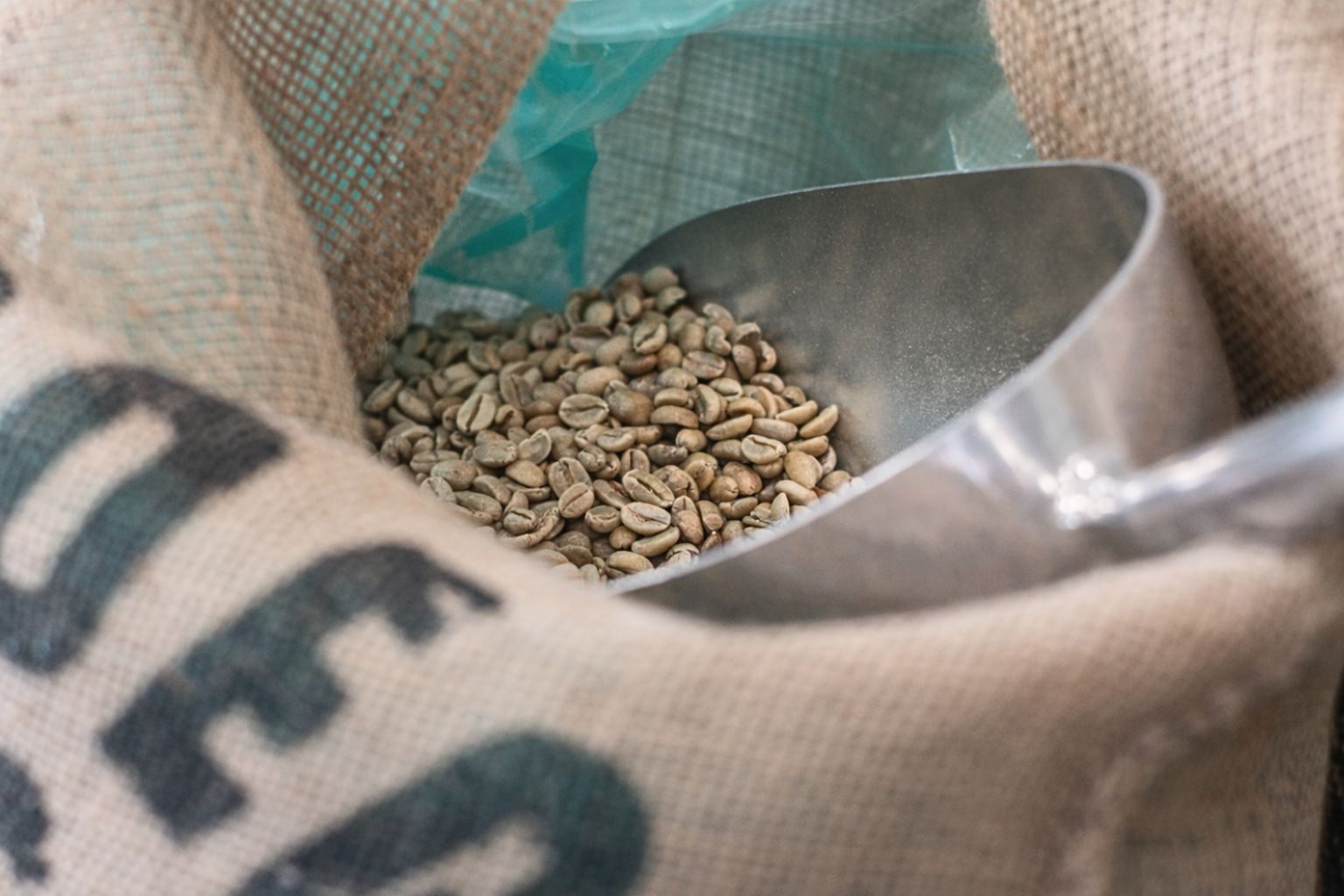
Standard jute or burlap sacks, while iconic and affordable, provide minimal protection. Their porous nature permits air and moisture to pass through freely, accelerating aging.
In contrast, modern high-barrier packaging is now the gold standard for specialty coffee. Companies like GrainPro, Ecotact, and PureLock manufacture hermetic plastic liners designed to fit inside traditional jute bags. These liners establish a gas-tight and moisture-resistant barrier, stabilizing water activity levels. For high-value microlots or competition series coffees, vacuum sealing offers superior, though more expensive, protection against oxidation.
Warehouse Environment and Operations
Beyond the bag, the ambient conditions of the warehouse are crucial. Ideal facility parameters include:
- Temperature: Stable between 15-25℃.
- Humidity: Consistent relative humidity around 60-65%.
- Light: A cool, dark environment with minimal natural light exposure.
- Moisture Level: Target a stable green bean moisture content of 11-12%.
Physical organization is equally vital. All inventory should be palletized, keeping sacks at least four inches off the floor to promote airflow and prevent moisture wicking from concrete. Best practices also dictate restricted access to storage zones to maintain security and hygiene.
Operationally, strict adherence to “First-In, First-Out” (FIFO) inventory management is non-negotiable. This protocol ensures older stock is roasted first, maximizing overall portfolio freshness. Finally, a comprehensive pest control regimen is essential to prevent contamination from rodents and insects, which represent both a financial loss and a health hazard.
Special Cases and Advanced Techniques
While freshness rules generally apply, the coffee world contains exceptions where aging is a feature, not a bug. These cases demonstrate that while uncontrolled aging is decay, controlled aging can be a technique.
Intentional Aging : Tradition Meets Technique
Certain coffees are aged intentionally to cultivate specific flavor profiles. Historical Sumatran and Javan lots were often aged to create a distinct, heavy-bodied style that retains a loyal following today.
A more profound example is Monsooned coffee, most notably “Monsooned Malabar” from India. This method involves exposing green beans to the moisture-laden monsoon winds for several months. This controlled weathering is the opposite of preservation, yet it deliberately imparts a unique, mellow intensity that defines the style.
Read also : 3 Ways to Fix Under-Roasted Coffee Without Wasting the Batch
Extending Shelf Life via Cold Storage
To preserve elite green coffees indefinitely, some industry leaders have adopted cold storage or deep freezing. This method drastically slows the chemical kinetics of degradation. Research conducted by The Crown (published in Roast Magazine) suggests that freezing offers measurable benefits for the long-term archival of high-quality green coffee, presenting a viable option even for smaller operators.
Conclusion
The one-year rule for specialty coffee freshness remains a reliable benchmark for roasters aiming for peak performance. If there is a single takeaway, it is that environmental stability – specifically regarding temperature and humidity – is the key to retarding the aging process. The industry-wide shift toward high-barrier hermetic packaging offers a critical safeguard against climate volatility. Ultimately, rigorous storage management is not a passive chore; it is a foundational element of professional roasting, ensuring the hard work performed at origin is fully realized in the final cup.
Wong young low is a coffee industry journalist from China who has been writing since 2007, focusing on specialty coffee, roasting, and market trends. He writes based on field experience and supply chain observations – helping roasters and coffee businesses make more accurate and realistic decisions.