
How to Match Roast Profiles to Market Preferences
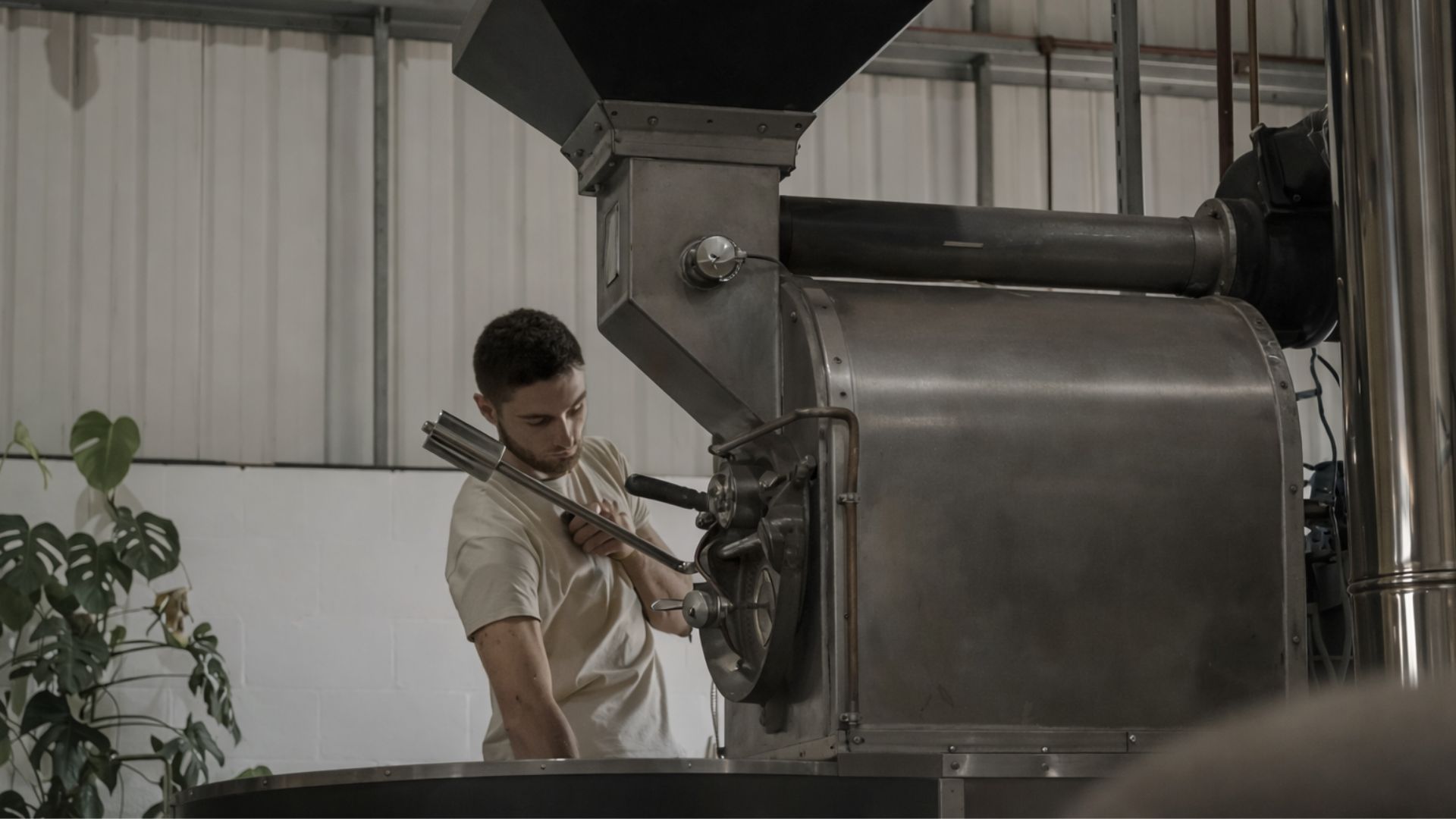
For most roasteries, roast profiling is treated as a technical exercise: managing heat application, development time, and airflow to achieve a desired flavour outcome. In practice, profiling is also a commercial decision. The same coffee, roasted two different ways, can succeed in one market and fail in another sometimes without any obvious quality fault.
The challenge is not that markets lack sophistication. It is that preferences are shaped by context: brewing methods, price sensitivity, café workflows, and customer expectations that are often invisible from the roast room. Roasteries that ignore these constraints tend to chase internal ideals. Those that acknowledge them build profiles that perform reliably in the market they actually serve.
Matching roast profiles to market preferences is less about following trends and more about aligning flavour expression with operational reality.
Market Preference Is Not a Flavour Opinion
Market preference is often discussed as taste lighter versus darker, brighter versus more developed. In reality, it is a combination of flavour, usability, and risk tolerance.
A café serving high-volume milk drinks may value solubility, sweetness, and consistency over aromatic nuance. A retail customer brewing at home may tolerate variability but expect clarity and distinction. Wholesale buyers often prioritise predictability, because inconsistency creates downstream costs they absorb directly.
Roast profiles that ignore these realities may still be “well executed,” but they introduce friction. The coffee becomes harder to dial in, less forgiving across brew parameters, or more sensitive to minor changes in water or equipment. Over time, these frictions shape buying decisions often more than flavour preference itself.
Internal Calibration vs External Performance
Many roasteries calibrate profiles internally: cupping panels, roast team consensus, or benchmark coffees that define house style. This is necessary, but insufficient.
Internal calibration answers the question, “Do we like this coffee?” Market alignment asks a different one: “Does this coffee work where it will be used?”
Problems emerge when internal standards drift away from external performance. A profile may score well in controlled cupping yet struggle on bar, particularly in espresso programs with staff turnover or limited technical oversight. When cafés compensate by overdosing, grinding finer, or adjusting ratios the coffee may still sell, but confidence erodes.
Roasteries that regularly evaluate coffees under customer-like conditions commercial grinders, typical brew ratios, non-ideal water identify these mismatches earlier and adjust profiles before they become account issues.
Roast Development as a Risk Management Tool
Roast development is often framed purely in sensory terms. It is also a way of managing risk.
Underdeveloped profiles tend to narrow extraction windows. They may showcase acidity and origin character, but they amplify variability. Small shifts in grind, dose, or water can produce sharp or hollow cups. For some markets, this risk is acceptable or even desirable. For others, it is commercially unsustainable.
More developed profiles typically offer greater solubility and forgiveness. They reduce the likelihood of extreme outcomes, at the cost of some complexity. In wholesale contexts, this trade-off is often rational. The goal is not to maximise flavour range, but to minimise failure rates across hundreds of daily extractions.
Matching development to market preference means recognising where the tolerance for error lies and roasting accordingly.
From a commercial perspective, these profiling decisions are closely tied to cost control in daily roastery operations, particularly when labour and rework begin to accumulate.
Read also : Consistency Tips for Roasteries Managing Multiple Origins and Lots
Espresso and Filter Markets Are Not Parallel
One of the most common misalignments occurs when roasteries apply similar profiling logic to espresso and filter markets.
Espresso markets are constrained by speed, consistency, and staff skill. Coffees that require tight ratios or precise temperature control increase labour load and slow service. Profiles that work beautifully in competition-style espresso often struggle in busy cafés.
Filter markets, particularly retail and subscription channels, allow more latitude. Customers brewing at home accept and sometimes seek variation. Distinctive acidity or lighter development can be a selling point rather than a liability.
Roasteries that blur these distinctions often end up with profiles that satisfy neither market fully. Clear separation both in profile intent and communication reduces confusion internally and externally.
Price Sensitivity Shapes Roast Expectations
Market preference is inseparable from price positioning.
At lower price points, customers tend to expect reliability over expression. Coffees that fluctuate from batch to batch or require explanation create dissatisfaction disproportionate to their cost. Profiles at this level benefit from restraint and consistency.
As price increases, tolerance for variation grows but expectations also sharpen. Customers paying premiums often expect distinction, not just quality. Here, roast profiles can afford to be more expressive, provided the narrative and experience support it.
Problems arise when expressive profiles are sold into price-sensitive channels, or when conservative profiles are positioned as premium without sufficient differentiation. In both cases, the mismatch is perceived as value failure rather than flavour disagreement.
Green Coffee Selection Sets the Ceiling
This is why many roasteries approach sourcing through a structured green coffee buying strategy for roasteries, rather than selecting coffees based solely on cupping performance.
Roast profiles cannot compensate indefinitely for green coffee that is misaligned with market needs.
Highly dense, high-acidity coffees may suit markets seeking vibrancy, but they demand precise roasting and brewing. Coffees with softer structure may lack standout character but offer stability and ease of use. Neither is inherently better; each supports different outcomes.
Roasteries that define market preferences first then source green coffee accordingly encounter fewer conflicts at the profiling stage. Those that buy opportunistically often attempt to force profiles to fit markets they were never suited for, increasing waste and frustration.
This alignment becomes critical as supply volatility increases and substitutions become more frequent.
Problems often arise when roasteries attempt to force profiles onto coffees that were never selected with profile compatibility in mind, instead of intentionally matching green coffee to roast profiles.
Read also : Green Coffee Purchasing Strategy for Roasteries Under Market!
Scaling Changes the Equation
As production volume increases, profiles that rely heavily on intuition often break down, which is why many teams revisit their consistency tips for production roasting during periods of growth.
Without deliberate adjustment, this frequently leads to subtle but persistent quality drift in scaled roasting operations, even when green coffee quality remains unchanged.
As roasteries grow, the cost of mismatch increases.
At small scale, a skilled roaster can compensate for fragile profiles through attention and adjustment. At higher volumes, this approach breaks down. Multiple operators, longer roast days, and tighter schedules expose weaknesses in profile design.
Profiles that rely heavily on intuition or last-minute correction do not scale well. Markets that once tolerated inconsistency begin to push back not because preferences changed, but because reliability did.
Roasteries that revisit profiles during periods of growth often discover that earlier “market preferences” were actually artefacts of limited scale. Adjusting profiles to suit current realities is not a retreat from quality; it is an adaptation to context.
Where Well-Intentioned Decisions Fail
Many profiling decisions fail not because they are wrong, but because they are incomplete.
Roasteries may pursue lighter profiles to align with perceived specialty trends, without accounting for customer equipment. They may maintain conservative profiles to protect consistency, without recognising that their market has matured. They may avoid change entirely, mistaking familiarity for loyalty.
The common thread is assumption. When roasteries assume preference without testing performance, profiles drift away from market fit.
Regular feedback loops sales data, brew support conversations, repeat order behaviour often reveal more about preference than cupping scores or social media signals.
Read also : Why Some Roasteries Always Have Customers: 5 Strategies That Work
A Practical Takeaway
Matching roast profiles to market preferences is not a one-time calibration. It is an ongoing judgment shaped by who your customers are, how they use your coffee, and what risks they are willing to absorb.
The most effective roasteries do not ask, “Is this the best profile?” They ask, “Is this the right profile for this market, at this scale, right now?”
That question rarely has a permanent answer. But revisiting it deliberately rather than reacting after problems emerge remains one of the most effective ways to protect quality, margins, and long-term relationships.
Follow us on :