Robusta vs Arabica: Key Differences in Flavor and Caffeine
Behind every cup of coffee, two names dominate the conversation: Robusta and Arabica. These are not just different coffee beans they represent contrasting taste profiles, farming conditions, price points, and drinking experiences. Arabica is often labeled as “premium,” while Robusta is frequently associated with bitterness and strength. In reality, the difference goes far beyond those stereotypes.
Most readers searching for Robusta vs Arabica want clear answers: what sets them apart, which one tastes better, and which is more suitable for specific uses espresso, milk-based drinks, or black coffee. The answer depends on several factors, including plant genetics, growing environment, chemical composition, processing, and roasting style.
As global interest in specialty coffee continues to grow, understanding the distinction between Robusta and Arabica has become increasingly important not only for baristas and roasters, but also for everyday coffee drinkers. This article offers a comprehensive, data-informed comparison presented in a clear, journalistic tone, making it useful for both general readers and coffee professionals.
Differences Between Robusta and Arabica Based on Origin and Plant Characteristics
One of the most fundamental differences between Robusta and Arabica lies in their origin and plant characteristics. Arabica (Coffea arabica) grows best at higher altitudes with cooler temperatures, typically between 800 and 2,000 meters above sea level. Robusta (Coffea canephora) thrives in lower altitudes and warmer climates.
Arabica plants are more delicate and susceptible to pests and disease. Robusta, as its name suggests, is hardier and more resistant to environmental stress. This resilience contributes to higher yields and easier cultivation.
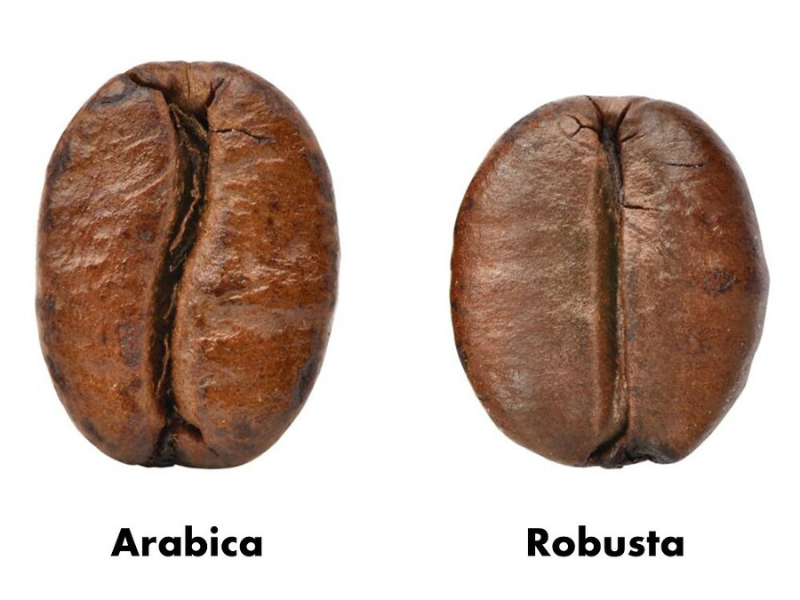
Physically, the beans also differ:
Arabica beans are oval-shaped with a curved center cut
Robusta beans are rounder, smaller, and have a straighter center cut
These structural differences influence how heat penetrates the beans during roasting, ultimately affecting flavor development.
Flavor Characteristics of Robusta and Arabica Coffee
Flavor is the most discussed aspect when comparing Robusta vs Arabica. Arabica is known for its complexity and layered taste profile. It often features brighter acidity with notes described as fruity, floral, citrusy, or caramel-like, depending on origin and processing.
Robusta, on the other hand, delivers a bolder and more intense profile:
Strong bitterness
Heavier body
Earthy, woody, dark chocolate, or nutty notes
These differences are closely linked to chemical composition. Robusta contains higher levels of chlorogenic acids, contributing to bitterness, while Arabica has more natural sugars, resulting in smoother and sweeter flavors.
In recent years, fine Robusta has gained recognition, particularly in espresso blends, where it adds structure, crema, and depth without overwhelming bitterness.
Caffeine Content and Its Impact on Coffee Drinkers
For those who drink coffee primarily for its stimulating effect, Robusta often stands out. Robusta beans contain nearly twice as much caffeine as Arabica:
Arabica: approximately 1–1.5% caffeine
Robusta: approximately 2–2.7% caffeine
Caffeine influences not only alertness but also taste perception. Higher caffeine levels tend to intensify bitterness, which explains Robusta’s stronger flavor profile.
Interestingly, many coffee drinkers especially in parts of Asia and Eastern Europe—prefer this bold intensity. For them, bitterness and strength define what “real coffee” should taste like, making Robusta a staple rather than a compromise.
Price, Production, and Role in the Global Coffee Industry
From an economic perspective, Arabica and Robusta occupy different positions in the global market. Arabica generally commands higher prices due to:
Higher production costs
Greater vulnerability to climate and disease
Strong demand from the specialty coffee sector
Robusta, meanwhile, is produced in larger volumes and forms the backbone of the instant coffee and commercial coffee industries. According to data referenced by the International Coffee Organization, Robusta accounts for roughly 40% of global coffee production, while Arabica represents about 60%.
Major producing countries include Brazil, Vietnam, Colombia, and Indonesia. Vietnam is the world’s largest Robusta producer, while Colombia is globally recognized for high-quality Arabica.
For a general overview of coffee varieties and production, see the reference on Wikipedia:
https://en.wikipedia.org/wiki/Coffee
How Robusta and Arabica Are Used in Brewing and Roasting
In roasting and brewing practices, Robusta and Arabica are rarely treated the same way. Arabica is often roasted light to medium to preserve acidity and aromatic complexity. Robusta is commonly roasted medium to dark to soften harsh bitterness and enhance body.
Typical usage patterns include:
Arabica: single-origin coffee, manual brewing, filter methods
Robusta: espresso blends, milk-based drinks, instant coffee
Many professional roasters blend the two to achieve balance between aroma, body, and intensity.
Common blending approaches:
70% Arabica + 30% Robusta for balanced espresso
100% Arabica for aromatic filter coffee
100% Robusta for traditional brews or strong milk coffee
[Also read: Related articles on this website]
Conclusion
The comparison between Robusta and Arabica is never strictly black and white. Arabica excels in aroma, acidity, and complexity, while Robusta delivers strength, body, and efficiency. The best choice depends on taste preference, brewing method, and drinking context.
Understanding these differences allows coffee drinkers to make more informed choices rather than relying on outdated assumptions. In today’s evolving coffee landscape, Robusta and Arabica are not rivals but complementary elements within the global coffee ecosystem.