How to Store Roasted Coffee Beans for Maximum Freshness
Freshly roasted coffee smells incredible.
But without proper storage, that aroma begins to fade faster than many roasteries expect.
For growing roasteries, storage mistakes often show up quietly: a flat cup after two weeks, inconsistent customer feedback, or wholesale partners saying the coffee tastes “different” near the end of the bag. These issues are rarely caused by roasting alone.
Freshness is not protected by roast quality. It is protected by how roasted coffee is handled after it leaves the drum.
Understanding What Happens After Roasting
The Problem
Coffee tastes dull or hollow days earlier than expected.
The Technical Cause
After roasting, coffee releases carbon dioxide through degassing while simultaneously reacting with oxygen. Exposure to oxygen accelerates oxidation, degrading volatile aromatics and sweetness.
Impact on Cup and Business
Flavor peak shortens. Shelf life becomes unpredictable. Customer trust erodes when the same coffee performs inconsistently.
Practical Insight
Storage decisions must balance degassing and oxygen protection. Ignoring either side compromises freshness.
Read also : What Makes Coffee Taste Sour? 3 Factors That Control Acidity
Why Oxygen Is the Primary Enemy
The Problem
Coffee loses aroma even when stored in sealed containers.
The Technical Cause
Oxygen trapped inside packaging continues reacting with coffee oils. Larger headspace means faster oxidation, even if the bag appears airtight.
Impact on Cup and Business
Muted acidity, fading sweetness, and stale aromatics reduce perceived quality.
Practical Solutions
- Minimize headspace in all retail and wholesale packaging
- Use one-way degassing valves to release CO₂ without oxygen ingress
- Avoid repeated opening and resealing during storage
Limiting oxygen exposure extends flavor life more effectively than any other variable.
Degassing: Timing Matters More Than Many Expect
The Problem
Coffee tastes sharp or flat depending on when it is brewed.
The Technical Cause
Freshly roasted coffee contains high levels of CO₂ that interfere with extraction. As degassing progresses, extraction stabilizes until oxidation begins dominating.
Impact on Cup and Business
Customers struggle to brew consistently. Returns and complaints increase.
Practical Solutions
- Rest most filter roasts 5–10 days before retail sale
- Rest espresso roasts slightly longer, depending on roast development
- Communicate recommended brew windows clearly to customers
Proper rest aligns flavor peak with customer use, not just roast date.
Read also : Roast Inconsistency Between Batches: 5 Practical Solutions
Storage Environment: Temperature, Light, and Humidity
The Problem
Coffee degrades faster in some locations than others.
The Technical Cause
Heat accelerates chemical reactions. Light degrades aromatic compounds. Humidity introduces moisture that destabilizes coffee structure.
Impact on Cup and Business
Shelf life varies between regions, seasons, and storage spaces.
Practical Solutions
- Store roasted coffee in cool, dry environments
- Avoid clear containers or direct sunlight
- Keep coffee away from temperature fluctuations
Stable environments preserve consistency across batches and customers.
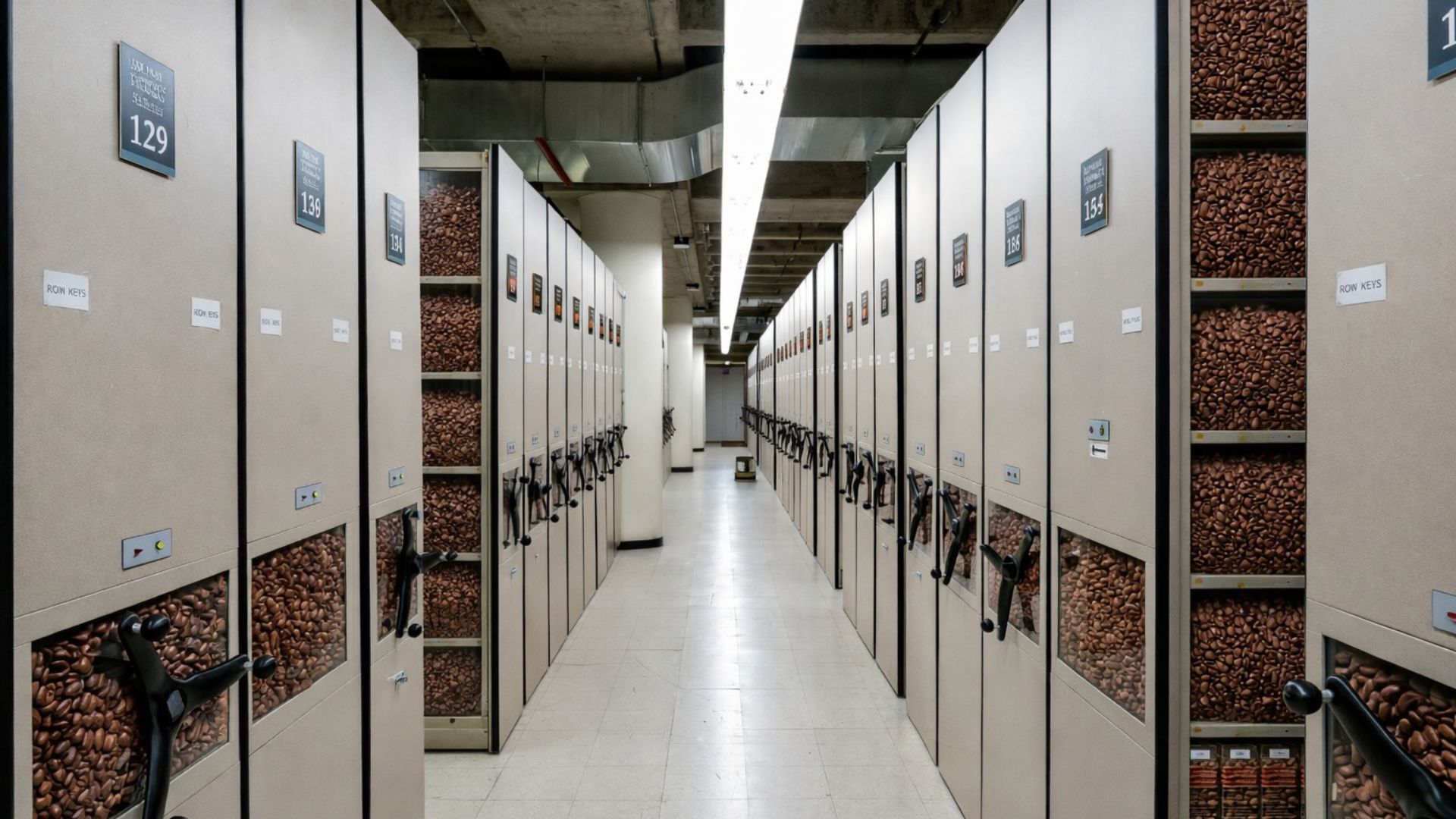
Bulk Storage vs Retail Packaging
The Problem
Coffee tastes different when repacked from bulk.
The Technical Cause
Each transfer exposes beans to fresh oxygen. Improper bulk storage magnifies oxidation before retail packing.
Impact on Cup and Business
Retail bags lose freshness faster than expected.
Practical Solutions
- Use airtight bulk containers with minimal headspace
- Avoid frequent opening of large bins
- Pack retail orders as close to shipping as possible
Every handling step should protect, not reset, freshness.
Freezing: When It Works and When It Doesn’t
The Problem
Confusion around freezing roasted coffee.
The Technical Cause
Freezing slows oxidation but introduces risks if moisture enters or temperature fluctuates.
Impact on Cup and Business
Poor freezing practices damage flavor instead of preserving it.
Practical Solutions
- Freeze only fully degassed, well-sealed coffee
- Use moisture-proof, oxygen-barrier packaging
- Avoid repeated thawing and refreezing
Freezing can extend shelf life when controlled, but it is not a shortcut for poor packaging.
Read also : Coffee Packaging Design: Psychology of Color for Impulse Buying
Freshness Is a Post-Roast Discipline
Roasted coffee freshness is determined less by how well it was roasted and more by how well it is protected afterward. Oxygen management, controlled degassing, and stable storage conditions form a system that preserves flavor integrity.
Roasteries that treat storage as part of production not an afterthought deliver more consistent cups and earn longer-lasting trust from customers and partners.
Thank you for taking the time to read this.
I hope these insights help you make more confident storage decisions and protect the freshness your roasting work deserves.
Join the newsletter
Follow us on :