How Packaging Color Influences Buying Decisions in Specialty Coffee
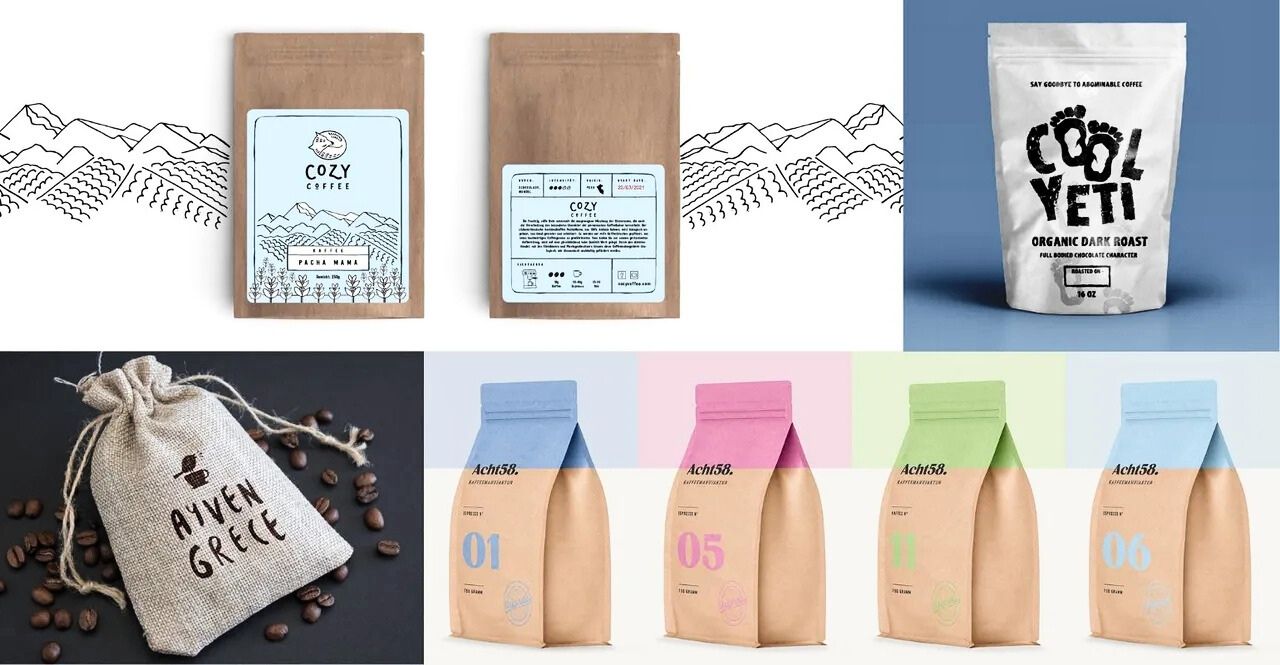
How Packaging Color Influences Buying ,For specialty coffee professionals, packaging is often treated as a branding afterthought an aesthetic layer applied once sourcing, roasting, and pricing decisions are complete. New research suggests this view is incomplete.
A recent study published in Food Research International demonstrates that packaging color plays a measurable role in shaping consumer expectations about specialty coffee affecting not only perceived flavor attributes, but also broader conceptual cues such as organic status, modernity, and product positioning.
The findings matter because expectations influence purchasing decisions before the coffee is ever tasted. For producers, importers, and roasters operating in increasingly competitive markets, packaging color is not merely a design choice. It is a sensory and commercial signal.
Color as a Driver of Flavor Expectation
The study, led by neuroscientist and The Coffee Sensorium founder Fabiana Carvalho, examined how color influences expectations among specialty coffee drinkers in the United States.
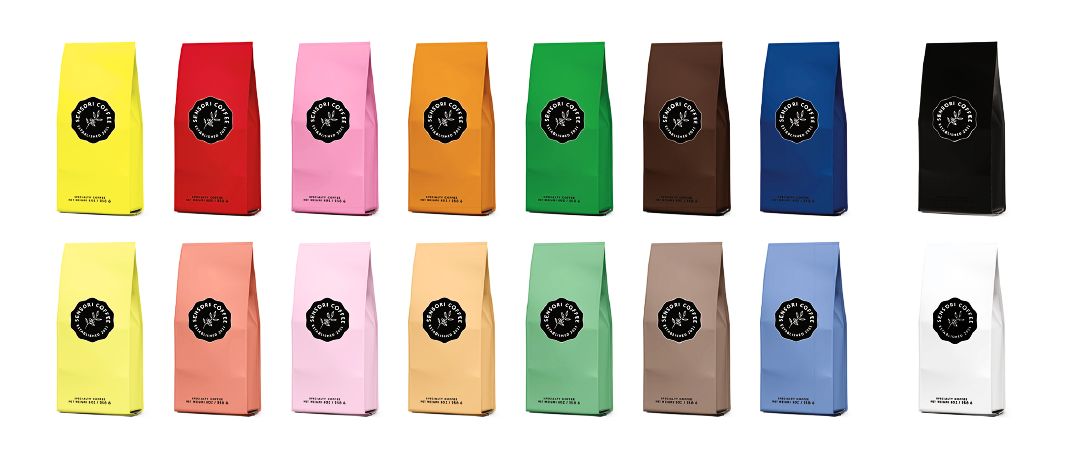
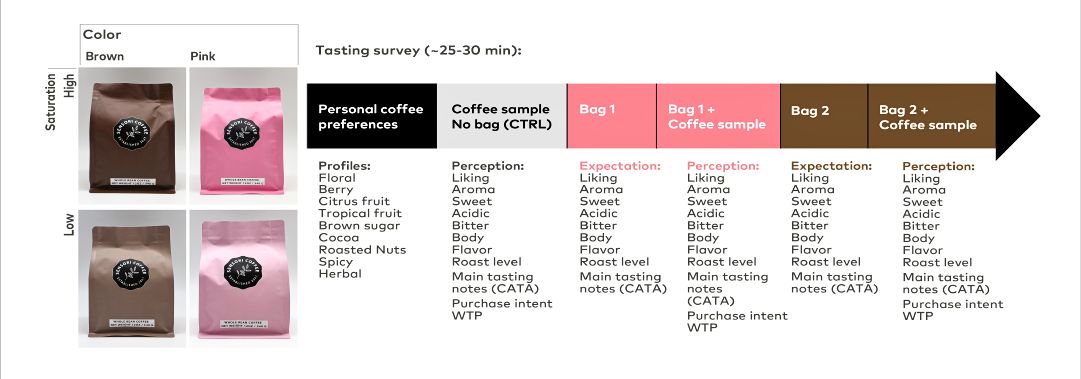
Participants were shown realistic digital images of coffee bags in eight colors each presented at two levels of saturation and asked to evaluate expected sensory characteristics such as aroma, sweetness, acidity, bitterness, and overall liking. They were also asked to associate colors with specific flavor categories and conceptual attributes.
One of the clearest outcomes was that color consistently primed specific flavor expectations, even in the absence of any descriptive text.
Pink packaging strongly suggested sweetness and the presence of berry or floral notes. Yellow was associated with higher acidity and citrus characteristics. Brown and black evoked bitterness, darker roasts, and cocoa-like flavors.
These associations align with broader cross-modal sensory research showing that consumers subconsciously map color to taste, often based on learned experiences across food categories.
For specialty coffee, the implication is direct: packaging color sets a sensory expectation that the coffee itself must either confirm or contradict.
Saturation Matters as Much as Hue
Beyond color choice, the study highlighted the importance of saturation the intensity or vividness of the color.
Highly saturated colors led participants to expect stronger flavors, heavier body, higher bitterness, and darker roast levels. However, these same packages were often rated as less likable overall, particularly among specialty coffee drinkers.
Lower saturation paler, softer hues was associated with balance, sweetness, and floral or fruity characteristics. White, pale blue, and light pink packaging ranked especially high in anticipated liking.
This finding underscores a critical nuance: intensity signals power, but not necessarily quality in specialty coffee contexts. Many specialty consumers associate excessive bitterness or extreme roast development with lower-quality commercial coffee, even when flavor intensity is high.
Conceptual Meaning Beyond Flavor
Color influenced not only sensory expectations, but also abstract product attributes.
Green packaging strongly signaled “organic” or environmentally friendly. Pink and yellow conveyed modernity. Pale blue was associated with sophistication, while brown and black were linked to commercial or mainstream coffee.
These associations matter because they shape how consumers categorize products before engaging with price or origin information. A coffee marketed as traceable, experimental, or high-end may struggle if its packaging cues contradict those messages.
Importantly, these conceptual signals appeared consistent regardless of color saturation, suggesting that hue itself carries cultural meaning that operates independently of intensity.
Specialty Coffee Packaging as a Strategic Signal
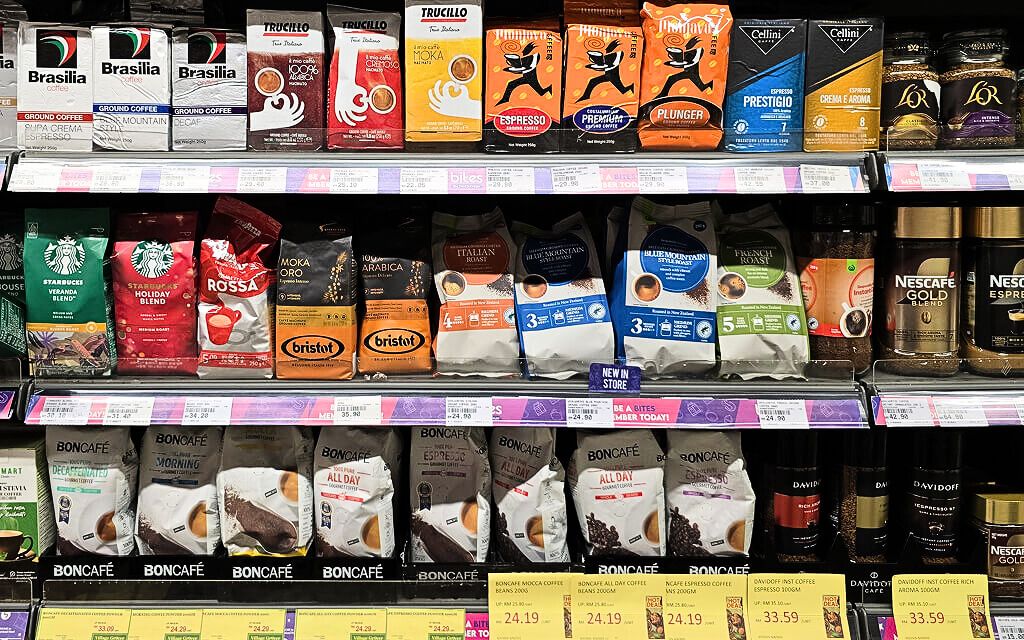
In specialty coffee, packaging is often the first point of sensory contact between the product and the buyer. Before origin, processing method, or price are considered, packaging color begins shaping assumptions about quality, style, and intent.
As competition intensifies, specialty coffee packaging functions less as decoration and more as a strategic signal that frames how the coffee will be interpreted.
Demographic Differences in Response
The study also identified age-related differences in how participants responded to color.
Younger respondents showed greater preference for fruity or floral flavor expectations and gravitated toward lighter, more colorful packaging such as pink or yellow. Older participants were more receptive to brown packaging and the flavor cues it implied.
For roasteries targeting multiple customer segments, this highlights the risk of assuming a single visual language will resonate universally. Packaging choices implicitly define the audience being addressed.
Implications for Specialty Coffee Marketing
The study’s authors argue that specialty coffees should be marketed using packaging colors that align both with intrinsic flavor characteristics and with conceptual positioning.
For example, a lightly roasted Ethiopian coffee with floral acidity may face unnecessary resistance if packaged in dark brown or black bags that imply bitterness or heavy roast development. The same coffee presented in a lighter, lower-saturation color can set expectations that align more closely with its actual sensory profile.
This recommendation reflects a broader shift within the industry toward recognizing that quality perception is shaped by more than the cup alone. Packaging operates as an extrinsic cue that frames how intrinsic attributes are interpreted.
For producers and importers, the findings suggest opportunities to better support differentiation at origin through coordinated visual and sensory storytelling. For roasteries, they reinforce the need to ensure that packaging design does not undermine the coffee’s actual profile or intended market position.
Misalignment carries risk. When packaging suggests sweetness but the coffee delivers sharp acidity or implies organic integrity without substantiation consumer trust erodes quickly.
Color, Expectation, and the Evolving Definition of Value
The research aligns closely with broader industry conversations around value assessment, including the Specialty Coffee Association’s shift toward the Coffee Value Assessment (CVA) framework.
CVA emphasizes the distinction between intrinsic attributes (sensory characteristics) and extrinsic attributes (context, presentation, narrative). Packaging color sits squarely at this intersection, influencing how intrinsic quality is perceived and valued.
In competitive specialty markets, differentiation increasingly depends on coherence. Coffee quality, sourcing narrative, pricing, and packaging must reinforce one another rather than compete for attention.
A Practical Takeaway
The study does not suggest that packaging color can replace quality. It shows that expectations are formed before brewing begins, and those expectations shape perceived value.
For specialty coffee professionals, the question is not which color is “best,” but whether packaging choices support the flavor profile, market positioning, and customer segment being targeted.
Color is not neutral. It communicates. When used deliberately, it can help consumers navigate choice with confidence. When ignored or misaligned, it introduces friction that no amount of quality can fully correct.
In an industry where differentiation is increasingly subtle, the strategic use of packaging color may prove less cosmetic and more consequential than previously assumed.
Read other articles :
- Five Coffee Lots That Changed Specialty Coffee Quality
- Coffee Too Sour: How to Fix Sour Coffee Taste Fast
- Coffee Packaging Design: Psychology of Color for Impulse Buying
Follow us on :
INSTAGRAM, TWITTER, LINKEDIN, YOUTUBE

Wong young low is a coffee industry journalist from China who has been writing since 2007, focusing on specialty coffee, roasting, and market trends. He writes based on field experience and supply chain observations – helping roasters and coffee businesses make more accurate and realistic decisions.