How to Choose the Right Roasting Machine for Your Roastery
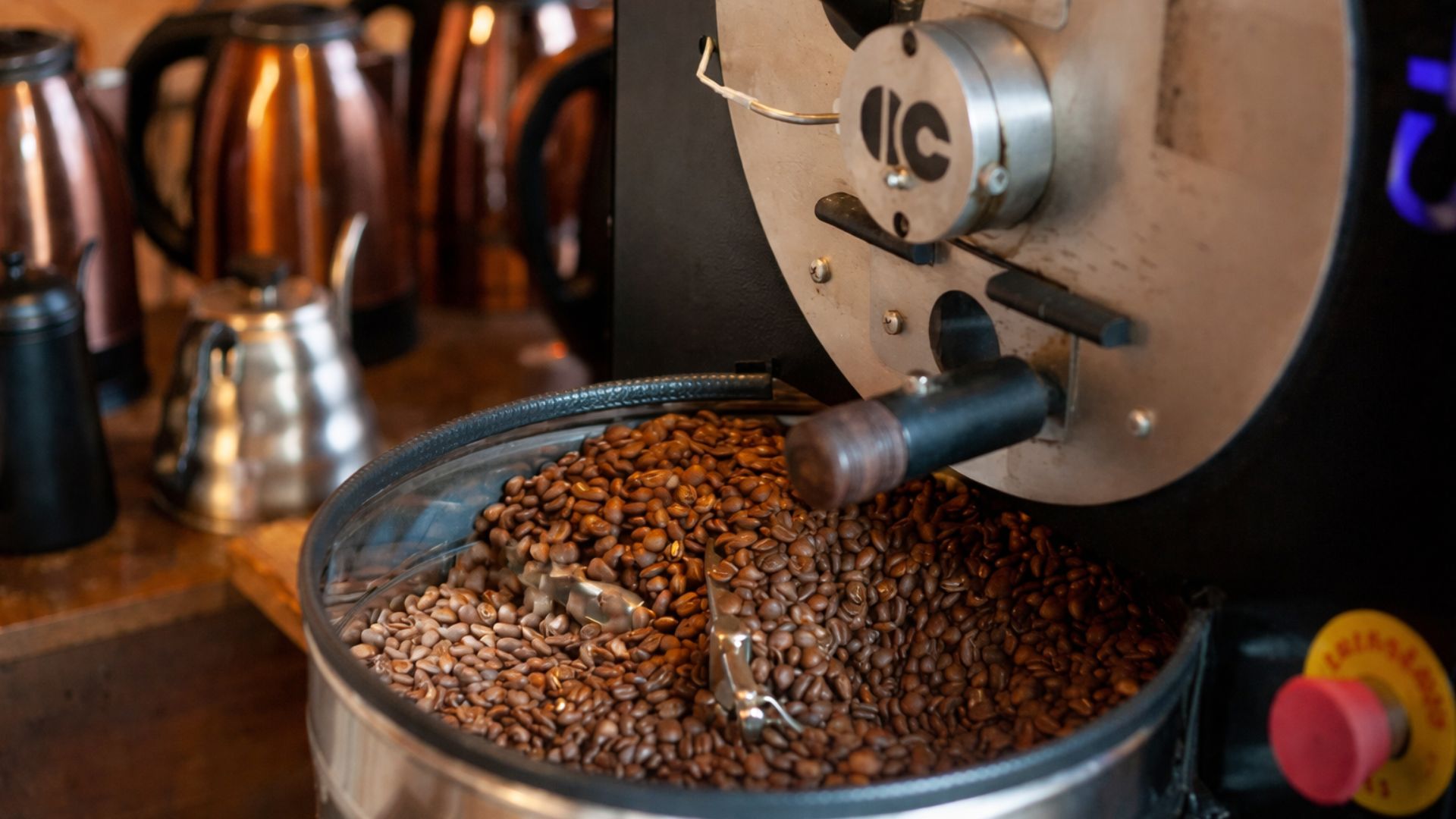
For most roasteries, choosing a roasting machine is framed as a capital purchase. In reality, it is an operational decision that will shape production flow, quality consistency, staffing requirements, cost structure, and growth limits for years.
Many roasteries run into problems not because they chose a “bad” machine, but because they chose a machine misaligned with how their business actually operates or how it will operate once volume, customers, and expectations increase. The consequences rarely appear immediately. They surface later as bottlenecks, inconsistency, underutilized capacity, or expensive upgrades that could have been avoided.
Selecting the right roasting machine requires moving beyond brand reputation and headline specifications, and instead evaluating how the machine fits into your production reality.
Start With Throughput, Not Batch Size
One of the most common mistakes roasteries make is anchoring decisions around nominal batch size. A “15 kg roaster” or “30 kg roaster” sounds straightforward, but batch capacity alone says very little about real output.
What matters operationally is usable throughput per day, not maximum batch weight. This includes:
- Warm-up and cool-down time
- Recovery speed between batches
- How consistently the machine performs over long roast days
- The realistic batch size you can run without sacrificing quality
Many roasteries discover too late that they can only run 60–70% of rated capacity if they want stable results. Others underestimate how recovery lag accumulates during continuous production, stretching schedules and increasing operator fatigue.
A smaller machine running efficiently for longer hours can outperform a larger machine that struggles under sustained load. Start by mapping realistic daily output targets, then work backward to machine capacity.
Understand Your Production Model Before Choosing Technology
Roasting machines are not neutral tools. They embed assumptions about how roasting should be done.
Some machines favor manual, operator-driven control, where sensory judgment and experience play a central role. Others prioritize repeatability and system-led consistency, with tighter automation and control logic.
Neither approach is inherently better. Problems arise when the machine’s philosophy conflicts with the roastery’s operating model.
Ask hard questions early:
- Will multiple operators run this machine?
- Is your production dependent on one or two highly skilled roasters?
- Do you need profiles to be interpreted, or executed?
- How tolerant is your operation to variation between shifts?
Roasteries scaling beyond founder-led roasting often benefit from machines that reduce interpretive freedom, not because operators lack skill, but because consistency becomes a system requirement rather than an individual one.
Control Systems Shape Consistency More Than Heat Source
Discussions about gas vs electric, drum vs fluid-bed, or burner type often overshadow a more important factor: control architecture.
Control systems determine:
- How inputs respond to change
- How repeatable profiles are across operators
- How quickly issues are visible
- Whether adjustments are proactive or reactive
A machine with excellent thermal design but poor data resolution or delayed feedback can be harder to run consistently than a simpler machine with clearer, faster signals.
Before choosing, evaluate how the machine communicates what is happening inside the roast. Can operators see deviations early? Can profiles be replicated without constant intervention? Does the system support learning, or obscure it?
Consistency failures are often blamed on people when the underlying issue is control clarity.
Maintenance, Downtime, and Service Reality Matter More Than Features
Advanced features look compelling during demos. In production, reliability and service access matter more.
Every roasting machine is a mechanical system under heat stress. Bearings wear. Sensors drift. Airflow systems clog. The question is not whether maintenance will be required, but how disruptive it will be when it is.
Consider:
- Availability of local or regional service support
- Lead times for critical replacement parts
- Ease of routine maintenance and cleaning
- Whether downtime halts production entirely or partially
Roasteries operating with tight schedules often underestimate the cost of a single day of unplanned downtime. A slightly less sophisticated machine with dependable support can outperform a technically superior one that is difficult to service.
Match Machine Complexity to Team Capacity
Machine sophistication must match organizational capacity.
Highly configurable machines offer flexibility, but they also demand documentation, training, and discipline. Without these, complexity increases inconsistency rather than reducing it.
If your team lacks:
- Formal roast documentation
- Structured training pathways
- Clear production ownership
then adding a machine with advanced control layers may increase operational risk.
Conversely, overly simple machines can constrain teams that require flexibility to manage variable green coffee or diverse product lines. The goal is not maximum capability, but appropriate capability.
Growth Planning: Avoid Both Overbuying and Underbuying
Roasteries frequently overbuy in anticipation of growth or underbuy to conserve capital. Both choices carry risk.
Overbuying can result in:
- Poor machine utilization
- Higher energy costs per kilo
- Inconsistent roasting due to low thermal load
Underbuying leads to:
- Compressed production schedules
- Operator burnout
- Compromised quality under time pressure
The most resilient approach is to choose a machine that supports your next stage, not your most optimistic future scenario. Growth rarely arrives evenly. Machines that operate efficiently across a range of loads provide more flexibility than those optimized only for peak capacity.
Energy, Space, and Infrastructure Are Not Afterthoughts
Roasting machines interact with the building more than many roasteries anticipate.
Energy supply, ventilation, exhaust routing, noise, and heat output all affect daily operations and compliance. Retrofitting infrastructure after installation is costly and disruptive.
Evaluate:
- Electrical and gas capacity
- Exhaust and filtration requirements
- Heat management in the roast room
- Noise impact on staff and neighbors
A machine that fits the business but not the building creates ongoing friction.
Align the Machine With Your Quality Strategy
Ultimately, the roasting machine should reinforce how you define quality.
If your brand depends on expressive, frequently changing profiles, you need a machine that allows controlled variation without destabilizing production. If your business depends on wholesale reliability, consistency and repeatability may outweigh flexibility.
The mistake many roasteries make is treating quality as something that happens after machine selection. In practice, the machine constrains what quality looks like on a daily basis.
A Practical Takeaway
Choosing a roasting machine is less about finding the “best” option and more about selecting the one that aligns with your operational reality, team structure, and quality priorities.
Well-matched machines disappear into the workflow. Poorly matched machines demand constant attention, explanation, and compromise.
Before committing, step back from specifications and ask a simpler question:
What kind of operation are we actually building and what kind of machine supports that consistently?
Answering that honestly is often the difference between a machine that enables growth and one that quietly limits it.
Read other articles :
- Roastery Website SEO: 5 Tricks to Boost Orders Fast
- Climate Impact on Coffee Prices : A Roaster’s Perspective
- Coffee Packaging Design: Psychology of Color for Impulse Buying
Follow us on :