What Changes in Coffee Roasting Technology in 2025
The pace of change in coffee roasting technology accelerated noticeably in 2025. While innovation has always been part of the industry, the past year marked a shift from experimental upgrades to practical tools designed for everyday production realities.
Rather than chasing novelty, manufacturers focused on solving persistent problems: energy efficiency, consistency at scale, data reliability, and operator workload. For roasteries, the question in 2025 was no longer whether technology belongs in the roast room, but how it meaningfully improves decision-making and resilience.
A Clear Shift Toward Production Stability
One of the defining trends of 2025 was a move away from feature-heavy machines toward systems built for stability and repeatability.
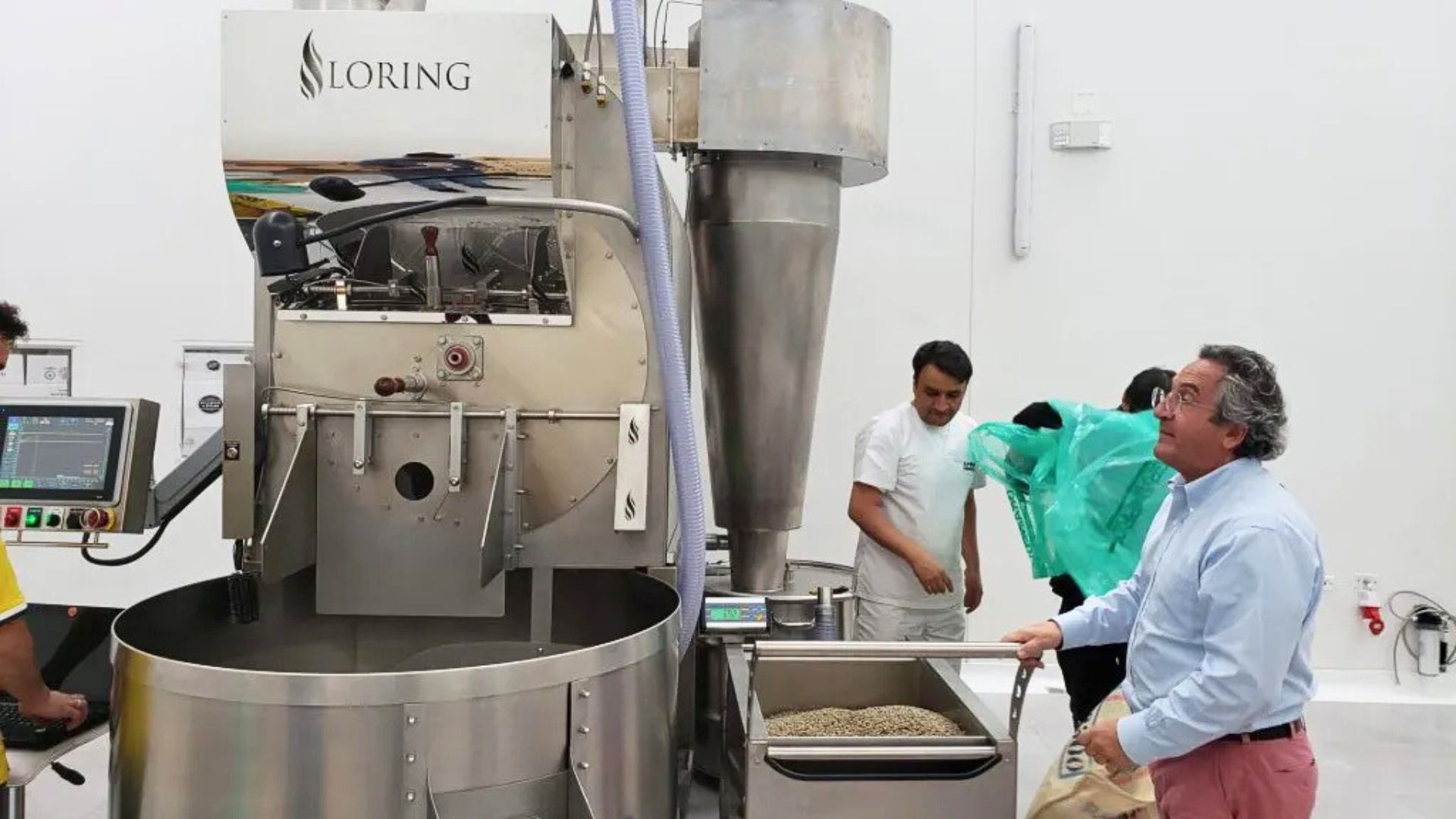
New drum roasters released this year placed greater emphasis on thermal mass management, airflow precision, and faster recovery times between batches. Instead of simply increasing capacity, manufacturers worked to reduce variance across long production runs.
For mid-sized and growing roasteries, this translated into fewer profile adjustments throughout the day and more predictable outcomes when scaling volume.
Read also : Roast Inconsistency Between Batches: 5 Practical Solutions
Energy Efficiency Becomes a Core Design Priority
Rising energy costs pushed efficiency from a secondary consideration to a central design requirement.
Several new roasting platforms introduced improved insulation, optimized burner geometry, and hybrid heating systems that reduced gas consumption without sacrificing heat responsiveness. Electric and low-emission roasting systems also gained ground, not as niche alternatives but as viable production tools for specific markets.
The practical implication is clear: energy efficiency is no longer about sustainability messaging alone. It directly affects operating margins and long-term viability.
Software Evolves From Monitoring to Decision Support
Roasting software matured significantly in 2025. Instead of acting as passive data loggers, newer platforms focused on interpretation and context.
Improved rate-of-rise modeling, batch comparison tools, and integrated quality control notes allowed roasters to see patterns across weeks or months, not just individual roasts. Some systems introduced early-warning indicators for drift, helping teams catch issues before they reached the cup.
This shift reflects a broader industry reality: data is only useful when it reduces uncertainty, not when it adds complexity.
Automation, With Limits Clearly Defined
Automation continued to expand in 2025, but with a more restrained philosophy.
Manufacturers moved away from fully autonomous roasting promises and instead delivered targeted automation: controlled heat application, repeatable airflow steps, and guided profile execution. The roaster’s role remained central, but manual intervention became more intentional rather than reactive.
Read also : Espresso Machine Technology 2025: What Cafés Need to Know
For production environments, this balance reduced operator fatigue while preserving accountability for quality decisions.
Green Coffee Variability Shapes Equipment Design
Climate-related variability in green coffee increasingly influenced equipment development.
Roasters released in 2025 showed greater flexibility in managing density differences, moisture variation, and inconsistent screen sizes. Faster response times and more granular control allowed roasteries to adapt profiles without rebuilding them entirely.
This reflects a growing recognition that roasting equipment must accommodate instability upstream, not assume uniform raw material.
Maintenance and Downtime Receive More Attention
Another quieter but important development in 2025 was a focus on serviceability.
Modular components, remote diagnostics, and predictive maintenance tools were built into new machines, reducing unexpected downtime. For roasteries operating on tight schedules, these changes had tangible operational value.
Reliability, once assumed, is now actively engineered.
What Changed and What Didn’t
Despite the technological progress of 2025, one reality remained constant: equipment does not replace judgment.
The most effective roasteries used new tools to reinforce fundamentals consistent inputs, clear sensory targets, and disciplined quality control. Technology supported these systems, but it did not redefine them.
The year’s most successful upgrades were not the most advanced on paper, but the ones that integrated smoothly into existing workflows.
Read also : Best Coffee Shops in London: 5 Iconic Cafés Every Coffee Lover.
Looking Ahead
The developments of 2025 suggest a coffee roasting industry becoming more pragmatic. Innovation is increasingly measured by how well it supports daily production rather than how impressively it demos.
As equipment and software continue to evolve, the advantage will favor roasteries that evaluate technology through a simple lens: does it reduce risk, improve consistency, or clarify decisions?
In a market shaped by volatility and rising expectations, those questions matter more than ever.
Join the newsletter
Follow us on :